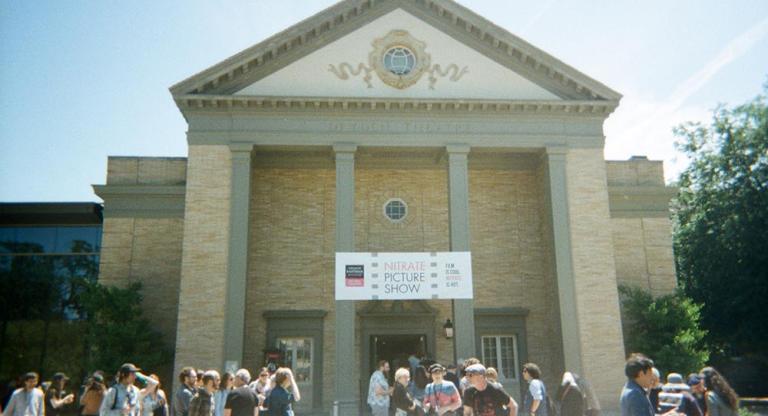
Early morning light streamed through the vaulted halls of Moynihan Train Station—a spacious, clean, airy, and architecturally hostile “update” to Penn Station’s dingy, brutalist cousin across 8th Avenue—as our merry band staggered in, still bleary-eyed from a one-two punch of “only in New York” nightlife. Screen Slate’s first-ever gala at Artists Space the prior evening was a rousing success (with an afterparty at La Caverna that wore on until the wee small hours) and the Knickerbockers’ victory in Game 1 of the NBA finals against the woo-woo San Antonio Spurs kept us buoyed in our exhaustion. Like Chaucer’s pilgrims wending to Canterbury, we piled into a designated Rochester-only car on the Amtrak Empire Service. Settled in and snacking, we eagerly awaited the 10 a.m. announcement of the weekend’s line-up, one of several sacred rituals that have taken root among our cinema entourage. If this year’s schedule were a poker hand, consider it a royal flush, with entries from luminaries like David Lean, Mitchell Leisen, George Cukor, John M. Stahl, Luchino Visconti, and countless other giants. For this Old Hollywood Pervert, the stacked dance card held its own against my previous Nitrate Picture Show outings—a reminder of the festival’s enduring power to surprise and delight.
For a decade now, the George Eastman Museum has lured cinephiles from the four corners to the central New York home of the Eastman Kodak Company. From my first visit to the festival in 2015, I’ve seen its popularity expand beyond a celebration of conservation into a veritable cultural juggernaut. Each year, the passes sell out faster, the crowd skews younger—including two new babies from our friend group!—and the social media profile expands. This year was no exception, with Philadelphia-based film publication MovieJawn on site to interview attendees and share behind-the-scenes moments from the festival’s social media handles.
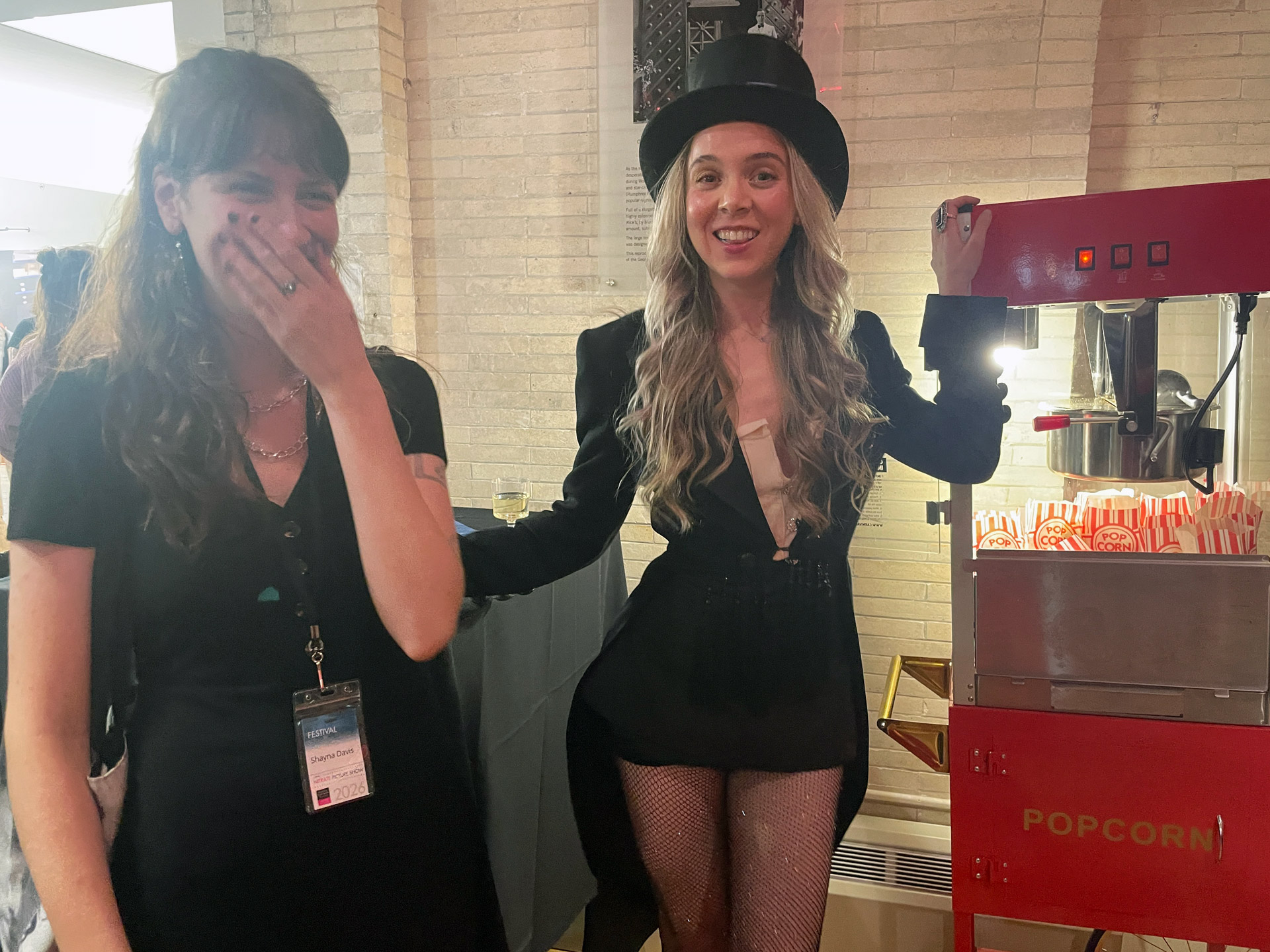
Ever thirsting for new trends, mainstream media has gotten wise to filmgoing’s rising popularity among the under-40 set (the “Letterboxd effect” is a phrase I did not have on my 2026 bingo card) [Ed. note: It's the Screen Slate Effect.]. Many, rightfully, cite a post-Covid hunger for in-person connection amid a decreasing supply of “third spaces.” Equally vocal are those pointing to Gen Z’s voguish penchant for analog technology—buying up Polaroid film, hoarding Criterion Blu-Rays—as a combined aesthetic and spiritual rejection of our digital slop ecosystem. But casting the rising popularity of the Nitrate Picture Show as “mere material fetishization,” to borrow a phrase from festival curator Peter Bagrov, is only half the story.
Look far and wide, and you will not find an audience more receptive to what a nitrate screening requires: the ability to totally enmesh oneself in an experience of the past as both present and future. With titles—and, by extension, prints—ranging from 100 to 75 years old, the unique pleasure of seeing these rare, gem-like objects lit up and life-sized is undeniable. One might mistake the festival as a celebration of obsolescence; rather, it’s a chance to bask in the moving image at its most sophisticated and avant-garde. These films were, at the time of their releases, at the cutting edge of storytelling capability: whether as technological achievements, or as the vanguard of narrative courage.
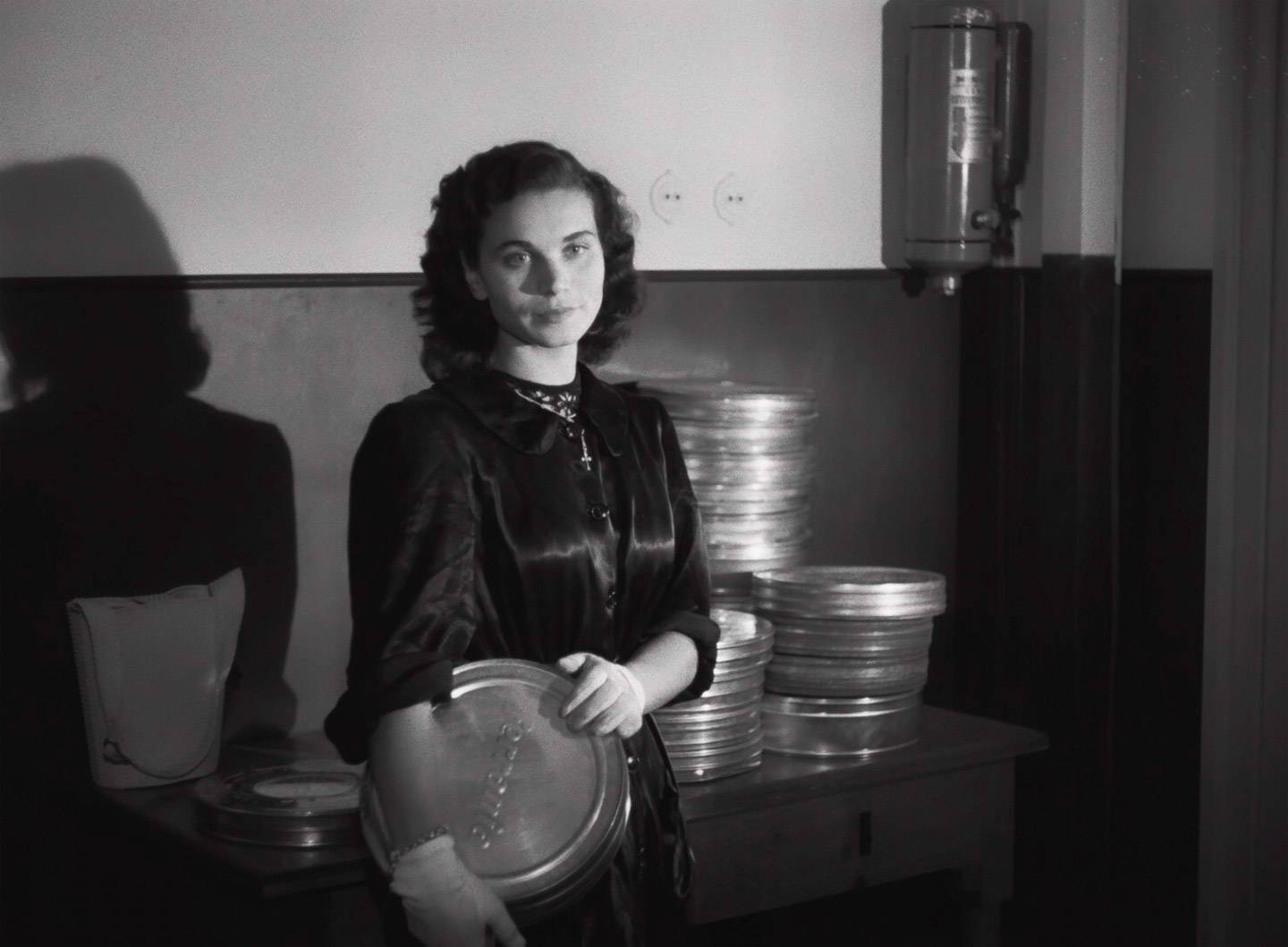
Seeking redemption through the love of an adoring public—whether writ-large on the silver screen or reduced to palm-size on our phones—was foremost on my mind in the tragicomic travails of Luchino Visconti’s Bellissima (1951, pictured at top). Anna Magnani’s full-bodied portrayal of a working-class cinephile hell-bent on landing her shy daughter an audition at Cinecitta ranks among cinema’s greatest stage mothers, sharing the dashed hopes and frustrations of Rosalind Russell in Gypsy (1962) or Claire Trevor in Hard, Fast, and Beautiful (1951) without tilting into mawkish parody.
Aspirational salvation-by-marriage to a “high value male” has tormented many a beautiful woman (on screen and off), but fortune’s fickle nature seldom makes it easy. Claudette Colbert’s gold-digging scheme in Mitchell Liesen’s Midnight (1939) is thwarted by her appetite for handsome trade, represented here by Don Ameche’s smoldering-but-poor Paris cab driver. Union-organizing diner waitress Irene Dunne is swept off her feet by Charles Boyer’s wealthy concert pianist in John M. Stahl’s When Tomorrow Comes (1939), but the third-act arrival of his estranged wife proves that placing comrades before cock is its own reward.
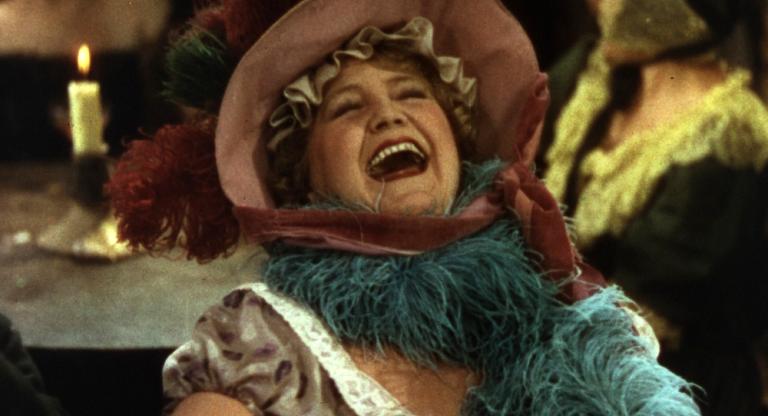
In both films, one could assume these heroines had a passing familiarity with Alexandre Dumas, fils’ sensational 1852 play La dame aux camélias. The tragic story of a consumptive Paris courtesan torn between a wealthy baron and the son of a prominent, but penniless, family already racked up five screen adaptations when George Cukor’s sweeping 1936 production hit the big screen. Germinating from the ur-text of a wanton woman humbled and punished by circumstance, Camille gifts us with star Greta Garbo in full blossom. Veering between coquettish and tragic, and carefree and lustful, her performance belies an athlete’s expertise in control and modulation. Whether ensconced within the flowing silks and sumptuous jewels of the Parisian demi-monde, or pale and wan on her deathbed, Garbo’s masterclass in screen acting invites us to peek behind the veil of studio artifice at a negotiated naturalism.
Every phase in our species’ industrial evolution begins with the body—the wheel to ease our burdens, the hearth to heat our homes and food. Even the Fordian process of studio filmmaking is imbued, through the bodies of artists and technicians, with the humanity of its creators. It’s an essential earthiness: without it, you only have the masturbatory ouroboros of AI feeding upon itself, iterating but never generating. Ironic that the greatest existential threat to art and artisanship today should be something so intangible as a few lines of code, as if the mighty edifice of our creative achievements could be laid low by a breeze.
Accelerating industrialization and reactionary nationalism were foremost on the minds of filmmakers and filmgoers alike when the young medium was at its popular apex, and these anxieties weave their way into our cinematic consciousness in secretive and unconscious ways. Joris Ivens’s industrial midlength Philips-Radio (1931) is perhaps the most comprehensive document available of pre-War tube radio production, but for every hypnotic, repetitive montage of whirring machines, Ivens gives special attention to the highly specialized manual labor of factory glassblowers—men of strong constitution and even stronger lung capacity who employ millennia-old technology to create vacuum tubes of staggering size and shape.

It’s human hands that transform the assembly line from a mere conveyor belt into an engine of production, whether at the Philips-Radio factory, or in the sleepy smalltown South in Norman Taurog’s The Adventures of Tom Sawyer (1938). In the dreamy childhood idyll of Mark Twain’s story—a wonderland of natural splendor, with countless opportunities for boyish mischief—no one can blame Tom for wanting to shirk his work. Displaying a clear knack for capitalist exploitation—some might call it entrepreneurship—Sawyer cannily cons a small army of schoolboys into spending the afternoon whitewashing a fence. When the boss strives for efficiency to improve his bottom line, he sells his workers on automation in the guise of deliverance. He acts as a Prophet who will lead us lumpenprole into a paradise of abundant leisure. I can’t imagine today’s Tom Sawyer—he gets buy on you, as the song goes—giving much credence to the hustle culture and grindset mentality of his peers, unless he could concoct a way for someone else to hustle for him.
The arrival of color in studio filmmaking in the 1930s—and, in particular, the rigorously scientific Technicolor process—marked a new chapter in the perpetual cinematic dance between the real and hyper-real. Both color features from this year’s line up—the aforementioned Tom Sawyer and David Lean’s melodrama This Happy Breed (1944)—eschew Technicolor’s signature vibrancy for a muted colorscape meant to evoke nostalgia for a simpler quotidian way of life. The quiet dignity of domesticity shows its true colors in the beige foods and buff-colored interiors of Tom Sawyer’s country home, as well as in the earthy palette of table linens and water-stained walls of the Clapham cottage that houses the Gibbons family during England’s interwar years.
Adapting Noël Coward’s 1939 play, Lean casts the Gibbons home as a stage upon which events both large (the Armistice, the 1926 General Strike) and small (domestic disagreements, New Years parties) unfold with equal care and sentiment. Within this microcosm of middle class celebration and strife, the tendrils of this year’s Nitrate Picture Show unwittingly converge. The social aspirations of the Gibbons’ oldest daughter, Queenie, drive her out of the home and into the arms of a wealthy married man, while the death of oldest son Reg is revealed not in a dramatic farewell scene, but by the sound of a radio (manufactured by Phillips, one wonders) in an empty room, a gift from the deceased to his mother only a year before. From the void of this loss, a signifier emerges, replacing man with machine. It’s a paltry substitute for the real thing, but in her portrayal of mother Ethel Gibbons, all matter-of-factness and stiff-upper-lip, Celia Johnson lets us believe that it will have to do.
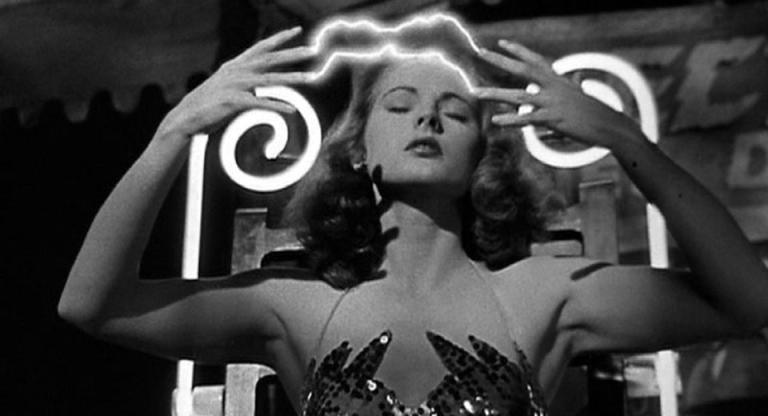
Blessedly, the festival’s Blind Date offered a gentle reentry to reality by way of Jean Cocteau’s Orpheus (1950). For Jean Marais’s lantern-jawed poet, death is an entr’acte, not an ending—a detour in the dark forest of art and memory. Nearing middle age, Cocteau’s Orpheus exhibits the customary “old head’s” suspicion of youthful trends, but even the half-world of Hades is not immune to technology’s reach. Held hostage by an underworld Princess in a classically Cocteauesque funhouse, his poems come to him not from whispers of the muse Euterpe, but through cryptic radio broadcasts.
Among us mere mortals, nostalgia is too often our sole weapon against the march of so-called progress. We race against time—against death, really—in the earthly vehicle of the body, craving the past with each step into the future. Fitting that this year’s final screening dispensed with this temporal prison entirely, shepherding us away from the linear toward a 75-year-old alternative that feels uncannily new. It’s a remarkable thing, this marathon four days where time exists only in runtimes and lunchbreaks between shows. In the unspooling reels one finds a perfect illustration of time’s cyclicality: a mirror of today’s anxieties illuminated by the anguish of our forebears, and a dim promise (or portent) of things to come. Our modern ills are, in fact, nothing of the sort, but merely echoes still reverberating from last century’s cries and laughter.