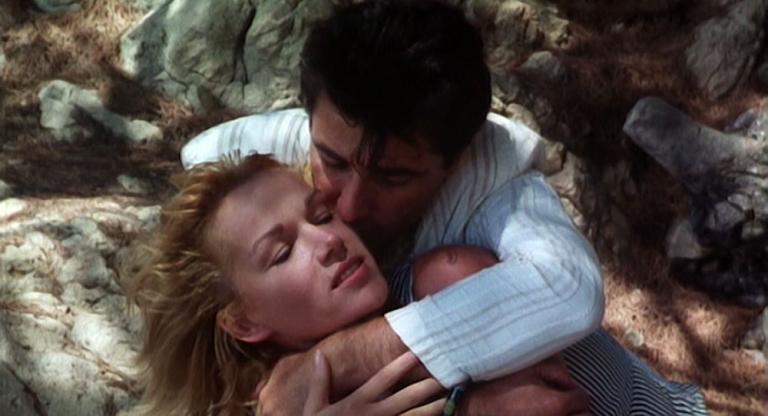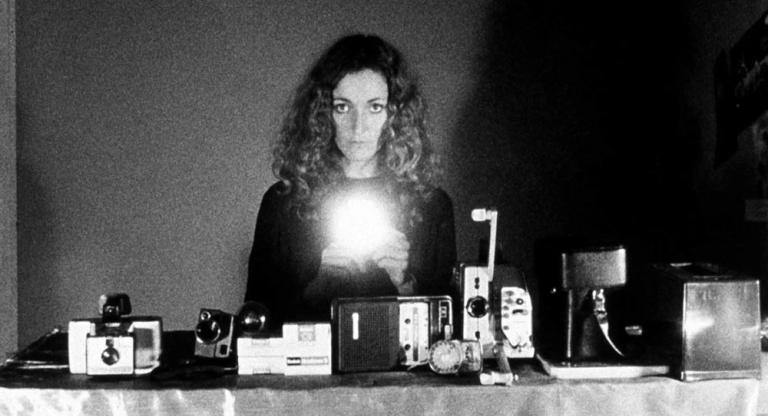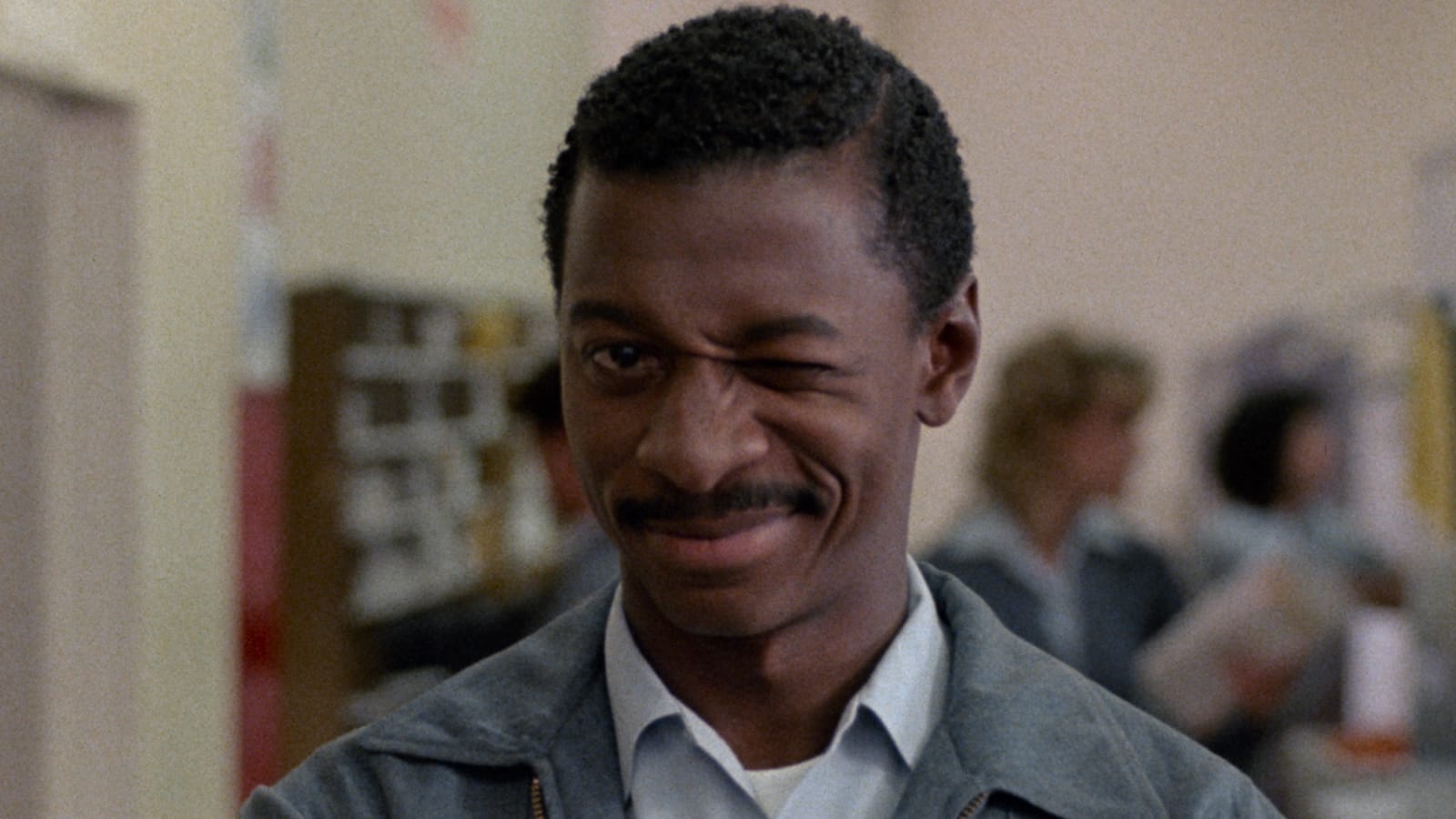
Robert Townsend says his “mind works differently.” Talking to him, it’s hard to disagree. The kineticism of his screen persona is hardly diminished in person, quoting his own movies verbatim, flying into uncanny celebrity impressions, gesticulating wildly, and freely pontificating on the future of movies, the nature of art, and the limits of good taste.
While the canonical status of many Black filmmakers of his generation is beyond debate, Townsend’s star is still on an upward trajectory and the richness of his filmography remains relatively underappreciated. We sat down to discuss his varied career, his admiration for Billy Crystal, and the lengths comedians will go to for a laugh.
Cosmo Bjorkenheim: Thanks again for taking the time to chat. This is on the occasion of a retrospective and film series that you’ve put together at the Balboa and Four Star Theaters in San Francisco. Can you start with telling me a little bit about how this series came together.
Robert Townsend: Last year, CinemaSFBay did a screening of one of the films that I was in, A Soldier's Story [1984]. Robert Anderson and Adam [Bergeron] coordinated the screening, and Robert was like, “Would you want to come up and do a discussion?” A Soldier's Story was the film that changed my life. It wasn't just a Black movie, it was a movie. It was directed by Norman Jewison. It was my first film. Denzel, David Alan Grier, Howard Rollins, Adolph Caesar. When I came up for the screening, I brought my daughter Skye with me, who is an actress now in Hollywood. She was on The Neighborhood with Cedric. And, she's sitting there watching the movie and she had this experience with the audience. There’s something about getting lost in a movie theater with a crowd.
Cut to—Mr. Anderson says, “Robert, would you want to come back up and do a whole week of movies at our theaters? Because you know what the mission is? It’s to get people in the theaters, and also to keep these theaters alive.” I was like, “I get to pick all my movies?” So then I just started going, “Oh, I want to see that on the big screen. Oh, I want to see that on the big screen. I want to watch that.”
Last year I hosted a TCM two-for night where you show two movies that you love. Network [1976] was one, and the other one was Here Comes Mr. Jordan [1941]. Network is one of my favorite movies, but I didn't want to do the same thing I did. There's a lot of people that go, “What’s Network?” And I go, “Oh my God. Paddy Chayefsky, Faye Dunaway—are you kidding me?” So this week is movie heaven for me, because I'm just going to be watching movies with an audience and I got a lot of surprise guests that are going to come up to either moderate a discussion or be a guest on a panel to talk about the films.
CB: It’s a great lineup. You've got The Great White Hope [1970], Claudine [1974], A Face in the Crowd [1957]. One throughline is that James Earl Jones is in at least three of these films. He’s sort of disproportionately represented. You’ve obviously worked with him and admired him throughout his career. Can you tell me a little bit about your relationship with him?
RT: When I was a kid, there were movies that affected me. My childhood was all movies. Even at 10 years old, I was watching Elia Kazan. Claudine was the first time I saw James Earl Jones. It’s about a single mother, Diane Carroll, who has six kids, and falls in love with a garbage man. And, that was my story. My mother was a single mother with four kids. I remember watching that movie—sneaking in because I couldn't pay for it. Then I saw The Great White Hope and his performance as a young actor was so powerful.
I don't normally do impersonations of people, they just come into me. He had that voice and the way he would always—[switches to a perfect James Earl Jones impersonation] “You see Claudine, daddy gotta be the breadwinner if I'm gonna win. I'm gonna get out there and I'm gonna win that goddamn fight.” And he would beat his chest. I was like, “Oh my God, what a performance.” Even as a young artist, I knew I was watching something on the highest level of acting, of art. "Just leave me be, woman. Leave me be. I said I'm a champ." I remember that movie so vividly, but I haven't seen it in ages. My passion for these movies comes out of James Earl Jones.
I had the scene in Meteor Man [1993] where he's got to cry because he's not on my side anymore, and he's in the room and he's crying. Talk about somebody with a fine instrument! That man could cry like that [snaps his fingers]. When I talked to him, I said, “What’s going on,” and he goes, [James Earl Jones voice] “I got it, I understand. All right, let's try it.” And then he goes, “Was that too much? Would you like to see it again? One tear or two? Left eye, right eye?”
CB: That’s that classical training, right?
RT: That’s why he's special in my heart. That’s why I can't wait for the world to see these movies on the big screen.
CB: When I was looking at the credits of The Five Heartbeats [1991], I noticed that Sidney Poitier's daughter, Pamela Poitier, worked as an assistant location manager on it, which I thought was really cute.
RT: It was a full circle. Mr. Poitier became my mentor. After I did Hollywood Shuffle [1987], he was one of the first people I looked for, because when I saw In the Heat of the Night [1967] as a kid, that movie affected me because I didn't have that many heroes. To see this powerful Black man of stature on that silver screen walking with such dignity, I go, “That represents me. These other images don't.” When we were doing The Five Heartbeats, we had this location manager working with us and he wanted to bring in Pam Poitier —she looks just like her father. We remained friends for many years. It was a treat to work with his daughter.
CB: I had never seen The Five Heartbeats before. I watched it a couple of days ago, and I was really struck by the tone. It’s very different from B.A.P.S. [1997], Meteor Man, or Hollywood Shuffle. How do you think about the role of The Five Heartbeats within your filmography? It feels like the only straight-up drama in the context of a career where you've mostly focused on comedy.
RT: There's certain films that I love. Claudine is very funny, but it's [also] very dramatic. When I think about Cooley High [1975], it's very funny and it's very dramatic. When I think about The Five Heartbeats—it's a serious story, but I think there's a blend of comedy, like me and my brother fighting, playing “shy brother,” just the silliness. Initially, Keenen [Ivory Wayans] and I were writing it for ourselves. It’s supposed to be funny, funny, funny. And then, when we interviewed the different groups, like the Temptations or the Dells, they were like, “We didn't make money. We didn't understand contracts.” The story took a shift. So, we got all the funny stuff in there because there's constant jokes. Big Red [Hawthorne James] is a serious character, but the character of Flash [John Canada Terrell], who takes over after we leave, is more comedic.
CB: You've also worked in other formats for comedy. You've done sitcom, you've done stand-up. Do you see yourself as a comedian first and a filmmaker second, or a filmmaker first and a comedian second, or do you not see it that way at all?
RT: I'm a true hyphen. There's certain people that go, “Hey, I write, I direct, I produce.” I think I've been blessed with a different kind of skill set. I think I wear the hats comfortably, so I can switch gears. Right now, I'm getting ready to tour with my one-man show. I did it at the Marsh [Arts Center] in Berkeley for almost two months, and then COVID hit. Nobody knew what the world was going to be, so I started to perform it again and I absolutely love being on stage. The reviews have always been like, "What a welcome return for Robert." But then I also love directing. I've been directing a lot of television because the movie game is really different. There's only so many slots now. I just directed an episode of The Chi, and the audience went crazy and said, “This is one of the best episodes ever.” That makes me feel good.
I think the screenplays I've just finished are really good. As a director, I'm always there. And then the side of me that is a stand-up—when I was on set with Billy Crystal, that man inspired me. When I was young in New York City, I was the biggest Billy Crystal groupie. I would go to Long Island to watch him perform and do his characters. The hyphen part of me just loves it all. I'm just having the best life. I get to live my dreams, I get to watch movies I love, and I get to sit in the theater and talk about them. So yeah, the hyphen part—it's all of me.
CB: I think you wear your influences on your sleeve. You're very open about who your influences are in other interviews I've listened to. Also, in the end credits of The Five Heartbeats, you have a title card at the end where you call out specific actors and filmmakers by name as true inspirations. You might expect some of them on a list like that: Charles Burnett and Gordon Parks. But then you have Julie Dash in there, Euzhan Palcy, James Bond III. Can you tell me a little bit more about some of these heroes?
RT: It takes courage to be a filmmaker. It takes courage to say “action” and “cut”. So many people are Monday morning quarterbacks. When I thought about artists and that fearless spirit, it was celebrating those artists and trying to put a little wind underneath their wings to say, “Keep going, keep going.” I'm a champion of the dreamers because I'm a dreamer.
CB: You've worked with Eddie [Murphy] on Raw [1987], and you've worked with a lot of other comedians—Faizon Love, Arsenio Hall. What's that collaboration been like? We've mostly talked about filmmaking, but in the context of stand-up, I'd be curious to hear more about that process.
RT: I recently worked with Damon Wayans again, and his son Damon Jr. There’s a term I use—it's called “funny bones.” Really great comedians have funny bones and can riff on anything and everything in a nanosecond. Keenen and I are working on something right now, and we always save one take where we just go crazy. We go like, “Oh, I got a funny idea. Okay, here we go—action!” I just finished working with Ms. Pat, you know, it's a sitcom on BET+, and Jordan Cooper is the showrunner. I just directed two episodes, just got back from Atlanta. She is Richard Pryor on steroids. And then you got Jordan, who brings in the heart and the soul.
Real comedians are always thinking funny. I feel blessed to work with the funny people that I've worked with because they bring their magic. The last take is always—I always say, one more for love. I'll say to the actor, “Hey, what you've done is amazing. I have what I need in the can. Is there anything you'd like to do?” It's the “love take” that is always in the show because they always come with something I didn’t foresee. I look at my team behind the monitors and I go,”That's the one,” you know? With comedians—oh my God. They're creative. They see the script and they make the script theirs. With one more for love, they go, “Oh, Rob, I know what you want. Watch this.”
CB: I imagine that some of that stems from the fact that you've worked so much on both sides of the camera. You probably have a different relationship to the actor's craft than a lot of other directors who don't perform. Have you found that—when you work in front of the camera with directors who are not actors themselves—they have different directing styles or different approaches to that craft?
RT: I’m really wired differently. My brain's really fast—I have to slow it down. Sometimes when I’m directing, I emotionally track every character, even the extras. How does everybody feel in the scene? You're happy for him. You're not happy for him. This is funny to you. Oh, this makes you sad. So I will paint with a fine brush all the different colors. Sometimes I find that other directors are more technical and they don't care about everything. Like, I had a character in the hospital bed and the character was giving a great performance. And then I said, "Your eyes are moving too fast. If this is your last breath and you're going, ‘I can't breathe,’” I said, "There's too much energy in your eyes." I get into every little detail and I think that makes the difference.
CB: There's a great essay by James Baldwin about In the Heat of the Night in his book The Devil Finds Work [1976] where he critiques the film—I'm really reducing and paraphrasing here—as a film that, on the surface, has a progressive attitude towards race relations in the United States, but when you go deeper, it's really a film made for white audiences and doesn't actually do a whole lot to dismantle the racial stereotypes that it purports to critique. I'm curious how you see the racial politics of that movie? Since you chose it for the series, I'm thinking that there must be some significance from that angle.
RT: Well, let me say this. We had never seen a brilliant Black man as a detective. So where he goes—[does a perfect Sidney Poitier impression] "Let me see your fingernails." We had never seen that. You could say the problem in Hollywood, especially as it relates to people of color, has always been balance. We only had one movie come out. Whatever that one movie was, it had to represent everybody. Everybody had to be happy. So when I look at In the Heat of the Night and I think about me as a man of color, I go, “How many smart detectives that were sharp, brilliant, stood up for themselves, talked back, did I ever see?” None. None. Part of the problem has always been balance.
When people said, for example, “Amos and Andy is a horrible show, take it off the air, it represents Black people in the wrong way”... They were master comedians just doing their jobs. They were very smart and they were very funny. That was just the only work they could get work. We didn't have doctors and lawyers to balance it out. If we had balance, everything would have been good. So when I hear the critique of In the Heat of the Night… No, he was a brilliant detective that was classy. So I disagree. It planted a seed in me that that's somebody I want to emulate. Not many images made me want to stand taller and go, “Wow, he was very smart. He didn't take any stuff and he could stand his own ground.”
For me, In the Heat of the Night is probably one of the best detective movies ever. I saw Norman Jewison’s love of actors and his love of people firsthand. I worked with him on A Soldier's Story. He was comfortable enough to say, "I'm going to direct all of these Black actors, but your opinion matters. How do you feel? How would you deal with that?" So then I was like, “Oh, wow, that's what happened on In the Heat of the Night.” There was discussion.
CB: You've talked about this at length, so this is well-trodden territory for you: the thing about satire is it can easily just be misinterpreted by audiences. So, when you're critiquing racial stereotypes, people may take those at face value and laugh at the stereotypes themselves. How do you see the balancing act of critiquing racial stereotypes versus just perpetuating racial stereotypes in something like Hollywood Shuffle?
RT: Okay, I'll point out a perfect example. You talk about the Black acting school. I am flipping it upside down and all over the place because we start with, “Yeah, massa, yes.” Cut. [In a British accent] “Hello. Hi, I'm a Black actor.” So right away you go, “What the hell just happened?” And then, [continues in British accent] “This is a Black acting school. This is Willie. Let's meet Willie,” and he's like, “Jive turkey suckah.” You know, the instructors are white. I think some people could say we were showing stereotypes, but we were busting apart stereotypes.
Really great satirical pieces have layers to them. Hollywood Shuffle has a lot of layers. It's one thing if we just did the sketch and we didn't get into all the other stuff, but I think it's playing with your head on so many levels.
CB: It definitely is. But with something as multi-layered and subtle as Hollywood Shuffle is overall, there's this risk of audiences projecting their own prejudices onto it and getting something out of it that maybe you didn't intend as a filmmaker.
Anecdotally, when I was a white 13-year-old watching Don't Be a Menace to South Central [1996], I don't know if I was laughing at the stereotypes themselves or if I was actually understanding the satire. My assumption is that I was just stupidly laughing at the stereotypes. The interpretations of these films can go in many different directions, but your responsibility as a filmmaker ends once the film is out in the world, right?
RT: Right. At the end of the day, once the movie’s over, people go, "Ah, man, it was just funny, funny, funny." Or somebody goes, "Wow, that was funny and poignant, but it also made me think.” To this day, many actors come up to me and say, "Thank you for Hollywood Shuffle.". They go, “Man, thank you so much, because you educated me.” Not everybody will get it, but I think a lot will.
CB: That’s just the gamble as an artist. You can't entirely control what happens to your work. It has a life of its own.
RT: Yeah, but I think that the right people will get the message because there's a lot of movies that people will say went over their heads. For example, I love Being There [1979] with Peter Sellers, and some people don't get the movie. I think that movie is absolutely brilliant. I get the comedy of The Apartment [1960] by Billy Wilder. I love that movie. As it relates to filmmakers, we just tell the movie the way we want to tell it, and hopefully the audience will see what we saw.
CB: In the series that you programmed at the Balboa, are there any films that you would have liked to include but couldn't for one reason or another?
RT: It wasn't so much that I couldn't include something, it was just that there were only 9 slots. There are so many movies I love that have really touched my heart.
CB: Is there a specific one that, if there were a Round Two to this series, would be the first title that you would include?
RT: The Apartment would be at the top of that list. Another one that I thought about was The Mack [1973]. It was shot in Oakland. Max Julien—incredible writer, director, producer, actor. It was really well made. And then, the other one would probably have been The Spook Who Sat by the Door [1973]. I did a pop-up film festival in Chicago in December, and I showed that. But, I'm happy with the lineup we have.
CB: I know that you're from Chicago originally, but you've also spent a lot of time in New York, some of your films are set in LA, and you've spent a lot of time on the West Coast. How do those different places figure into your identity or into your work?
RT: I don't know. It just is what hits me as a writer. I love New York. Like I said, I lived there for like seven years from the '70s to the '80s. I'm from Chicago and I live in Los Angeles now. There's a new script that I just finished and it is based in Memphis. Then there's another story that I'm going to base in Chicago. So, I don't know, it's just the energy of the script. And also tax incentives.
CB: Of course, can't ignore that.
RT: If something compels me to go somewhere different, it just depends on what's in my head.
CB: I've done a bit of programming at a local theater here and we’ve programmed a couple of your films. We showed B.A.P.S. and Meteor Man over the past few months. They were guest programmed by Skye Williams, a roving film programmer. There were great turnouts for both of those screenings, and it's been really great to see. Do you notice there being a revival of interest in your body of work?
RT: Well, what's interesting is that my films are always playing somewhere, so I don't really see it as a resurgence. I've been blessed to create movies that people consider classics. I'm not really on social media, but there's always somebody reaching out like, “We're screening here and we're screening there. We're showing Holiday Heart, we're showing B.A.P.S., Meteor Man, Five Heartbeats, Hollywood Shuffle.” I get these things all the time. Somebody just reached out in France. There's a mock-documentary festival and they want to screen Jackie's Back [1999].
CB: In Hollywood Shuffle, there's a couple of cinematic role models that your character keeps bringing up. One is Sam Spade and the other is Superman. He’s like, “Why can't we have a Black Sam Spade or a Black Superman?” There's a scene where it's like a fantasy of your character turning into a superhero. Was that already the germ of the idea for Meteor Man?
RT: To tell you the truth, when we were doing that, I was just thinking about all the images that I had seen as a kid. So, I didn't think about Meteor Man then. It wasn't until years later, after The Five Heartbeats that I was like, “I want to do it.” I wasn't cocky enough to say I'm going to call Marvel and get one of their heroes. I grew up on Batman and Spider-Man. Frank Gorshin as the Riddler was my favorite. He had that little crazy laugh and I cast him in Meteor Man. I was just a fan as a kid and I was like, “I'll create my own superheroes.” My brain has always been wired differently. As I was writing, I would laugh to myself, like, he's a superhero, but he's afraid of heights. So, when you see him flying, he's only four feet off the ground. I just thought that was funny.
CB: Music plays a big part in your work. Obviously, in The Five Heartbeats, the music is incredible. But, you've also incorporated musical acts into your stand-up specials and stuff. You performed with Bobby Brown in one of your stand-up specials and your co-stars in The Five Heartbeats are all also talented dancers and vocalists. I'm curious how music plays into your output.
RT: I used to always say music is the fifth star of the film. Really great movies have songs that stay with you once you walk outside the theater. The Apartment. The Godfather. I did a documentary about making The Five Heartbeats. I talk about [how] I listened to over a thousand demos until I found the right songs. With great movies, all the elements come together, and music is one element. If a song starts at the right place, you're going to cry. If it starts at the wrong place? Meh.
I just finished doing an episode of The Chi, and the music supervisor chose a song for this one scene that was even better than anything I could have ever imagined. The clip went viral. It's that good. In The Five Heartbeats, people thought we were a real singing group because the songs were all original, but they fit the group and the lyrics fit where we were in the story. In B.A.P.S., in the very last scene, I chose to take the words out and I brought in an orchestra and we played this big song. While they're crying and having this emotional moment, I took the words out and the audience had to lean in because the symphony was so beautiful. Everybody's crying, and Halle was like, "Wow, Robert, why did you—that was a different choice." Great filmmakers try different things and I'm always trying to be the best I can be.
CB: We've talked about some of your collaborators, like the Wayans family. I recently rewatched White Chicks [2004], and the style of comedy that [Shawn and Marlon] Wayans went into in the '90s and early 2000s with is a different, broader, more grotesque kind of humor. How do you relate to their filmography, because they're such a brand also?
RT: We're all still working together to this day. Keenen will go for the jugular vein when he goes for a joke. They do not play. In the writers' room with me and Keenen, I was always the one going, “Oh, I don't know if we should go that far.” Keenen never cared. That's what I really love and admire about him. And, I think that's what always made our working relationship work so well. I celebrate the fact that he has always been so free as an artist. Keenen's a genius on a whole other level because of the madness. They will hit jokes really hard, harder than I will.
CB: One of the people that you thank in that title card at the end of The Five Heartbeats is John Singleton. Your films get sort of categorized together in retrospective reviews of that period of independent filmmaking. I recently rewatched his Shaft reboot from 2000, which I love, and I really think it's one of his best movies, but for some reason it's not really as celebrated as a lot of his other films. It’s both a reboot and a satire of this legacy blaxploitation IP, which maybe pigeonholed it to some extent and maybe it wasn't taken critically as seriously as it could have been.
How do you see John Singleton's trajectory, since he also worked in a lot of different registers, from independent to super-high-budget blockbuster. How do you see the parallels and differences between your developments, since you were sort of coming up at the same time?
RT: John came up later. When I was starting out, it was me, Spike [Lee], and Mario Van Peebles. We were kind of the new wave after Melvin Van Peebles, and then John came up later. But [he was a] talented filmmaker. We went to the funeral. He was one of those quiet giants, because he was so soft-spoken but he had so much to say. Boyz n the Hood [1991] is the gem of gems for me. He was just a kid doing that movie. Stephanie Allain, who was one of the producers on it, was the one who championed the film. She really believed in it. It was a masterpiece. I think he was living his true self as an artist.
CB: In another interview you mentioned that one of your big heroes from a comedy perspective is Danny Kaye. I wasn't familiar with his work, so I watched some clips and I can really see the genealogy from him to a lot of your comedy. I watched a clip from The Kid from Brooklyn [1946] and one from The Court Jester [1955], and there's such a mix of slapstick, very physical, very athletic comedy, and then this mile-a-second verbal comedy that he’s able to alternate between. How do you see his influence on your work?
RT: I love Danny Kaye. When I was a kid, I would watch those movies. Keenen and I talk about being students of comedy. When you're a student of comedy, you watch from Carol Burnett to Lucille Ball to Danny Kaye. Danny Kaye was a master of physical comedy. He would sing, he would dance, he would act, and he would be animated.
A lot of people don't know Danny Kaye. And here's the thing: years later, I read that those movies weren't successful. He was on his last leg, and Hollywood was like, “Oh, nobody wants this.” But he was brilliant. It's really interesting, because a lot of the greatest movies of all time were not hits. When I think of It's a Wonderful Life [1946], it wasn't a hit. When I think about A Face in the Crowd, it wasn't a hit. Wizard of Oz [1939] wasn't a hit. Eventually, the audience caught up to the movie and went, “Wait a minute, this was really good!” Jimmy Stewart didn't think he was going to work again. Frank Capra and all of them were like, "Ugh," but we thought it was good. I was reading that Jimmy Stewart said he wasn't going to work with Donna Reed again because he felt it was her fault that the movie didn't do well.
So when I think about movies and being an artist like Danny Kaye—yeah, those movies really influenced me, especially in Meteor Man. All of that is straight out of Danny Kaye's playbook.
“Robert Townsend Artist in Residence Film Series” runs August 5-9 at the Balboa Theatre.