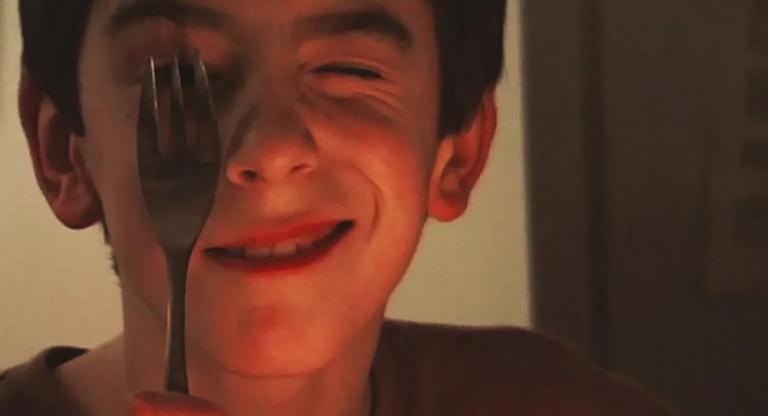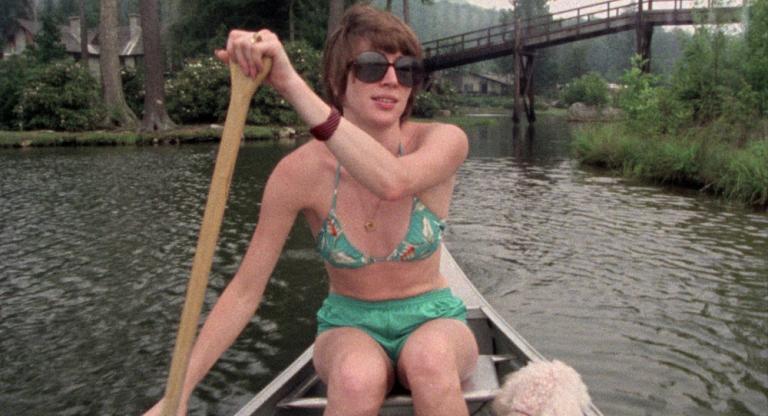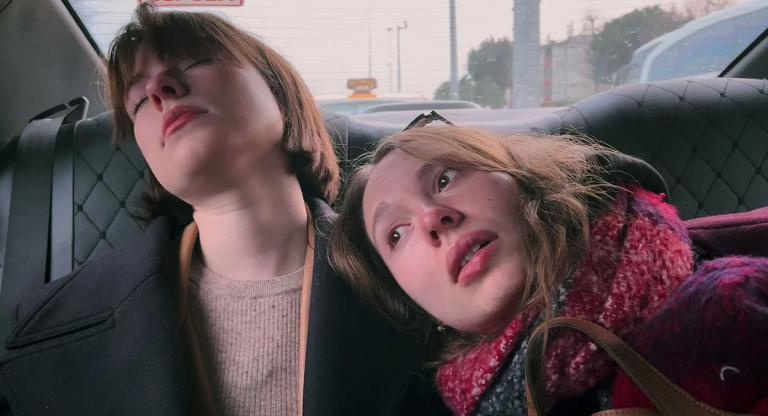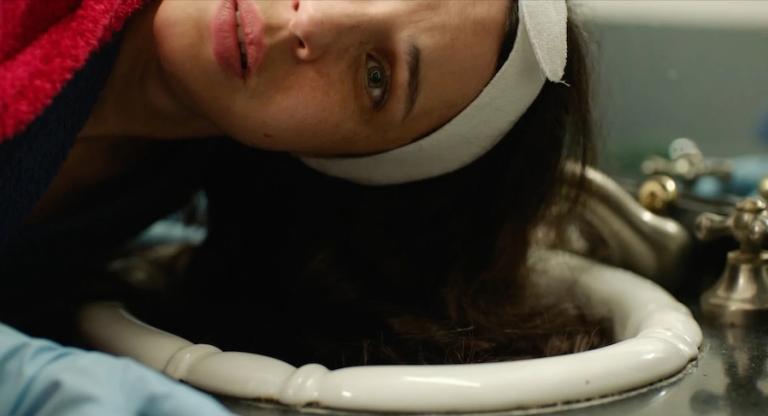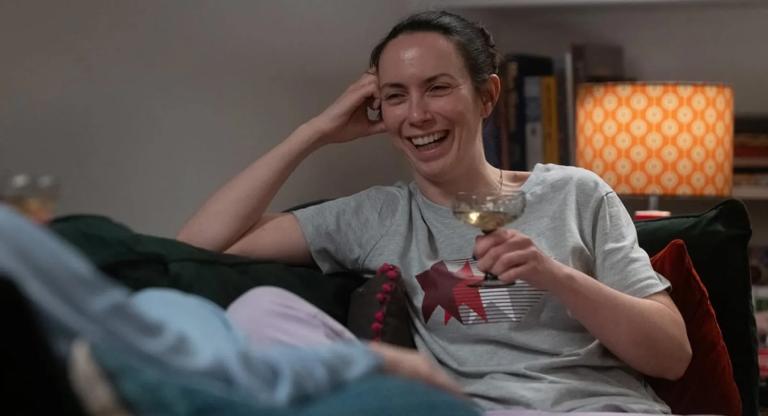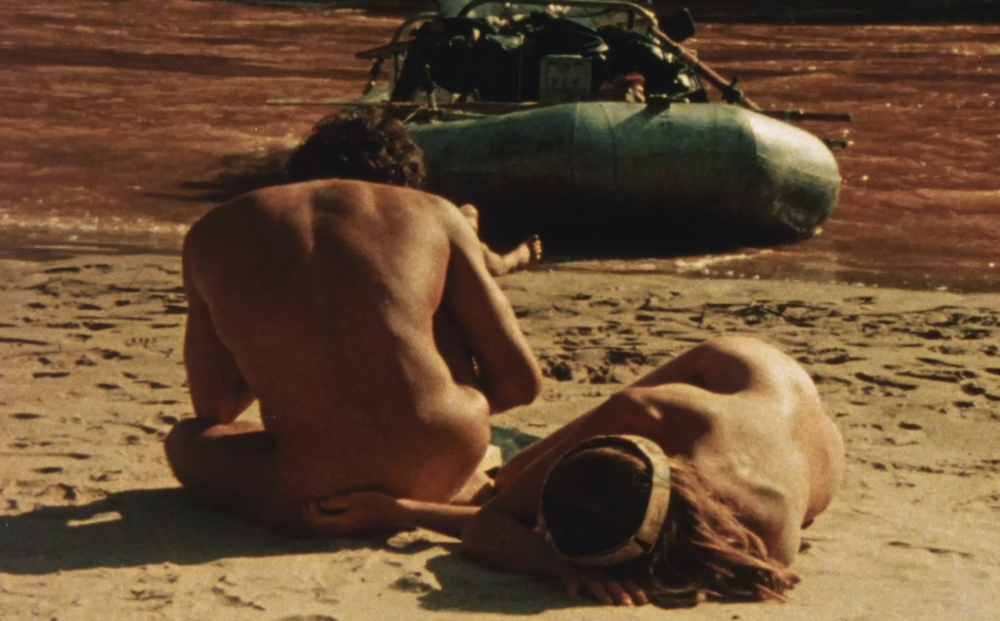
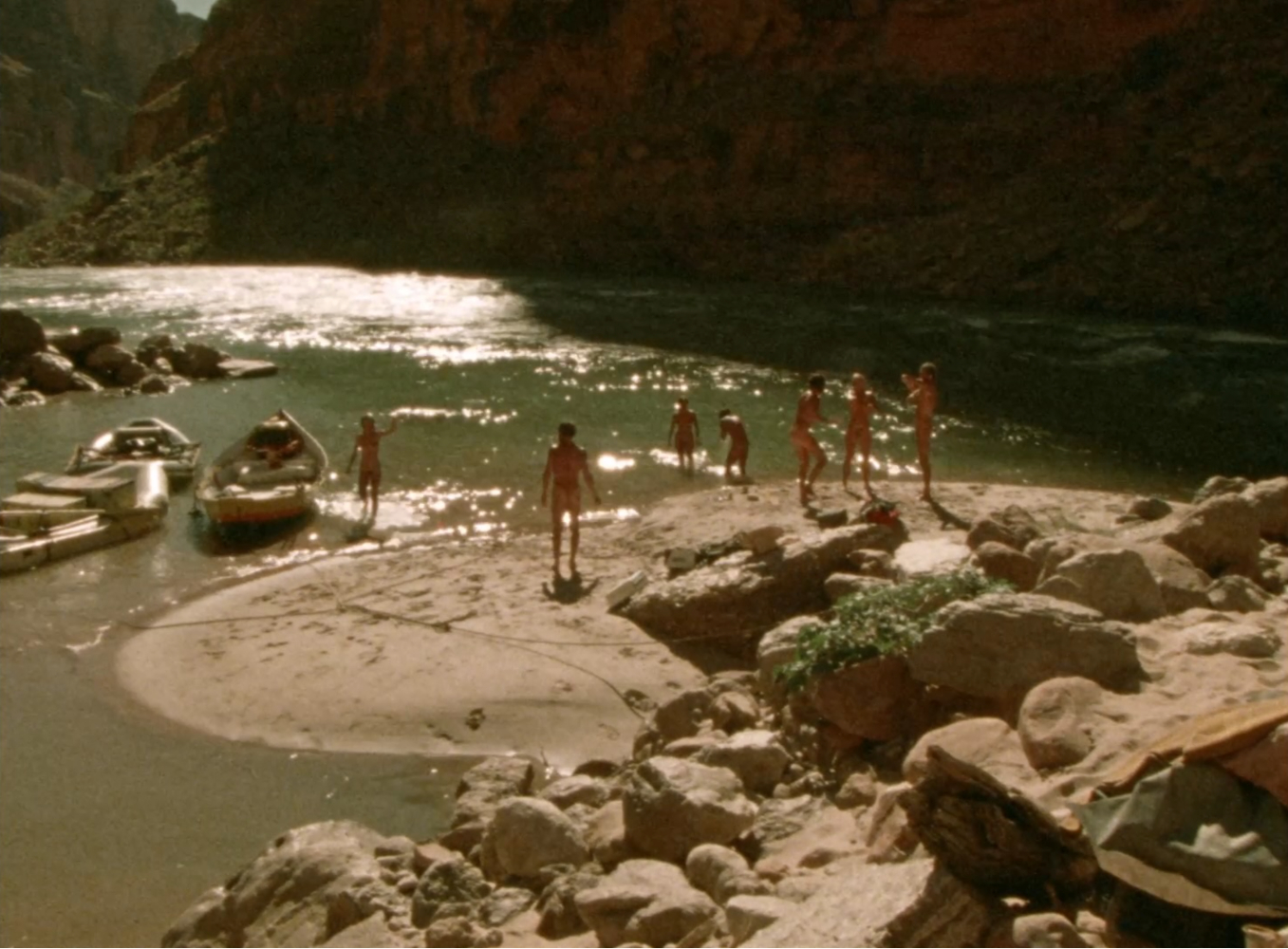
Robb Moss’s Riverdogs (1982) chronicles an idyllic month-long river trip. At peak physical shape, muscular and usually naked, his friends navigate raging rapids against a majestic southwestern canyon backdrop. When Moss revisited the same friends 20 years later to make The Same River Twice (2003), he found them in the more mundane flow of middle-aged American life, dealing with marital issues, health scares, and career challenges. In that film, he decided to intercut the present-day chaos of their lives with the halcyon days of Riverdogs. Now that another two decades have passed, old age has arrived, climate change has taken its toll on the mighty rivers, and the utopia glimpsed in Riverdogs has been usurped by what one of Moss’s friends calls “a post-apocalyptic world,” Moss has made The Bend in the River (2025, pictured at top).
Moss, along with Ross McElwee, studied at MIT with two of the pioneers of the personal documentary, Richard Leacock and Ed Pincus. While McElwee’s films are overtly autobiographical, with his frequent on-camera appearances and narration, Moss is more of a fly on the wall. Yet throughout the trilogy, he often interacts with his friends from behind the camera. And we, the audience, become deeply attached to all of them: Barry, a wry, philosophical mental-health professional; Jeff, an ambitious writer/carpenter/politician; Cathy, who married and later divorced Jeff and became mayor of Ashland, Oregon; Danny, a woman whose exuberance and constant activity create their own fountain of youth; Jim, the eternal hippie who lives off the grid and continues to be a river guide.
The films build on each other, the latter two weaving in flashbacks, yet each of the films work entirely on their own. In a startling self-referential moment in The Bend in the River, Jeff’s campaign for state senate is sabotaged when an opponent attempts to smear him by releasing footage from The Same River Twice in which Jeff admits to cheating on his wife. This Möbius strip sequence is just one example of the intricate tapestry that Moss has created. It is notable that The Bend in the River is being released at almost the same time as Ross McElwee’s Remake. Both films form a pair of wise, brilliantly edited time-hopping meditations that are sure to become milestones of the personal documentary.
David Schwartz: Each of the three films builds on the previous one, yet each works on its own; but, everything springs from the idyllic experience of Riverdogs. How do you see that film in hindsight?
Robb Moss: As you say, each film incorporates the previous one. Riverdogs has no previous film, but it has my five years of not paying rent after college. I ran rivers, went to Africa, studied Spanish in Mexico. I was unwilling to commit myself to anything when I didn't know what I wanted. Then I went to graduate school and decided that I was going to be a filmmaker.
I brought a camera from my new life into my old life to make Riverdogs. That experience taught me how to shoot, which meant that I had a pretty terrible time as a river trip. The trip was eviscerated by the filmmaking. I had to understand that that was the cost of committing myself to this idea of film. I had to remove myself from the thing that was happening and film it as closely as I could.
As for the nudity in Riverdogs—if they're not naked, it's just a camping trip. Once they're not wearing any clothes, suddenly everything is cinematic. It's like they become a form in the way that the landscape is a form. I had to film people and place them in a landscape. The camera couldn't ogle at them. It had to place them in a context and film them in a certain kind of way that didn't exploit them.
DS: How did you feel being behind the camera so much of the time during the trip?
RM: I was passionately committed to trying to evoke what it is that we all loved about being on rivers, but not to talk about it. There's no interviews, no music track. I just filmed as closely as I could this thing that I loved and was leaving. That informed every moment. It made me feel a bit melancholy. Like all river trips, they end. You go down the river, you sleep under the stars, you feel great. You don’t want to be anywhere else, then it’s over. Its temporary-ness was part of the way the film ended up being. I didn't have any idea that another film would follow. I was just struggling to make this film.
DS: Ross McElwee’s Sherman’s March [1986] is out now in re-release, and that film and yours capture a time when the future lies ahead and anything seems possible. Not surprisingly, his new film Remake and your new one, The Bend in the River, feel much more retrospective.
RM: I just did a Q&A with Ross at the Coolidge Corner in Boston, showing Sherman's March. I'm close to that film and close to Ross, but we didn't intend to finish our new films at the same time.
People tend to see the river films from wherever they are in the timeline. So if they're young, like I was when I made Riverdogs, my life was in front of me. To keep the metaphor going, it's like none of us had taken a bite of the apple of our adulthood yet. So if you're young, you see your future in front of you. You look at their naked bodies and go, “I don't wanna not be that, I don't wanna get old.” If you're middle-aged, you see what's in front of you and what was behind you. If you're older, you look back and ask, “What constitutes a life?” That was our job in The Bend in the River, to try to figure out, with all this footage, what did we believe about the relationship of the past to the present?
DS: There’s definitely a sense through The Bend of the River and The Same River Twice that the early experience in Riverdogs is still very much a part of everybody. Jim is the best example because he remained a river guide.
RM: It's like everybody else grew into their middle age or grew into their adulthood and made choices that responded to those changes. Jim didn't. He wanted to have the same life that he'd had, and he has kept repeating that choice over and over again. It’s harder for him at 76, but he's still committed to it.
DS: Riverdogs was filmed in a very concentrated period of time. The Same River Twice and The Bend in the River were each shot over several years.
RM: River Dogs was a 35-day river trip, and that created the temporal boundaries of the film. With The Same River Twice, I wondered if I could do something with that footage and track the movement of what it's like to go from young to middle-aged. I didn't know how long that would take. I knew it had to be long enough for things to happen, and I needed to spend time with my friends and get to know them with the camera.
People agree to be in documentary films for all kinds of reasons. Among them: they have something important to say; they think it's cool to be in a film; or, they like being filmed. But in this case, they agreed because I was their friend and I asked. It was an act of generosity.
I'd show up with this dinky little video camera and film them making peanut butter and jelly sandwiches and they’d joke, “This is going to be a good film.” In middle age things are popping. All the choices you’ve made are like little landmines. You're stepping on them all the way through. It's a busy, active time; you could poke the camera in the middle of that and see a lot of things. Filming people aging [for The Bend in the River] was much more difficult.
DS: Could we talk about the editing of The Bend in the River, which you cut with the brilliant Jeff Malmberg?
RM: In The Bend in the River, while it goes from being young and naked to being in our seventies, any moment in the middle of the film can go forwards or backwards. There's no predicting what direction it's going in. It's not organized in any chronological way. It's not even organized in a way that's leading to a particular conclusion. But each moment references another moment in the ways that our thoughts jump around. Our internal lives are not chronological.
DS: Yeah, I love that about the title. A river goes in one direction, but in The Bend in the River the film does circle around and bend in time.
RM: Yes, it certainly does. There's a lot more biography of people's lives in The Same River Twice, but in The Bend in the River, it's much more difficult to film what they were doing and have that be the scaffolding upon which the film was built. Biography seemed too pointed, too leaden, too one-foot-after-another. The film had to be let loose in time. What I think actually stitches our lives together are these forgotten, intimate moments. So, when Barry tosses the diaper gently onto [his daughter] Teague's belly when she's a baby and it just makes this little thwack sound… It's so beautiful. Completely forgettable. But the camera remembers. We mined the film for such things, which had that feeling of momentary expressiveness. A kind of rendition of how life is pieced together, rather than “they did this” and “they did that.” Nobody has a resume in this film. And, in that sense, it's not an obituary. It's a chronicle of what people's lives look like over time.
DS: As in McElwee’s films, things happen that would seem unreal if they were scripted. I’m thinking of Jeff’s run for state senator, and the way that his admission of adultery in The Same River Twice comes back in The Bend in the River to cause a political scandal. What was that like while it was happening?
RM: I had just arrived at Medford, Oregon from Boston, an hour before that. He picked me up and drove to a location where he was doing canvassing, and meeting people and dropping leaflets off. I had the camera going when he said, “I just got this email.” This kind of filmmaking is always about being at least a beat or two late, because when something interesting happens and you want to turn on the camera, you've missed the beginning of it. So, you're always scrambling. But, in this case, the camera was rolling as he's finding this thing out. And so I have this common documentary conundrum at the moment, which is: it's amazing that this is happening and I'm thinking, “My God.”
DS: Part of you is thinking: “This is great.”
RM: Part of me is going, “This is great.” But if my other film has destroyed Jeff's chances to be elected, I don't want that. I kept filming not knowing, but I felt terrible. I hardly slept that night. The next day Jeff and Cathy [his ex-wife, who is now his campaign manager] got together to talk about it. And then there’s this incredible scene. Somehow, their former marriage is a subtext throughout that conversation. You’re wondering, are they talking about this? Or, are they talking about that? By the end, it seemed to me that they really were solving a political problem rather than litigating a failed marriage.
DS: The Bend in the River addresses the state of the world we're living in now. Do you think about The Bend in the River as a political film?
RM: Let me back up for a second and then come back to the state of the world. Jeff and I struggled with how much you needed to know. Like, did you need to know in watching The Bend in the River that there were these two other films, that the footage you're seeing that's not in the present is from these two other films? We tried to deal with that with text. Should I have been in the film more? Should I have done voiceover to clarify things? Because, it's a really complicated edit to be traveling through time. Films are obsessed with continuity. In fiction films, there's a person on set who does nothing but keep the continuity between one thing and the next. If you're filming people in a documentary and they have long hair, and then they get it all cut off and now they have short hair, you can't intercut the short hair with the long hair. If you violate continuity, then you betray your relationship with the audience and it doesn't quite work. Here, there's no continuity. They're blonde, they have dark hair, they're young, they're old, they're getting bald, they've got lots of hair. I always joked in The Same River Twice that they went from hairy to harried. And then, in the third film, it's just like we're getting old and things are settling down.
The state of the world is ever present and absolutely needs to be recognized, and it's also a third rail because as soon as you do a certain kind of thing, it becomes politicized and suddenly people are choosing sides. Then you've replicated the problem in your movie that lives in society in a way that's not interesting unless you find a way to do it. In The Great Experiment [2026], Stephen Maing and Eric Metzgar do a magnificent job in trying to wade into that problem. How do you look at the world and make sense of it without actually coercing people to choose?
Over the course of making The Bend in the River, I was reading about the death of the Colorado River. I kept thinking that the river is running out of water as we're running out of time. And, that the temporal frame of the river and the human frame of our mortality crosses for a moment. I felt we had to get back on the river, and we took a river trip during the last week of filming. I couldn't finish the film without acknowledging our relationship with this river and our love of it, and just being able to experience the river and then being on it again to have this experience, which is a representation of not being able to stay in the same river twice. It's not the same river and you're not the same person. By the third film, we are very different than we are in the first film. And the river is very different. The river used to have an overwhelming, intense life force in it. You couldn't resist it. You had to figure out how to negotiate it. You had to understand it on its terms, which is some of the great pleasure of being outdoors. You're such a puny speck in it all. So Barry, as we're driving, starts talking about his insight that as polarized people we share the fear that there's a threat to our existence. What we disagree about is what the threat is. But we have the same experience of the world. That seemed a way to draw it in, to not elaborate necessarily, but to put it on the table along with the river running out of water, and that we used to think we were immortal and the river was eternal.
DS: But there is that experience that all of you had early on. Though you can’t recapture the Eden of Riverdogs, there is a better world to work towards.
RM: I read something I wrote about Riverdogs while I was trying to raise money for it, and I placed it politically. We were trying to build the life that we hoped to have. That's what river trips were. There was a kind of political valence. But, because I shot it in this expressive close up, non-narrated style with no titles except for a couple of orienting titles, then you can't control what comes out. If you want it to be about politics, you have to make it about politics. You have to film a clearly political situation. Here, their exuberant naked youth somehow summons the garden and not the world. It's exactly not the world. And what's interesting is now Riverdogs is framed within the world. And, in a way, now has political content. It's a cliche that filmmakers start with an idea, have to abandon that idea, and then finally, when they finish the film, the idea is returned in another form. In this case, it took almost 50 years for it to return.
DS: It aged in such a way that now it is something that it maybe wasn't meant to be in the beginning. I read that you came up with the alternate title, The Naked and the Dead.
RM: Yeah. When I showed The Same River Twice at Sundance, somebody said, “Am I going to make a third one?” And I said, “Maybe.” Then they suggested, The Same River Thrice. And I said, “How about The Naked and the Dead?” I thought about actually using that for The Bend in the River, but it's much funnier to say it out loud than to actually brand the film with that. As Barry said, at some point, it'll no longer be funny, that joke.
The Bend in the River runs from August 14-20 at Film Forum. Riverdogs and The Tourist screen tomorrow, August 15, at Metrograph. Moss will be in attendance for Q&As at both theaters.
See Also