A master and pioneer of home movie epics, Ross McElwee makes films that are at once simple, intimate, and infinitely complex. While often starting with the anecdotal—a mundane thought or simple life event—his films have a tendency to digress infinitely through dry comedic musings that quickly veer into the metaphysical and meta-cinematic.
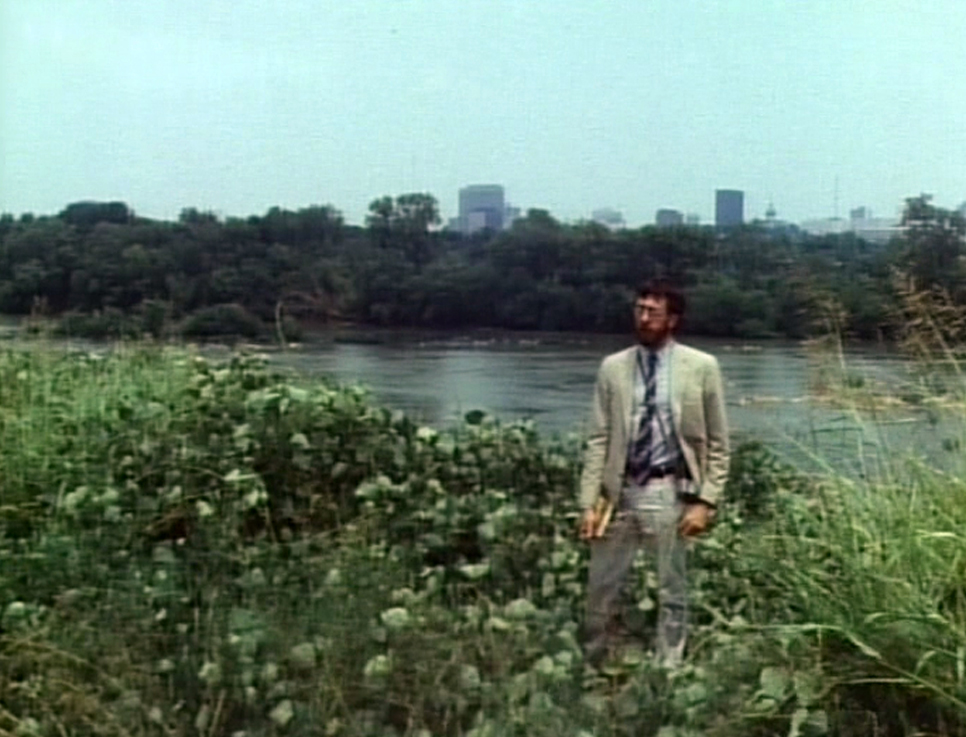
His latest, Remake (2025), begins with a chance offer from a Hollywood filmmaker to develop a fictionalized version of McElwee’s breakthrough film, Sherman’s March (1985), but spins into a deeply affecting portrait of grief as McElwee grapples with his son, Adrian’s, addiction issues and eventual overdose. At once a letter to his son, a lament on his own failings as a father, an active gesture of grieving, and a portrait of the artist as an old man, Remake is a film that carries a lot on its shoulders and packs a commensurate emotional punch.
Ahead of the New York premiere of Remake, as well as a visit by McElwee to Spectacle (where I volunteer), I talked with him about the film and its emotional potency.
Joshua Bogatin: The opening stretches of Remake focus on a potential fictional remake of Sherman’s March. Your work has focused so heavily on capturing life through non-fiction, do you feel like the idea of fictionalizing your life is antithetical to your approach to cinema?
Ross McElwee: Of course. Just about all I've done in my life is make these autobiographical documentary essay films. I think there's something very antithetical about somebody wanting to do a fictional version, but I was deeply fascinated by it in the beginning. I love fiction films. I see probably more fiction films than I do documentaries. It’s something nobody had ever proposed for one of my films. I was thinking if it worked out, it would be great because then you'll have the original and the fictional version, so I was very much willing to go along for the ride, but I also wasn't sure how they could improve upon the effectiveness of the documentary.
The process is antithetical even if the result might not seem antithetical to someone watching it. I never do retakes of anything when I film. I don’t do pre-filming investigations. I don’t go to locations and think about how to film in advance. I don’t interview the people I film beforehand. If you're making a fiction film, you're heavily reliant on all of those things. I don't do those, for better or for worse, because it also means that you waste a lot of time as a documentarian when nothing interesting is happening and you’re just waiting. On the other hand, when something does unfold and you're fortunate enough to capture it on camera, I think audiences can tell the difference. I've always used that as a prime component in my films. I look for what was unexpected. I’m capturing what’s happening in real time, moment by moment, with the filmmaker there. That’s the antithesis of the way fiction films are usually made.
John Cassavetes was someone who used the moment to extemporize with his actors, so I guess you could say his films are fictionalized to a degree, but they're also heavily dependent upon what happens in the moment. Plenty of people made films like that. Jean-Luc Godard does a lot of improv on the scene and yet his films are structured and have a predetermined timeline that the narrative adheres to.
JB: When you started filming Remake there was obviously no way you could have conceived of what the ultimate subject of the film would be because it grew to revolve around a family tragedy. Can you talk about the process of how the film developed?
RM: I thought, in the grand scheme of things, what I was making a film about was the fact that I was totally single and divorced at an age where you don't particularly want to be single—your 60s. What does it mean to be single then compared to where I was when I was making Sherman’s March? I didn’t know what would come out of that, but it was something interesting.
A lot of it would be about time passing and how things change over time. How I have changed over time. I also think mortality began to become a theme that I would directly address during the course of the making of the film. I also insisted that there be humor in it because without humor it would be unbearable to watch a 60-year-old guy wandering around with no one to love. Kind of pathetic. [Laughs]. Then, of course, it did turn out to be about mortality, but not my mortality, my son’s—which was a place you never want to be in as a parent.
JB: When Adrian’s death became part of the film, how did your process of making a film work alongside the grieving process? Was filmmaking a necessary part of grieving for you?
RM: It was definitely part of the process of grieving, but I'm still interpreting what that means. At first I couldn't conceive of making a film that had anything to do with this. It seemed too fraught. I couldn't even begin to look at the home movies that I shot. It took me a year before I could go back to the editing console and look at the clips and moments I had filmed of my son. Instead, I started writing because I thought that could be one way to confront the fact of his death. Even that was hard to do, but at least it was a step removed from actually seeing him all the time. That was going to be the hard part.
What I did was interesting. I hired a former editing assistant to go through the films in which my son had appeared and choose just 1 or 2 frame-grabs that she felt represented something about the film and his presence in it. Then I would write chapters based upon that particular film and that frame-grab. It sustained him visually in a frozen picture. It broke the ice for me and helped me turn a corner so I could begin to think about if there really was a way for me to make a documentary which seemed both honest and somehow cherishable. Not perishable, but cherishable in terms of my relationship with my son. I hope that Remake does that. I’m not sure.
JB: You give a lot of time to Adrian’s footage in the film and there are even a few moments where he takes the camera from you. Why was it important for you to include his perspective as a filmmaker and narrator?
RM: I can't imagine not having it in the film, especially because I had this gift, if you can call it that, of his own footage showing his own life. There are some very beautiful passages that he filmed, which were very positive about what you can do with your life. Primarily skiing. I thought his skiing footage, where he goes off on a trail on his own with a GoPro, was just beautiful. He was also very curious about nightlife in Boulder, Colorado, where he had moved, and had a lot of footage of what was happening on the streets. I thought there was something quite wonderful about that. Then, of course, there’s his downward spiral as he got more and more involved with drugs. He did film, kind of ruthlessly, himself and his own addiction. It was very hard for me to use that, but I thought it was necessary to put it into the film because he had filmed it and I wanted his version of what was happening in his life at that time to be part of the film.
I think what might be interesting about the film is that there are two timelines represented in the last part of the film. One is the timeline of my life. After he had gone to Colorado he wasn’t there for me to film, so I was filming other things: meetings, brain surgery, the fact that nothing is happening with the Sherman’s March remake. At that same time, Adrian’s got a similar archive of footage that shows a very different perspective on life. There’s something about the way the two of those things blend together, as radically different as they are, that I thought was meaningful and important for me to try to work with.
JB: In the opening of the film you say, “I used to call myself a filmmaker.” Do you still feel that you’re not a filmmaker, even as Remake is getting screened? And why did you feel a need to announce that at the opening of the film?
RM: That opening has a latent irony in it. If you don't call yourself a filmmaker, what are we looking at here? Of course, at the moment, you're looking at an animation and you don’t even know what that animation is—you only find out later. Still, it's clearly part of a film that has my name on it. It was something that just popped into my head as I was thinking about the film and making notes about it. I think the first time I remember having that thought was when I was feeling really depressed by Covid and not being able to go out to film anything. So I made that comment to myself about how I used to call myself a filmmaker. That thought, of course, began to have a much longer gestation than I thought it would and took on all of the meaning that it has now. But it was just something that popped into my mind and then seemed like the way to begin. What did you think of it as a way to begin the film?
JB: I was intrigued by the sense of doubt and self-criticality it evokes. It sets us up well for how you revisit and reevaluate your whole career in Remake, but it also gives the film a sense of futility. Reflecting on it after the movie ended, it made me think that perhaps film, memory, and the way film interacts with memory are somewhat doomed. You can have all these records of the past, but they don’t change the past and eventually they also disappear.
RM: Well, that's a fundamental part of living isn’t it? Everything will disappear. In 60 years people won't even remember my name, but for now this is something I feel like I've got to do. There's something elegantly futile about the process of doing anything in art. If you're writing or painting, you're not really thinking about where it’s going to go or who's going to care at all about it in 20 or 100 years. The answer is nobody. Probably. But that doesn't mean you don't do it. [At Spectacle] you're showing films every night, some of whom are by people I assume don’t feel like they’re making their films to become immortal. They make them because it brings them some pleasure and joy.
JB: That’s the source of one of the ironies of the film and its relationship to mortality. Documenting something comes from a desire to escape mortality, like André Bazin suggested with his idea of cinema as embalmment. You film a moment so that it doesn’t completely disappear, but in your film you also seem to fully know and express that it’s a futile endeavor. It gives your films a sense of inherent absurdity.
RM: But you can say that about anything in life. Why have children? They’ll die at some point. I keep a journal and years ago I wrote about going into Adrian’s bedroom one night while he was sleeping and becoming overwhelmed with the fact that he’s going to die. I wrote that I’ll be gone by then, so it wouldn’t directly affect me, but I remember feeling this weird sadness about that fact. He was a baby and here I was walking away from his crib feeling this incredible depression about the fact that he wouldn’t live forever. It was an obvious thing that really got to me. Why does this beautiful thing have to die? This creature? I never, of course, dreamt that I would outlive him, but I did.
JB: In one of the last scenes of the movie Charleen Swansea points to your camera and calls it a “really ugly thing.” I was wondering to what extent you agree with that sentiment? Do you hate the process in some way?
RM: How could I disagree? Cameras are really ugly pieces of equipment. It's large, it's often black, and it's being shoved into somebody's face. Charleen had a wonderful sense of humor about it and we used the camera as a way to create wonderful moments on film between the two of us. But yes, it's an obstacle to being in the moment with somebody. Part of the irony in a lot of my films has to do with the acknowledged absurdity of trying to forge a conversation or an emotional relationship with somebody who has to deal with the fact that there's a camera on your shoulder. iPhones have mitigated that to some degree. People have gotten very used to these little rectangles being held up, but it’s the same principle. The equipment is ugly no matter how you look at it.
JB: But do you think filmmaking itself is ugly? Have you grown disillusioned at all with the medium and your obsession with documenting life?
RM: No. I mean, anything I would say about it would be obvious, but it totally depends upon why the filmmakers are making a film, especially with documentary. There are films about social justice problems that do that a lot and I think it’s for the good. How could I not think that? I think filmmakers making those kinds of movies have to put aside that this is kind of an abusive way to tell somebody’s story because it's going to be for the good in the long run.
JB: Are you still making films these days even if you maybe don't call yourself a filmmaker anymore?
RM: No, I'm not. I'm not sure I could ever make another film. That's my personal take on having gotten this far. I'm not sure there needs to be another film. This might be a good way to bid adieu to the notion of filmmaking. It’s a sad way to say goodbye, but on the other hand I just have no time to actually work on a film at this time. I’m in the scramble of going around and screening Remake, which I enjoy doing.
JB: Why do you feel unsure if you could make another film?
RM: A part of it is just my age and my decrepitude, that’s beginning to settle in. Of course, the cameras are getting lighter and lighter and more and more automatic, so it's almost as if somebody is trying to keep me in the game longer. Also, isn’t it just enough? Is enough, enough? Maybe you just have to let it go and try to enjoy what's left of life. But the people were important to me. I probably won’t end up doing that, it’s too tempting to pick up the camera and start shooting. I’ll do something different. I don't know what it will be.
Remake screens this evening, March 10, at the Museum of Modern Art as part of the series “Doc Fortnight 2026: MoMA’s Festival of International Nonfiction Film and Media.” McElwee will be in attendance for a Q&A. At Spectacle, McElwee will be in attendance for showings of Time Indefinite and Bright Leaves.