Nicholas Ray's final studio film is a fascinating specimen made during one of cinema's great seismic shifts. Produced roughly 10 years after the Paramount Decree but before the Golden Age studio system completely imploded, taking the censorious Production Code down with it, Party Girl is both the result of the ‘50s post-television format mania—Cinerama, 3D, and all manner of widescreen lensing—and the prologue to the ascension of the French New Wave, though those avenging upstarts have a hand in its legacy. Metro-Goldwyn-Mayer hired Ray to direct the picture that would finish off the tenure of two of the studio's last contract stars: ballerina-turned-leading-lady Cyd Charisse (born Tula Ellice Finklea) and one-time heartthrob Robert Taylor (nearing his 24th year at the studio).
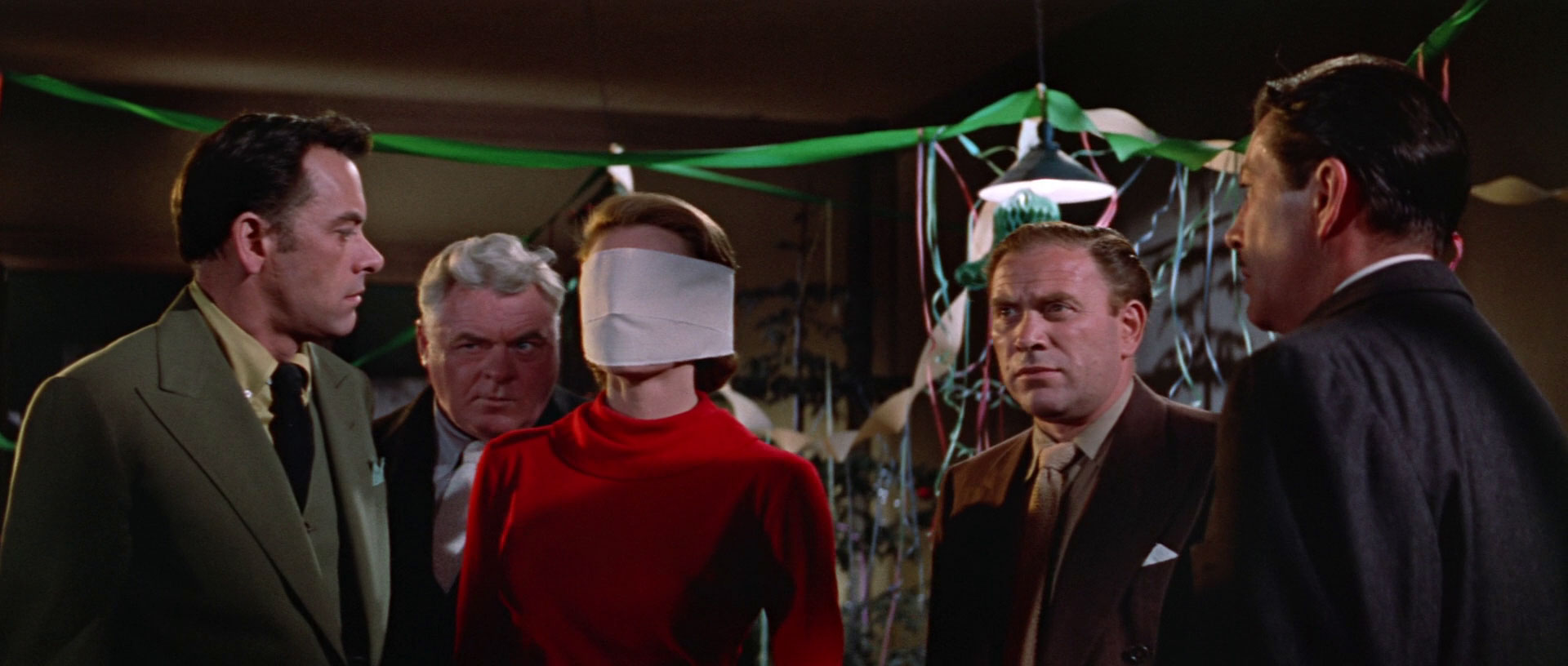
Not quite a noir and certainly not a musical, Party Girl integrates elements of both while hewing to an archetypal Ray saga of romance on the fringes of society. Set in Prohibition-era Chicago but looking every inch like a backlot production (not a knock), the film follows Charisse as the titular “party girl,” an Oklahoma-born chorine who performs at the Golden Rooster's Winter Follies and winds up embroiled with the mercurial, movie-mad mobster who runs the club: Rico Angelo (a perfectly cast Lee Cobb), who is introduced brooding over Jean Harlow's marriage and eventually shooting up a framed portrait of the platinum blonde. Though Charisse is aggressively pursued by one of Angelo's slimiest henchmen (John Ireland), she finds herself improbably falling for the crime boss's lawyer (the thinly mustached, limping Taylor). Bookended by delirious yet stark dance numbers from Charisse (which Ray allegedly was not permitted to direct per MGM policy), Party Girl is land-mined with sudden bursts of violence. Early on, a purported suicide is rendered with a painterly composition that evokes Jacques-Louis David's The Death of Marat (1793). An after-hours gangster soirée hosted by Angelo turns bloody as a miniature pool cue is brandished violently (nearly 30 years before Brian De Palma's The Untouchables staged a similar blowout), and the film climaxes with an all-out gang war, Tommy guns blazing. Even Taylor's explanation of how he wound up with a damaged leg is gruesome.
Ray may have been at the mercy of the suits when making Party Girl, but his signature flourishes are everywhere, from the evocative use of color (hues of red take different forms from scene to scene, whether as a form-fitting dress, dazzling pieces of furniture, or, as already mentioned, spilled plasma) to its mastery of the Scope frame and, ultimately, its combination of fatalism and mad love. Panned by American critics, the film was lionized by the majority of the Cahiers du cinéma crowd, perhaps most famously by Fereydoun Hoveyda, who penned a 14-page panegyric that boasted, “If people insist on thinking that Party Girl is rubbish, then I proclaim, ‘Long live this rubbish which so dazzles my eyes, fascinates my heart and gives me a glimpse of the kingdom of heaven.’”
Party Girl screens this evening, August 2, at the Roxy on 35mm as part of the series “Rebel: The Cinema of Nicholas Ray.”