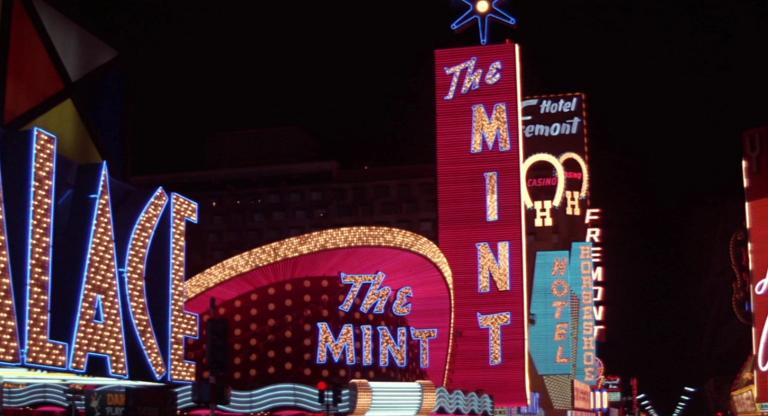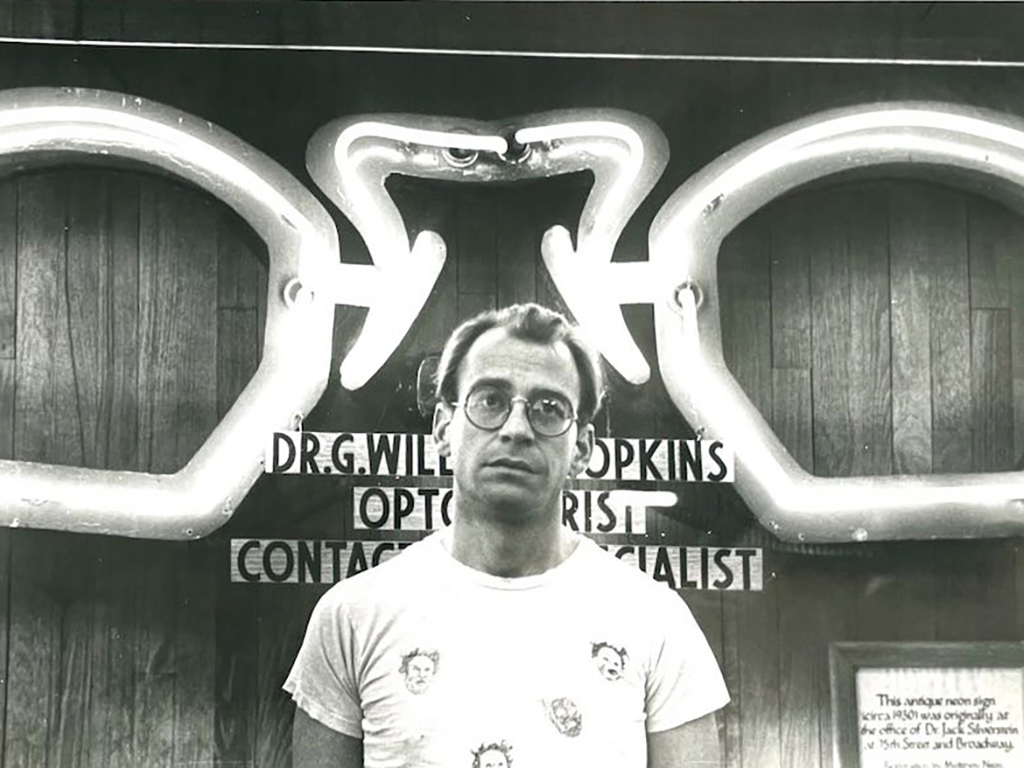
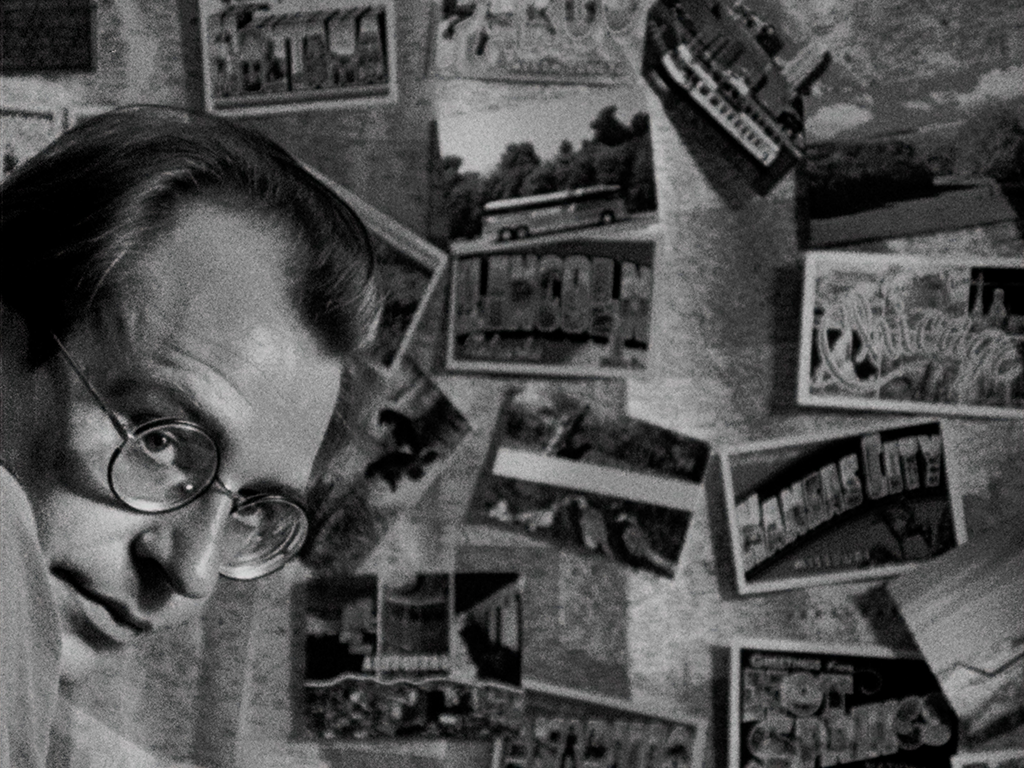
Resurfacing like a relic in its grainy black-and-white splendor, Philip Hartman’s noir-flavored picaresque No Picnic (1987) takes place in a pre-gentrified East Village. Watching it now evokes a certain nostalgia for jukeboxes, cigarette machines, the St. Mark’s Cinema, the Atlas Barber School, and Bleecker Bob’s Records. Some of the neighborhood’s iconic locations remain, many are gone, but what the film most vividly conjures is the low-rent bohemianism that was available to anyone who could score a tenement apartment with an exposed bathtub in its cramped kitchen back in the ‘80s.
Hartman, a Long-Island born cinephile who studied at Princeton and then escaped to Bard College, moved to the Lower East Side after a failed attempt to become a Hollywood screenwriter. He also co-founded The Great Jones Cafe, which quickly became a neighborhood institution. With the model of ultra-low budget films such as Stranger Than Paradise (1984), Chan is Missing (1982), and Last Night at the Alamo (1983) having some theatrical success, Hartman took some Great Jones earnings, and with support from Wim Wenders’s Union Square-based production company Gray City, made his first, and to date, only film.
Like The Great Jones Cafe itself, No Picnic was a community affair. It has more characters than a Robert Altman film and a ramshackle story line built around Macabee Cohn, a former punk musician and present-day jukebox warrior who is played with an ineffable blend of hardboiled toughness and slacker charm by David Brisbin. But, the film’s real star might be its cinematographer, the late filmmaker Peter Hutton, who is best known for his own experimental films, meditative, and exquisite studies of cities and landscapes.
Urban grunge has never looked as good as in No Picnic. The film earned Hutton Sundance’s first-ever cinematography award and No Picnic opened theatrically at Anthology Film Archives in the summer of 1990. In The Village Voice, Manhola Dargis wrote that it was “a valentine to a neighborhood under siege by realtors and galleries…. a swan song to a languishing New York tribe.”
I talked to Hartman just before the new restoration of his film opened at Film Forum for a limited run.
Philip Hartman: I just got a text from an old friend who I had a historic first trip to the East Village with way, way back. We went to a triple bill at the St. Mark's Cinema when it was $1.50 for three films. We remember it was Putney Swope [1969] and Gimme Shelter [1970], but we can't remember the name of the third film. We've been trying to remember for 30 years.
David Schwartz: Three films for $1.50!
PH: Sticky floor for free. Gray City Films, Wim Wenders’s company, wanted to buy the theater and open No Picnic there. It was for sale.
DS: Speaking of theaters, when you were at Princeton, you started a film society and were the film critic for the college paper.
PH: I was shocked when I got to Princeton that there was no film society. I thought that was such an integral part of every college. So, in my sophomore year, I started one. We showed The Exterminating Angel [1962] as our first film. The film was in the trunk of a car and the lock broke. I had to take the backseat of the car out to retrieve the print. Anyway, it became the biggest organization on the campus. We had 800 members by the time I graduated. My first review for the paper was Mean Streets [1973], which was a good way to start. Then, I went to Bard because Princeton had no filmmaking. I wanted to go to the place least like Princeton in America, so I went to Bard. That was great. I studied with Adolfas Mekas.
DS: It’s funny you mentioned Mean Streets, because I was thinking of that film a lot while watching No Picnic. In a way, it does what Mean Streets does and just captures the people, the sounds, what was in the air. You do for the East Village what Scorsese did for Little Italy.
PH: When I see No Picnic now, I think a lot about Andy Aaron. He was our sound guy. Super advanced, a real artist. He added so much texture to the soundtrack. I hear it now when I see the film, I hear bottles rolling in the street and a distant carnival in the 4th of July parade scene. You're hearing it because he really did a fantastic job.
DS: When you made the film, there was not much of an independent film scene.
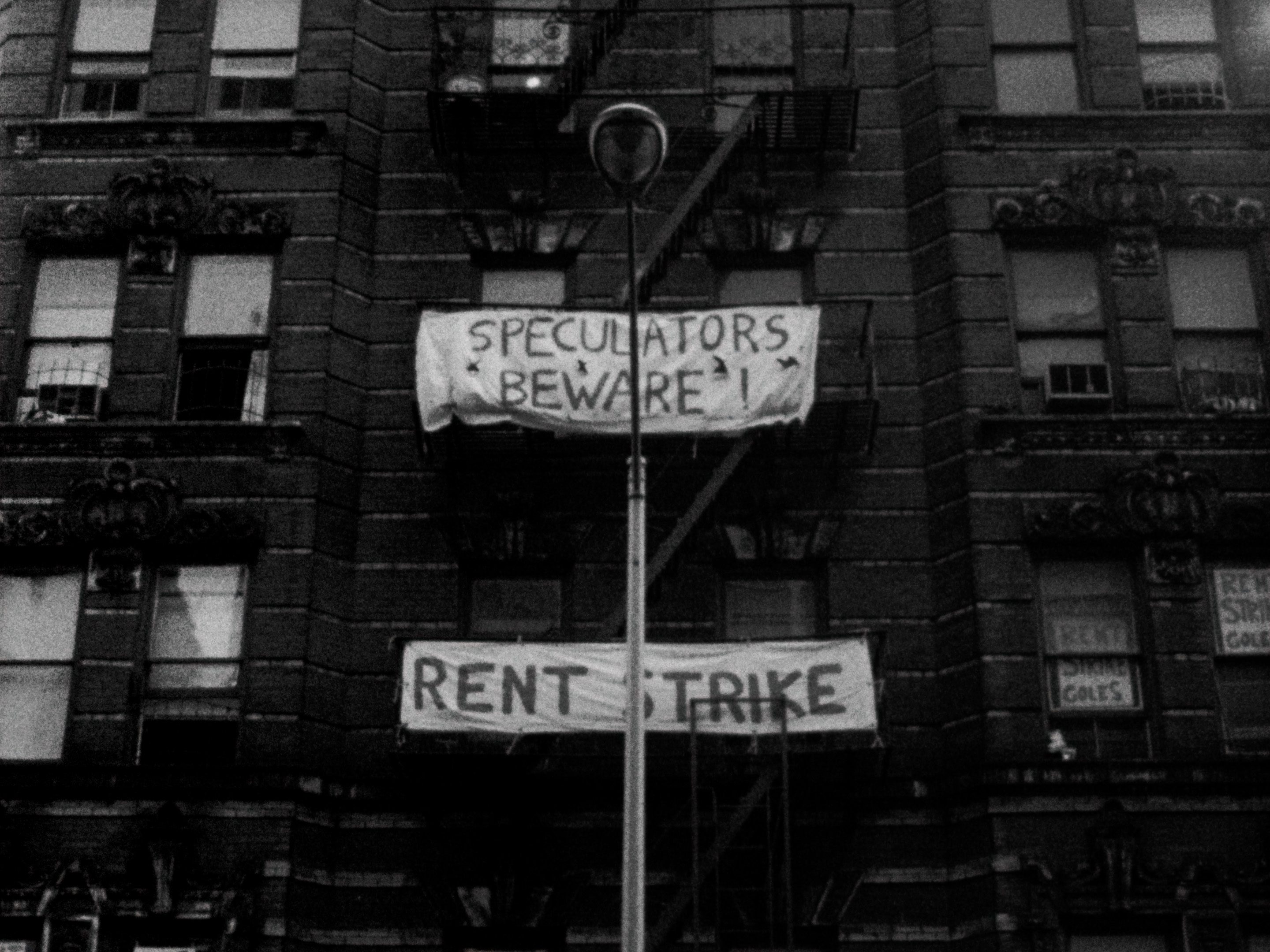
PH: That's right. When I graduated, I was writing for Warner Bros. I was a screenwriter, not a filmmaker. That first shot in No Picnic, which starts on the building with all the rent strike banners and then pans down to a side-view car mirror with a guy’s face in the mirror, was literally the first shot in my life. And, it was by a cameraman who never wanted to move the camera. The difficulty level was very high but we pulled it off.
We had Chris Sievernich, who was Wim Wenders’s producer. And, we worked with Wim’s editor, which was a phenomenal experience. But this was a real first film. I had never worked with actors and I was concerned about that, which is why there’s so much voiceover. I thought, at least if I don’t get the performances I want, I'll have the voiceover to play with.
DS: Jean-Luc Godard said about the Lumière Brothers something like grammar is invented by the illiterate, meaning that the people who don't have any experience and have to kind of invent their own language make the breakthroughs.
PH: Well, you know, it was fun also because Peter had never worked with actors either.
DS: How did you find Peter Hutton and get him to shoot this?
PH: Doris [Kornish], my partner at the time, had started the theater Films Charas. You're familiar with that?
DS: Yes! That’s where I saw the premiere of Todd Haynes’s Superstar [1987].
PH: I think we also had the premiere of Spike Lee’s Joe’s Bed-Stuy Barbershop: We Cut Heads [1983]. The theater had schedules that they printed, maybe twice a year. I saw an image on one of them, the size of a postage stamp, an industrial landscape, black-and-white smokestacks. I saw it and said to Doris, that’s who I want to shoot my film. I tracked down Peter and we really bonded. I don't think he was pining to shoot a feature with somebody, but we just got along and he got excited about the idea. We went around the Lower East Side together with his Bolex and shot some test rolls. Then, it all came together.
DS: With the narration and visual style, the film has a noir flavor.
PH: Well, the first film I sold to Warner Brothers was called Bleeding Heat. It was a punk rock detective story. It was loosely based on bands like Talking Heads and Television. Warner Bros. optioned it. At our first meeting, they said, “We love it. We think that Fleetwood Mac or the Doobie Brothers would be great as the leads.” I said, “This is not going to work.” I earned a living for a few years selling scripts, but it was very frustrating. None of them got made. They liked having what they called a house weirdo on the staff who they could point to as like, you know, this is our exotic guy.
So, I decided to help my best friend from high school open a restaurant. We took this abandoned bar near Scorsese's block. It was the Great Jones Cafe; I made a good chunk of money there. That’s how the movie got made. It was super successful. My friend bought a house in the Hamptons. I took my money and made an indie film. I had enough money to shoot it, but not for post-production. We were accepted for Sundance, and around that time, a guy came into Great Jones and asked if we could help open another restaurant. So we said, yeah, give us $25,000 and a piece of the restaurant, and we’ll give you six months on it. We created Two Boots for him.
DS: That worked out.
PH: Yeah, I got the money to finish the film and we won best cinematography at Sundance.
DS: This was Sundance before it was Sundance. Sara Driver’s Sleepwalk was in your year and Lizzie Borden’s Working Girls. This was before indie features were a big commercial thing.
PH: Exactly! The short film that opened for us was called Bingo Inferno [1987]. It was as funny as hell, by David O. Russell. Wim’s company was going to distribute our film, but the company was discontinued.
DS: There was a three-year gap before it opened theatrically at Anthology Film Archives.
PH: It was the biggest-grossing film in Anthology history. They haven’t had a lot of blockbusters [laughs] but this did run for six weeks, which was amazing.
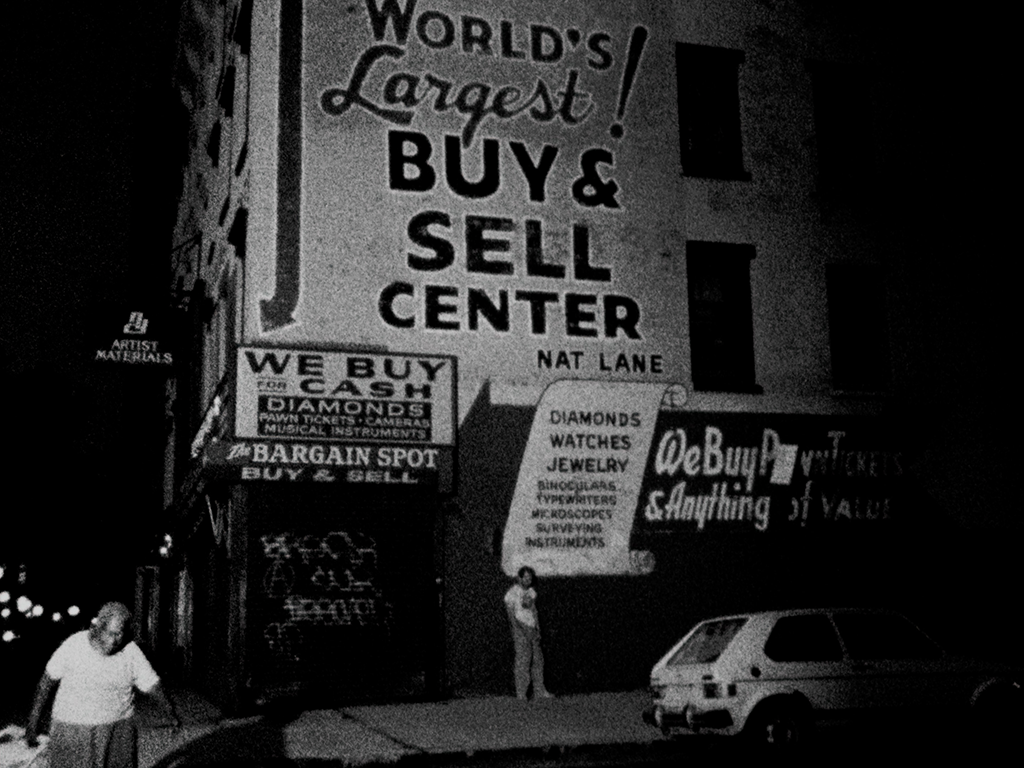
DS: One of the key lines in the film is, “The more things change, the more they change.” It’s so interesting what the passage of time does to the film. I know you didn’t make it intending it to be a time capsule.
PH: It's crazy. It's also crazy that so long ago, we were so concerned about the neighborhood changing, because people now complain about change in the East Village and this movie was made more than 40 years ago.
New York is all about change. Sometimes I'll hear a young person complain about the change and I’ll say, “Move to Vienna if you want to live somewhere that doesn't change.” Obviously there's good change and less good change. I feel like what makes New York tick is the energy that new people bring to it. Not the people who have been here forever, but every year there's another 10,000 or so young people who come and they bring their ambition, they bring their energy. And 9,500 of them are not going to last here. They'll go back to their hometowns. But while they're here, they bring so much energy. That to me is the engine for what makes New York great. So, I always try to stay open to change and to the energy that new people bring. The cutting edge scene obviously is not in the East Village anymore, but the East Village spirit still exists. It might be in Ridgewood or Gowanus. It moves around.
DS: It’s there in the Lower East Side now.
PH: Yeah, my daughter is raising my granddaughter a block from where she grew up. I raised three kids on Clinton and East Broadway, right where the Jewish, Spanish, and Chinese communities meet. She loves it down there. It’s still pretty rough where she lives. Anyway, my answer is the East Village is more than a physical place, even though I love the physical place. I love the old tenements. I love the cornices on the fifth floor. But the East Village is more a state of mind. I live in Brooklyn now, but I'm still an East Villager.
DS: It was unique for a feature film to go out and capture the energy of the whole community, and all those places that you filmed. There really was a sense that you were getting that whole community on film.
PH: Well, some of the best things in the film were just grabbed. I mean, that whole Spanish carnival scene, to me that makes the movie, it gives it ballast and we just caught it. We're so lucky. Even the little kid on the tricycle with the sparkler…
DS: And, you filmed that scene at Shea Stadium. You captured the Mets at a very specific time. It was like a party going to see them then.
PH: Yeah, that was 1985. They were on the cusp. It was super fun. Dwight Gooden was going through the roof. It’s insane what we captured in that shot at Shea. It has Pete Rose from the Reds, one of the most famous players ever. And right next to him is Keith Hernandez, who's like an all-time great character. And then George Foster, who's also a great player at the time. To catch those three in one shot, just crazy.
DS: That’s what the whole film feels like. You watch the movie and see all those great places in the East Village. Some of them are still there, some aren’t.
PH: I'm so glad we got Adam Purple's garden, because I was reading up on it the other day. It was torn down just like six months after we shot for low-income housing. And, he turned out to be kind of a problematic character, but his garden was amazing.
DS: Your lead actor, David Brisbin, is interesting, sort of low-key and hard-boiled. He has an artist’s spirit, but his art form is keeping good music in the jukeboxes, which I guess is drawn from your own life.
PH: Yeah, I had a very famous jukebox at Great Jones and then jukeboxes at several Two Boots locations, so I accumulated quite a collection of 45s. I just became obsessed with the boxes and the mechanics of them and filling out the slips.
I knew David from Great Jones. I actually wrote this part for him. People refer to his performance as deadpan, which I think is pretty good. But, there's something also very tender about it. He did a lot of work with Mabou Mines. There's a bunch of Mabou Mines people in the film. And, he sings that Spanish lullaby. That was him, in the spur of the moment, like the scene in the boat with him and Luis Guzmán, there's just something very magical about it to me. Even that shot of the Twin Towers, I have no idea why we shot it or included it. It was almost like we knew something. Of course, Luis’s career trajectory was unexpected by us, but not by him. He was super ambitious and confident.
DS: What is it like bringing the film out today?
PH: There aren't that many 40-year-old films to get re-released. So, I feel really lucky. I probably appreciate it in a way that maybe I wouldn't if it was 30 years ago, 20 years ago. And, I love working with The Film Desk. I feel really honored to be part of their roster. But the biggest thing is that I hope it gives me the opportunity to make another film. That's my hope, to take a break from the pizza for a little while.
No Picnic screens Thursday, May 14 at the Roxie, with director Phil Hartman in person.
Previously:
No Picnic runs from April 17-23 at Film Forum. Director Philip Hartman will be in attendance for a series of introductions and Q&As on April 17, 19, and 23.