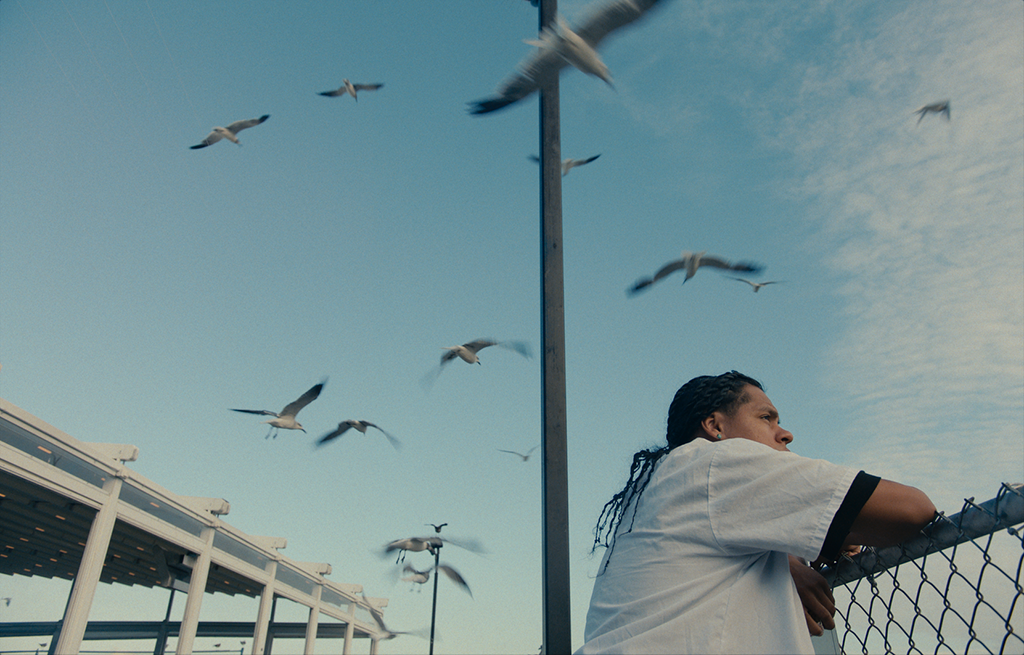
An occasion rarer than it ought to be, a new New York movie is a reason for celebration—and doubly so when it arrives bearing the stamp of a new cinematic voice. Joel Alfonso Vargas’s debut feature, Mad Bills to Pay (or Destiny, dile que no soy malo) (2025), is a clarifying, sun-dazed study of what happens when youth is pressed too quickly into adulthood.
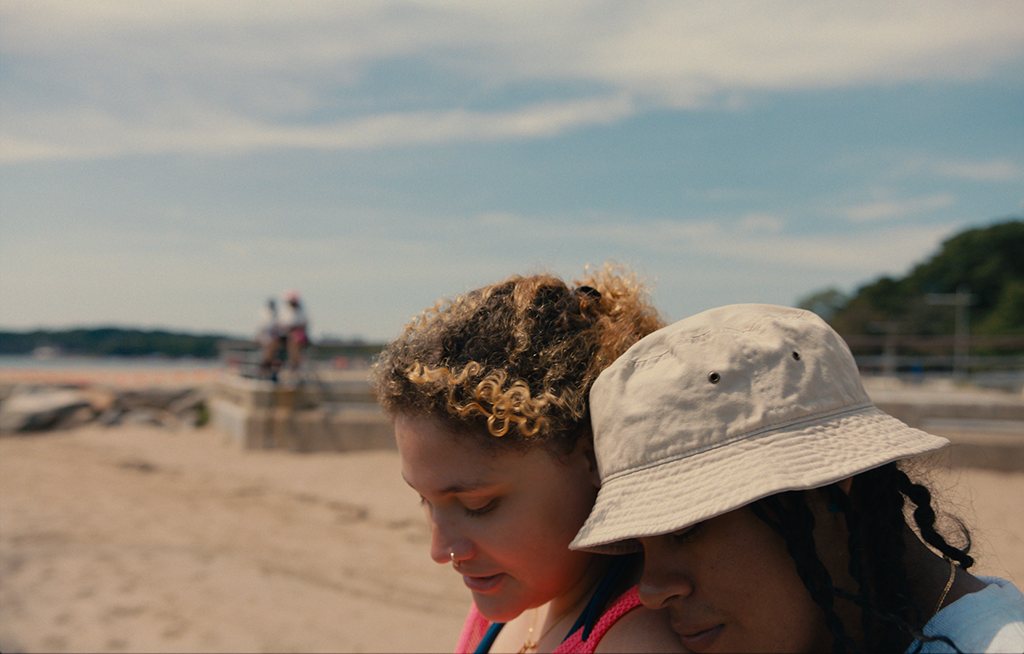
Set within Bronx’s Dominican community, the film follows Rico (Juan Collado), a young man who sells nutcrackers (bootleg neon cocktails christened with names like Kirby Punch and Lemonhead Pikachu) on the man-made shores of Orchard Beach. Those in the know will instantly recognize sites in Pelham Bay and City Island, like fried-clamshack Johnny’s Reef, where Rico briefly cleans bathrooms. The soon-to-be father’s already precarious rhythms are interrupted when his pregnant 16-year-old girlfriend, Destiny (Destiny Checo), moves into the apartment he shares with his hardworking mother (Yohanna Florentino) and his younger sister, Sally (Nathaly Navarro). Unfolding in bursts of domestic uproars and suspended stillness, the film is one of thunderous squabbles in close rooms, of humid summers, of dreams that may amount to nothing more than a passing breeze.
Rico, brought to life with impeccable, volatile charm by Collado, is an amalgamation of people Vargas grew up with. And, through the character, the film offers a shaded critique of masculine values. Rico is as magnetic and sympathetic as he is dazzlingly immature and over-confident (he plans to name his future son—and he’s convinced it’s a son—Riley, after the Boondocks character, or Samsung, after the electronic company, a detail which had audiences roaring at the Jeonju Film Festival, where the film won the top prize. A serial screwup, Rico is nonetheless intent on reforming. His bad decisions register as much as moral failings as they do the byproducts of the system closing in around him. If the jokes come at his expense, Vargas makes sure we also reckon with why we are laughing.
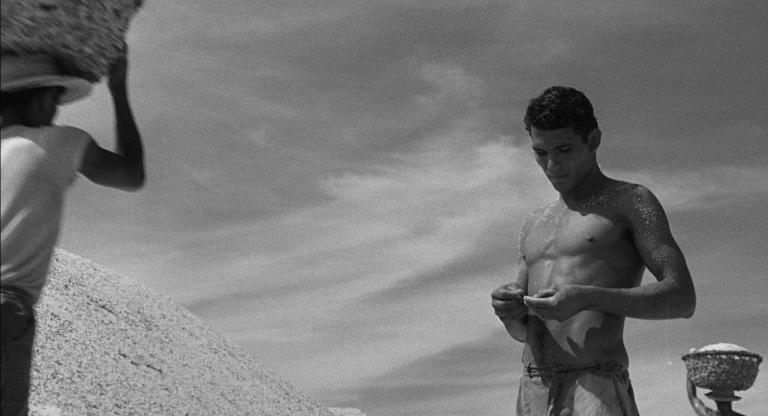
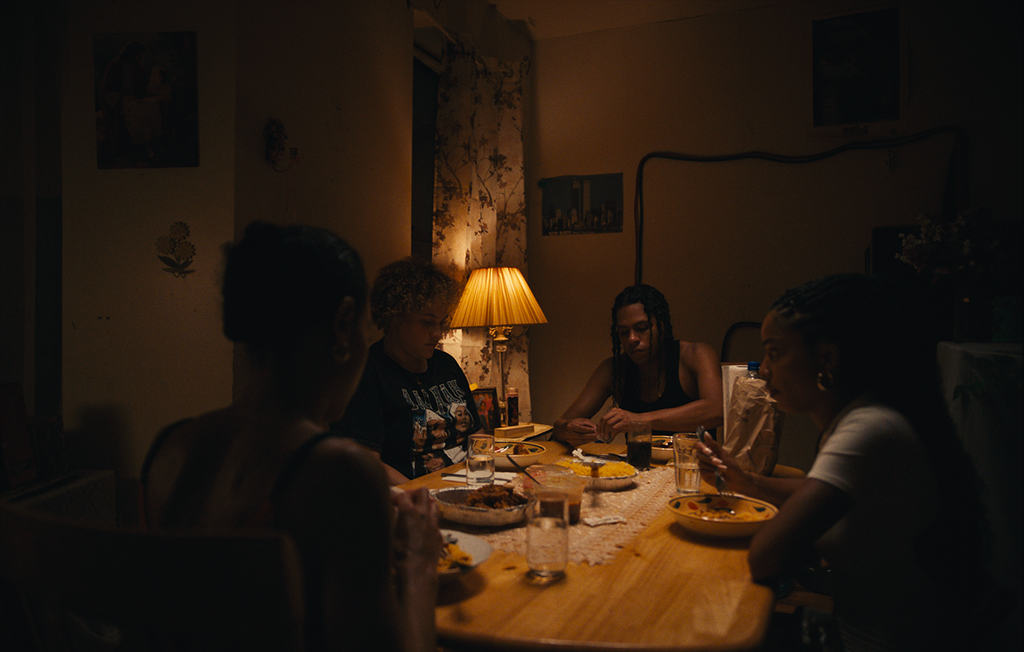
Though Rico is entrapped socially and economically, Vargas’s film is less cinematically cloistered. It’s composed of master shots and bathed in golden light, evoking the work of Pedro Costa. (Vargas tells me that the Portuguese director’s 1997 film Ossos is one that he returns to again and again.) That visual generosity is central to the film’s achievements, with Vargas prioritizing an observational patience over the flashy declarations of quick cuts and restless movements. Vargas, who studied engineering before abandoning that path after immersing himself in international cinema classes, brings to the film a sensibility shaped as much by structural rigor as by human observation. Among his other influences are Roberto Minervi, Larissa Shepitko, and John Cassavetes. The latter, he calls the GOAT.
Over chicharones in Inwood, a stone's throw away from where he grew up in the Marble Hill Projects, Vargas talks about the film on the occasion of the film’s theatrical release.
Elissa Suh: I saw that you did a stint at USC, which I also briefly attended, but then left to attend the National Film and Television School in London. Was it vastly different?
Joel Alfonso Vargas: It wasn’t that different in a sense since there was still a lot of red tape around making films, even more so in certain respects because they took health and safety to another level [during the pandemic]. There was one class, something called “Screen Arts,” which was essentially a film theory and criticism course. We’d watch films, talk about them, and read around them. But for the most part, it was very practically focused, with 90% of making films—three or four projects over the span of two years. It was very much: here’s a camera, go make something. They don’t really intervene too much, which I liked. It was also just nice to be around other filmmakers from different countries and backgrounds. It felt very international, like you were constantly exchanging references and inspirations.
ES: Mad Bills started as a short, right? What went into expanding it?
JAV: The funny thing is, the feature idea actually came first. We didn’t go through that traditional process of making a short, waiting a few years, and then developing it into a feature. I was like, fuck that. In a lot of ways, making a feature takes the same kind of work—it’s just stretched over a longer period. With a short, you can kind of crash-and-burn your way through it. On the short, there were times I literally pulled all-nighters, sometimes five days straight, barely sleeping. But you can't really do that with a feature. The learning curve for me was about making that journey a little bit more sustainable and incorporating rest. But as far as casting it, finding locations, the development work that goes into it, script-wise, it's not that dissimilar.
ES: Viewers have mistaken the actors as non-professionals, which I did at first. But, as you watch the movie, it’s clear they're acting—they’re too good. It made me think about how and why we assume or associate characters of certain background, of color or lower socioeconomic status, with non-professionals, as if those performers don’t exist within the professional acting world.
JAV: “Street cast” is the term that gets thrown around a lot, and the cast, especially Destiny, reacted pretty strongly to that, which is fair. “Street,” at least from our perspective, can come with a negative connotation. I use it to describe a very specific process: you walk up to someone on the street who likely isn’t an actor and ask if they’d want to be in the film. But that's distorted, and people in the short form say, “this cast has been street cast.” That’s not always true.
We went out with the intention of casting, and we did see a lot of people that way. We got really far with one guy from a Puerto Rican background we met at Washington Square Park. He was a recent father, too, so we were interested in working those elements into the story, but 36 or 72 hours beforehand, he said he can’t really be part of this. There was too much going on. We tried everything we could, and even paid for his childcare. His whole thing was that he was afraid it was gonna be too big and take him away from his family. I didn't know what the film would become, so I just told him it was super small. No one's ever gonna see it. It's still small. But anyway, he dropped out.
We had met Juan a few days before. We found him on Backstage. Luckily, he was available. Destiny is the only true non-actor, if we can use that term; she's done some acting in, like, elementary school, so she's had exposure to a process. But she was the only true person with no kind of experience.
ES: No formal experience at least.
JAV: Yeah, we found her through these TikToks where she was lip synching. Yohanna [Florentino], who plays the mother, comes from a more formal background. She's a classically trained theater actress. Nathaly, who plays the sister, was suggested to us by an agent. She initially read for Destiny.
ES: Did the characters change, or were they built on your work with the actors?
JAV: I cast the film very close to the characters. Although these are fictional roles, they've lived adjacent to these experiences or, in some cases, have experienced some of these things. There wasn't a whole lot of conversation around character development because the minute that we started talking about it was like, “I understand. I know this person. I've grown up around four people, five who lived this life.” It was my intention for there to be a lot of common ground, and I trusted them to shade in that sort of nuance, because we really entered it with just an outline and beats to hit.
ES: They also improvised a lot, right?
JAV: They did, and I can't even break it down into a ratio of what was improvised and what wasn’t at this point. Juan also brought so much humor to it. The scenario, as it was, was meant to be a little comedic, but he just took it to another level. He has experience with improv, and his comedic timing is great.
Also, a big part of my process is to obsessively take voice notes during rehearsals. I listen back and start picking at the things about those rehearsals that I really like. By the time we get to set, if there’s something I know a scene needs, I’ll go back into those recordings and find it. I never want the performances to feel overly academic or like you’re just staring at a piece of paper. I feel like that’s always been stifling for the cast on other projects I've worked on. I just want this to be a very organic and open-ended process.
ES: Was it Juan’s idea for him to be calling Destiny “bro”?
JAV: That's just how Juan talks. That’s how he expresses himself, and I think it's very New York. “Bro, babe.”
ES: Tell me about the production and shooting around New York. What month was it?
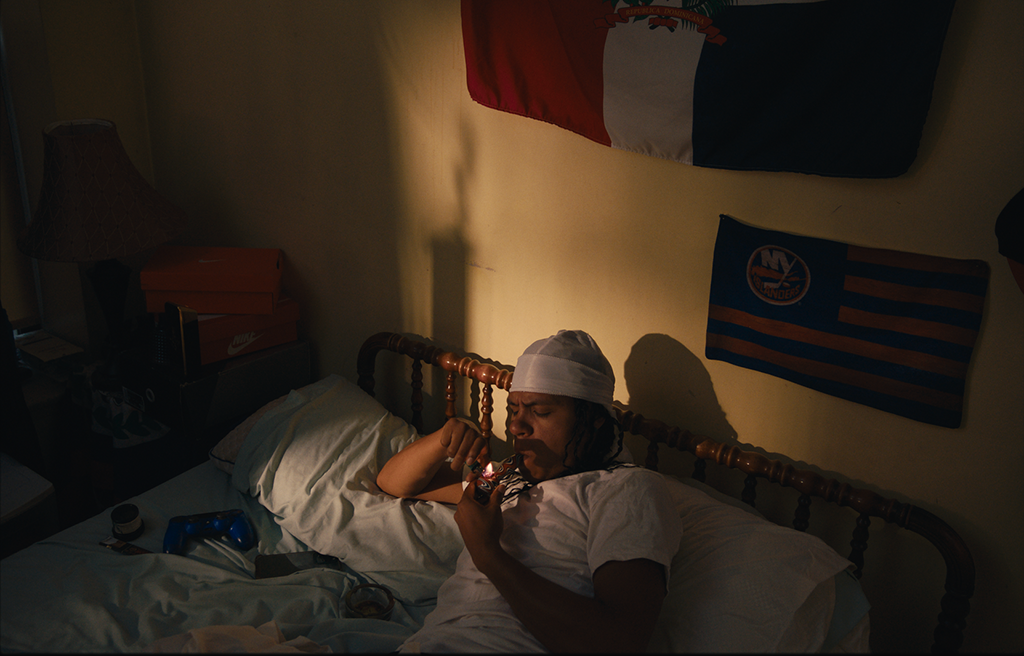
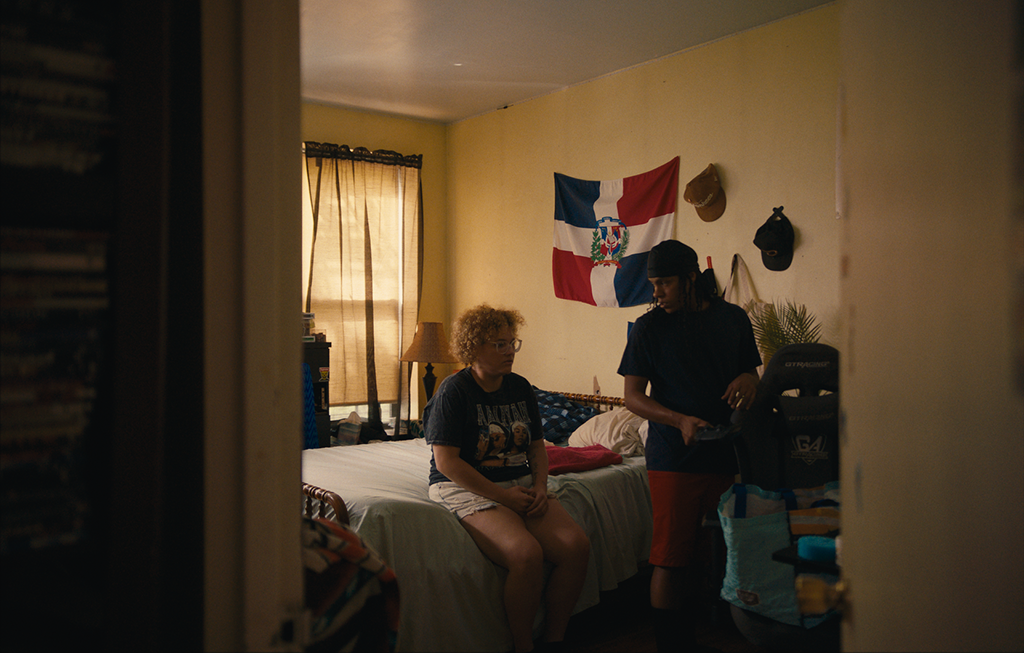
JAV: It was August. The apartment was like a furnace and we're shooting, so we can't have AC on. It’s boiling, and then we’re at the beach. New York is a very dynamic place and you have to be very responsive to that. There was a whole thing with the infestation and it being fumigated, so we shot in the exterminator’s apartment. Some of the crew came from England and some are based here. Our line producer is a Bronx native. Our AD was a Bronx native. We knew at least, on that side of production, how to move and how to be guerrilla and get stopped.
ES: Do you have any personal experience selling nutcrackers?
JAV: I've never sold Nutcrackers. I've never sold anything illegal. But without saying too much, there’s a strong family connection to other kinds of illicit activities. I'm the youngest in my family and I grew up watching many of the men around me—my dad, my uncle, some of my brothers—go to prison because of it. Seeing that made me decide early on that I didn’t want that life for myself, so I chose a different path, which is ultimately what brought me here. We grew up in a tough place where people had to do what they had to do to survive. In this particular case, Rico is selling nutcrackers, and it's pretty harmless, but that's still technically illegal.
ES: What’s the reaction been like from your family?
JAV: My mom was a teen mom, so I think she saw herself in Destiny's story. I remember when I was shooting, she would ask what I was working on. I played things very close to the chest. When I’m working, I tend to keep things very close to the chest. I finally showed her a clip of the vaccine argument scene, and she got really excited about it. She usually never gets like that. But this, she immediately understood. Part of it was the approach, making things as true-to-life as possible, especially in the way people speak. I didn’t want to embellish anything. I wanted it raw, and her reaction was like, “Wow, this is really how it is.” That meant a lot to me. I’ve had siblings watch it too, and they’ve had similar responses.
ES: I want to talk to you about the film's visual look—this slower, observational approach with long takes. It takes a while before we even see a close-up of Rico. Were those decisions more practical, or does it go back to your cinematic touchstones?
JAV: It was a combo, but fundamentally it's a taste thing. I’ve always been drawn to observational cinema. When I got that Fulbright to study in London, that was my first exposure to observational docs and hybrid work. Films like Fire at Sea [2026] really moved me, and I knew that would eventually become part of my approach. Photography was also a major point of reference for us, too. I was looking at the work of Bruce Davidson and other New York photographers. Wayne Lawrence shot a series titled Orchard Beach: The Bronx Riviera. This contemporary photography almost became a key for who we were looking to cast, like archetypes and faces.
What’s been exciting for me is that the film isn’t only connecting with festival or cinephile audiences. It’s resonating with regular people, too—ordinary people from the hood are sitting through those seven-minute long takes, or however long, and staying with them, without even realizing it. Or maybe they are realizing it. And, I think it's fucking cool.
ES: You’re doing the good work of getting the general public acquainted with slow cinema.
JAV: Call it what you want, but I think it's effective because the film is dynamic. It is a slower language, but there's a lot happening within the frame. It's not slow and quiet. Usually, that's the combo. It's like slow and loud. I think that was something that we stumbled upon ourselves and realized it really worked.
ES: One of the things I admire about the film is that you see all of Rico’s flaws. You never soften them, but there’s also no judgment in the way you portray him. The film doesn’t pull punches, but it’s never punitive. I’ve noticed some reviews and reactions that ambiguously describe parts of the film as deeply troubling. I wonder if what they’re really responding to is the discomfort of having to sit with people portrayed in all their contradictions.
JAV: I remember reading one review that was published when we screened in San Francisco. Juan sent it to me thinking that it was a good review, but I don't think he read the whole thing because when I read it, I thought, “Wow, this is a bad review.” It was going on about how the film wasn't political enough, which is interesting because I find it incredibly political. We're just not trying to be didactic about it. These people exist within a setting and under inherently political pressures. The backdrop is political. For me, simply putting a camera on someone in a particular place, at a particular moment in time, is already a political act. I’ve never felt the need to foreground politics in an overt way. I don't know if that's what they were getting at. What matters to me is the nuance.
This is an immigrant story, but not the idealized, gold-star version we’re used to seeing. In my own family, when they arrived here, they were deeply embedded in the informal economy, struggling to survive and doing whatever they had to do to get by. And that’s true of almost every immigrant group if you look back far enough: Italian Americans, Irish Americans, all of them went through periods that looked very similar. I wanted to tell that side of it. That people are flawed, immigrants aren’t perfect, and they’re as messy and human as anyone else. Especially now, with everything happening around ICE and immigration policy—none of that was the backdrop when we made the film, but it is the backdrop of its release—it feels even more valuable to show that these stories are not black-and-white.
ES: In addition to being an immigrant movie, Rico comes from a lineage of characters who get in their own way. Men who are always making one wrong decision after another, no matter how hard they try. One recent example I thought of is Simon Rex from Red Rocket [2021].
JAV: Around the time I was developing Mad Bills, I was watching Return to Seoul [2022], which is also about a character who self-sabotages. I don’t think it was consciously influencing me, but looking back, I’m sure it seeped in somehow. I can’t tell you why, but I'm always drawn to stories about someone who's really unraveling, like A Woman Under the Influence [1974]—maybe because I grew up around these things.
There's something about the systems in which we live under capitalism where you're feeling these pressures intensely—especially in New York and especially if you're living on the margin or below the margin, as I've seen firsthand. Those forces drive people to the limit, to the brink of insanity. Everywhere you look in the city, people are struggling with mental health, lacking structure and support, and so on.
ES: This is such a New York movie and specifically a Bronx movie. Were New York movies on your mind when developing this? The one that has been referenced in regard to this movie is Raising Victor Vargas [2002].
JAV: It's a nice film. I don't think we watched it for this. I love that cast. They're great, iconic. But it wasn't something that I was consciously looking at. I was very intentional about not doing the whole movie-reference thing, because, coming out of film school, so many people were obsessed with the shot deck.
I don't want to emulate or copy other people. And because the cast was coming over from England, some of them had never been in the Bronx or, let alone, New York City. I just wanted them to find their own kind of organic way into this thing without anything preconceived. Of course, they’ve probably seen films about New York, but I wasn't trying to make that point of reference for us.
ES: There’s also that opening quote from A Bronx Tale [1993]. Why begin or frame it from there?
JAV: A Bronx Tale is something we all grew up on. Ask almost anyone in the Bronx, and they’ll know it by heart. For me, the line has a double meaning. It’s not just about rejecting conventional work; it also speaks to how someone like Rico can feel shut out of, or is not even allowed access to, a more traditional path altogether. A lot of young men of color are targeted early on. In school, they’re labeled as troublemakers and made to feel like they’re already outside the system. You internalize all that, and by the time you’re coming of age, you feel so alienated and rejected by institutions at large that the response becomes: “Fuck it—I’m not playing by your rules. I’ll make my own way.” That’s where the outlaw mentality takes hold, and identifying with that can lead people into real trouble.
ES: What are you working on next?
JV: I’m working on a film set in London about the Dominican community there. There’s been a growing Latino population in the city, mostly Dominican and Colombian. Overthe last decade, the Dominican presence has really become more visible. I remember the first time I heard bachata on my commute in London, maybe 10 years ago. I was genuinely shocked. I had this moment of, “Wait, what?” Now it’s completely commonplace to hear Dominican Spanish in the city. The other project I’m developing is set here in New York and touches on gentrification, in some ways building on ideas from Mad Bills to Pay. Maybe that one will be political enough.
Mad Bills to Pay (or, Destiny, dile que no soy malo) runs April 17-23 at Film Forum. Director Joel Alfonso Vargas will be in attendance for a Q&A today and tomorrow evening.