The general lack of Latin American programming in U.S. repertory film circles often means that audiences are deprived of representations of Afro-Latin life. This, in particular, entails the tragic omission of great art about diasporic life in countries like Brazil, Colombia, and Uruguay. It’s clear that times have changed given the welcome spotlight that’s been brought to the films of Sara Gómez, but a lot of work lies ahead for programmers who have yet to tackle the output of artists like the Afro-Brazilian filmmaker Zózimo Bulbul and Gómez’s Afro-Cuban contemporary Sergio Giral. Unlike Gómez (who died far too young), the late Giral (who was born in Havana in 1937 and passed away in 2024) was able to make multiple fiction features, including a trilogy of period films that explore Cuba’s history with the Triangular Trade slavery. As part of this year’s edition of the festival FilmAfrica (a Brooklyn subset of the New York African Film Festival), BAM will present the New York premiere of Giral’s newly-restored 1950s-set María Antonia (1990), which was the last film that the director shot in Cuba before moving permanently to Miami in 1991 with his partner Armando Dorrego, the film’s producer and screenwriter.
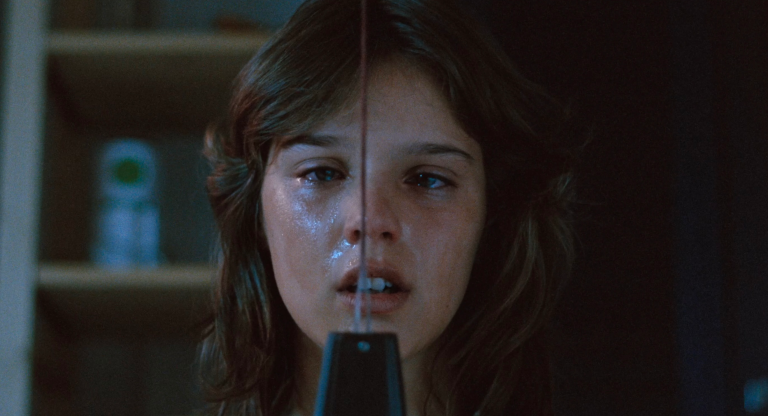
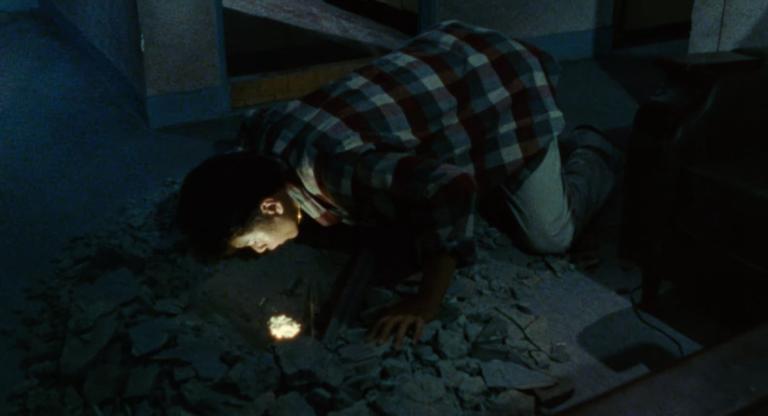
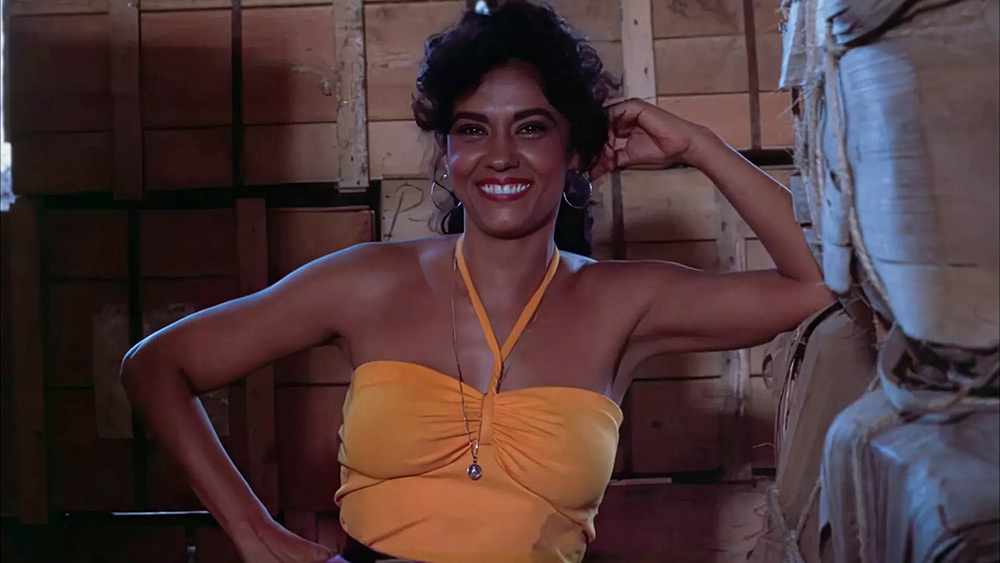
Dorrego’s script adapts a once-popular and, for its time, incendiary 1965 play by Eugenio Hernandez Espinosa, which was itself based on Georges Bizet’s Carmen. The title character (an explosive Alina Rodríguez) is a mixed-race prostitute. She often dresses in bright colors and dares the weak-willed men in her hillside lower-class neighborhood to take her on as a lover or as an adversary. This includes her would-be beloved, Kid Julián (Alexis Valdés), a young Black boxer whose attention wanders from María Antonia to marijuana, dreams of Madison Square Garden fights… And other women. María Antonia decides vengefully to cast a curse on the Kid and, in the midst of their conflicts, other characters emerge in their orbit, including a fairer-skinned romantic rival (Roberto Perdomo) whose love for María Antonia lies at odds with the masculine brutality he’s been taught to exercise his whole life and our leading lady’s dark-skinned godmother (Assenech Rodríguez), who tries and fails tragically to keep her safe within the customs and ceremonies of their Yoruba faith.
At times, María Antonia is filled with full-blown carnality, the frame loaded up purely with tingling bodies and sweat; of special note is the soundtrack, which can overwhelm the listener with loud bursts of music or pull back to leave only the isolated, supremely sensual sounds of individual drops of falling water. Yet the most frontal gesture that Giral makes might be a less sensorial one, which he ostensibly took to avoid censorship after years of trying to get this film off the ground: it’s his decision to set the narrative before the 1960s, when the source play took place, and set it before the Cuban Revolution broke out. Giral, the son of a white Cuban man and an Afro-American mother, expressed his perception in a late interview, stating that “The Revolution, which purported to end racism, ended up merely masking it in a different form.” His film questions how much actually changed with the Revolution’s arrival, while presenting a heroine strong enough to seem immortal.
María Antonia screens tonight, May 26, at BAM as part of the series “FilmAfrica.” Screenwriter Armando Dorrego will be in attendance for a Q&A.