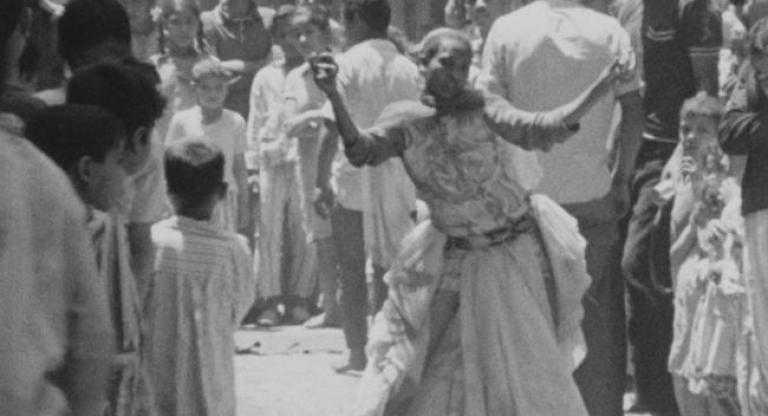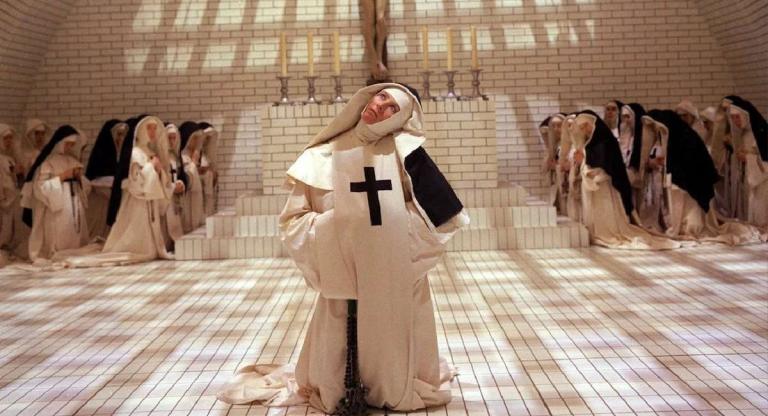
Comedy and melodrama are gestural arts. The exaggerated gesture is the basic unit of Charlie Chaplin and Douglas Sirk alike. Comedy plays bungled gestures for laughs; melodrama plays emotionally emphatic gestures for sobs. When, in the latter case, the effect backfires, it’s deemed “camp”: an originally affectionate term that, through overuse and accumulating layers of irony, has acquired a sour tinge. Countless films employ the rhetoric of melodramatic emotion merely to mock it. How can an artist renew the affinity between these forms without shortchanging the grandeur of emotion or the release of laughter?
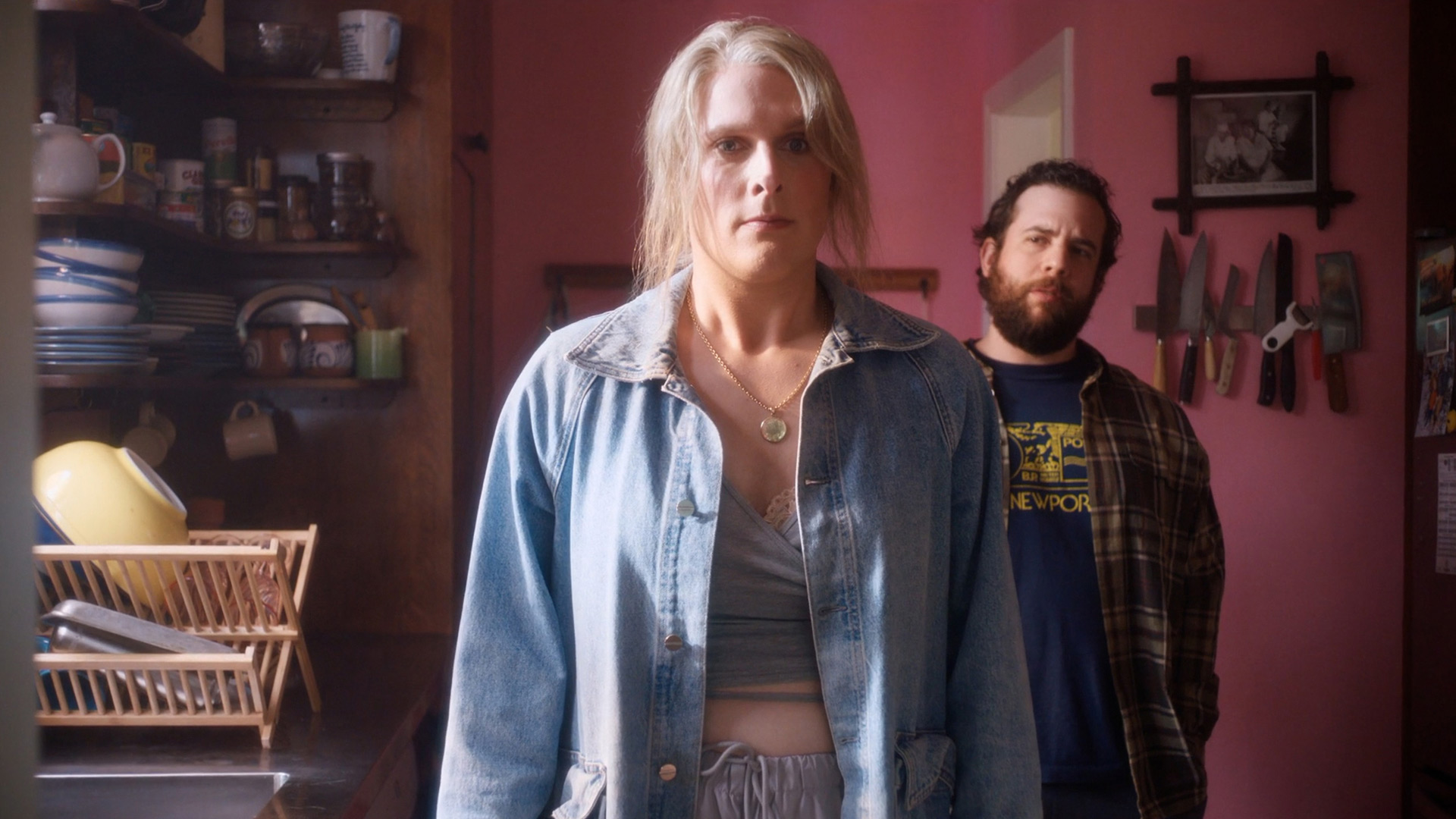
John Early’s Maddie’s Secret (2026), a hysterical comedy that doubles as one of the purest American melodramas in years, offers a compelling answer. The narrative, affectionately modeled on women’s psychodramas and disease-of-the-week TV movies, follows the eponymous ingénue (Early himself, bewigged) as she ascends through the ranks of her career in food content creation while struggling with the renewed onset of her bulimia. The neuroses of influencer culture, which molds the body into an object for visual consumption, are an easy target for contemptuous satire, but Early withholds the spectacle of feminine abjection for a more sensitive exploration of the body’s excesses and limitations.
The film’s gestural precision is evident from its opening: a buoyant camera engages Maddie and her lascivious friend Deena (Kate Berlant) in a comic waltz of desire. That briskly blocked tempo is maintained throughout the runtime. Whether following Maddie’s movements around her kitchen or tracking in slowly during her moments of anxiety, the frame is always mobile. The effect is energizing and funny, especially when Maddie’s breathless naïveté is played against Deena’s unabashed lust. But the actors never mug or signal any awareness “above” the material, and their conviction yields poignant payoffs. There is palpable shame in Early’s voice when Maddie first acknowledges her illness. When she falls to her knees after a shocking revelation, the frontality of the grief conveyed by her posture is startlingly moving. These gestures pierce the heart without ever compromising the physical expressionism that characterizes the film’s humor.
Early’s delicate merging of affects crests in a group dance that Maddie participates in during her breakdown. The sequence farcically frames voguing as torturous self-punishment, but its length exceeds its comedic function. As we watch the debilitated Maddie hit her marks in tandem with the dizzying camera movements, we’re forced into an extended confrontation with the duress she’s placed her body under and the resilience of that body in withstanding the pressure. The comic irony of her dilemma harmonizes with the tragic consciousness of her embodied humanity. The result, for the viewer, is a giddy, bracingly cinematic exhilaration in which laughter is reconciled with tears.
Maddie’s Secret opens Friday, June 19 at IFC Center. Director John Early will be in attendance for a series of Q&As opening weekend.