By current standards, the signature romantic glide of Max Ophuls’s camera is a rickety affair. In the opening minutes of his third feature, Liebelei (1933), the frame briefly assumes the gaze of a stage manager at an opera house. He surveys the crowd of gowns, black ties, and military uniforms assembled for Mozart’s The Abduction from the Seraglio through a peephole in the curtain. The camera lifts off and hovers above the audience in a graceful but halting advance that suggests a winged attendee apologetically shuffling toward her seat. Throughout his career, Ophuls mounted ambitious tracking and crane shots during periods when cameras were grounded behemoths married to tripods. For all we know, his mind’s eye conceptualized a fluidity of motion that would transcend its mechanical origins on greased wheels and ingenious pulley systems, but in truth a wobble haunts his dazzling minuets. Far from a defect to be worked out by better gizmos, the discrepancy creates a pleasing tension between ethereal elegance and the plain business of locomotion in actual time and space. What’s more, it faithfully reflects the director’s preoccupation with refined characters, often women of means, mired in romantic scandal.
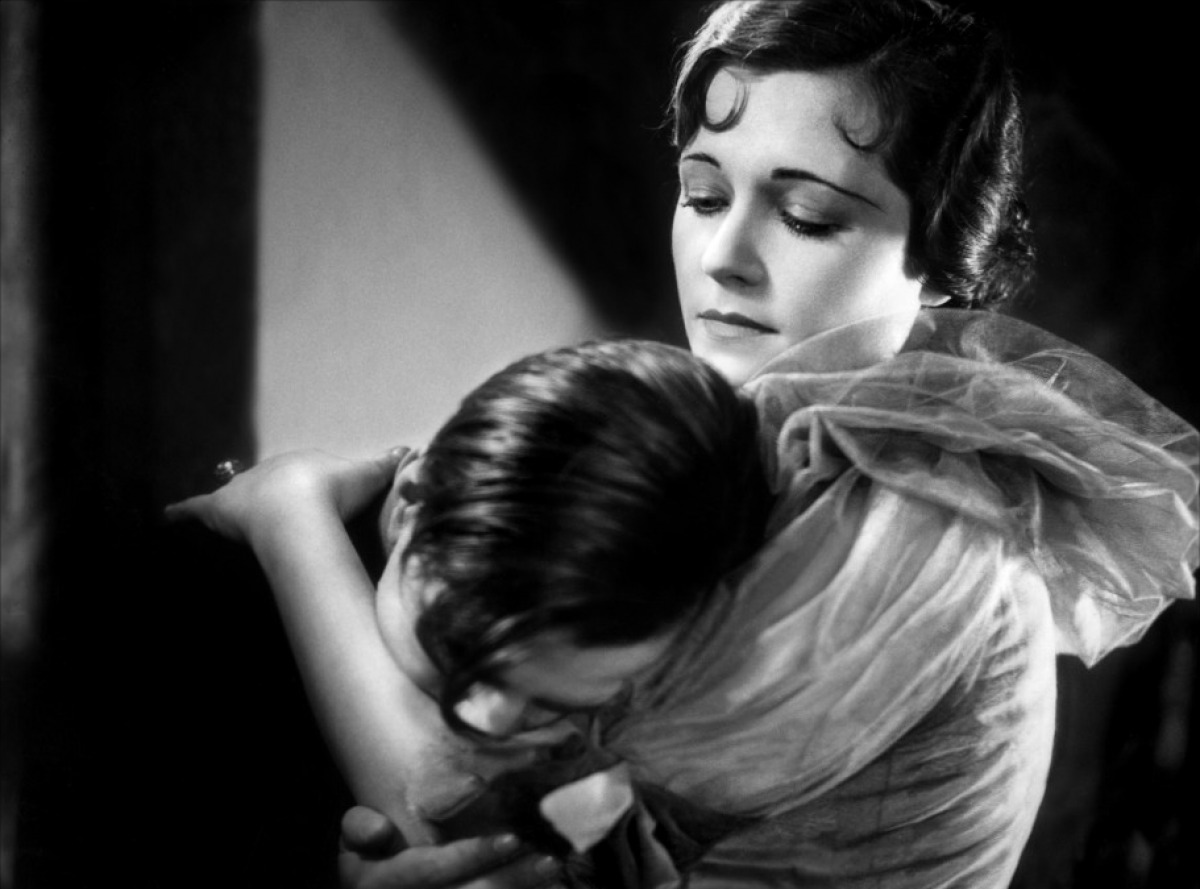
The scandal at the center of Liebelei concerns the sensitive Lieutenant Fritz Lobheimer and a Baroness. By the time her monocled and top-hatted husband catches on, Fritz has broken off the affair after falling for Christine (the luminous Magda Schneider, Romy’s mother), a similarly sensitive aspiring opera of common stock. The Baron demands satisfaction, and the terms of the duel are painstakingly laid out in a semicomic montage of military gossip and official proceedings. Fritz withholds the ordeal from Christine, saying that he’ll merely be away on assignment for a few days. During a heartrending scene in which the camera gradually approaches the two lovers side by side on a loveseat, Christine admits she knows he’ll probably be gone longer than he says, but any absence is tolerable considering the happiness they’ve enjoyed together. While the camera zeroes in on a shared close-up, she dreamily opens her heart and he nervously plays with matches until, in the final moment, they sit cheek-to-cheek ennobled by love’s rapture. Fritz gently sweeps a hand across her chest in a bracingly intimate gesture that recalls an Ophuls camera movement that feels profound, beautiful, and pleasingly ostentatious.
In addition to this achingly innocent romance and Ophulian camerawork, the film boasts impressive sets marked by expressionism’s pointed arches and creeping shadows. Liebelei was adapted from an early play by Arthur Schnitzler and released the same year Ophuls, who did not hide his Jewish faith, fled the Nazis. The script features plaintive monologues against honor culture and sexual repression. It all adds up to “degenerate art” of the first order.
Liebelei screens this afternoon, February 7, and on February 14, at Metrograph as part of the series “Max Ophuls: Motion Within Motion.”