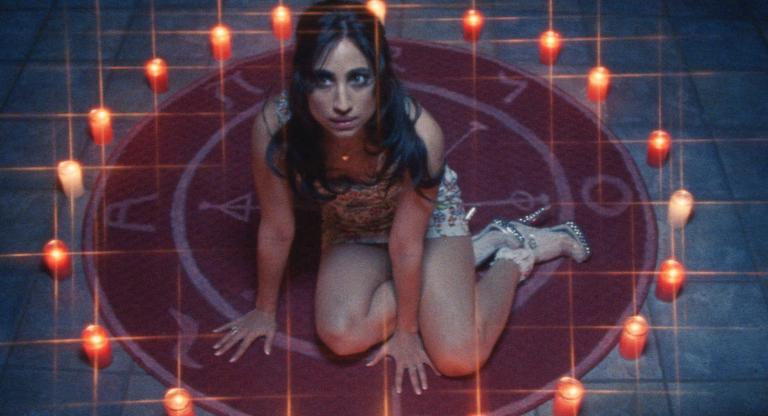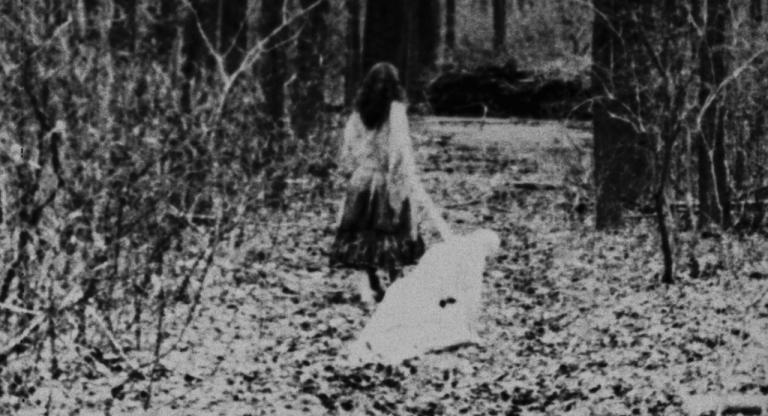
A nerve-jangling tangle of images and sound—mostly it’s the music that terrifies—Michael Almereyda’s Nadja (1994) is inspired by André Breton’s surrealist 1928 novel of the same name, with generous infusions of black-and-white bloodsucker movies from Carl Theodor Dreyer’s masterpiece Vampyr (1932) to Lambert Hillyer’s cult classic Dracula’s Daughter (1936). Almereyda recently described his film as “a perambulating exquisite corpse,” although that term becomes an oxymoron when applied to the work of a single filmmaker. “Exquisite Corpse” was the name given to collaborative artworks by a group of surrealists who left to chance whether an assembly of talents, each given equal opportunity to make their marks on a roll of drawing paper, would result in a coherent work of art. Almereyda’s film is simply an intermittently glorious Godardian collage, its sources as much literary and musical as filmic.
Set in an East Village of post-No Wave glamour and drugged-out criminality that barely exists today except as a haunting in the psyches of those fortunate enough to have lived there, Nadja plays out like a dream. The sex is in your head, although you feel it in your body. The film is anchored by Elina Löwensohn’s performance as the titular Nadja, the vampire daughter of the deceased Count Dracula, or maybe just an unusually composed Alphabet City exotic with a deadpan wit and a ravenous hunger for connection. Get involved with her and she’s likely to suck you dry. Nadja is awash in convulsive superimpositions and stilted dialogue, but Löwensohn has a clarity that cuts through the commonplace and the supernatural alike. You may not be able to follow the convoluted relationships of a set of characters played with various degrees of assurance by Galaxy Craze, Peter Fonda, Martin Donovan, Suzy Amis, and Jared Harris, but in the end, Löwensohn’s Nadja is irresistible.
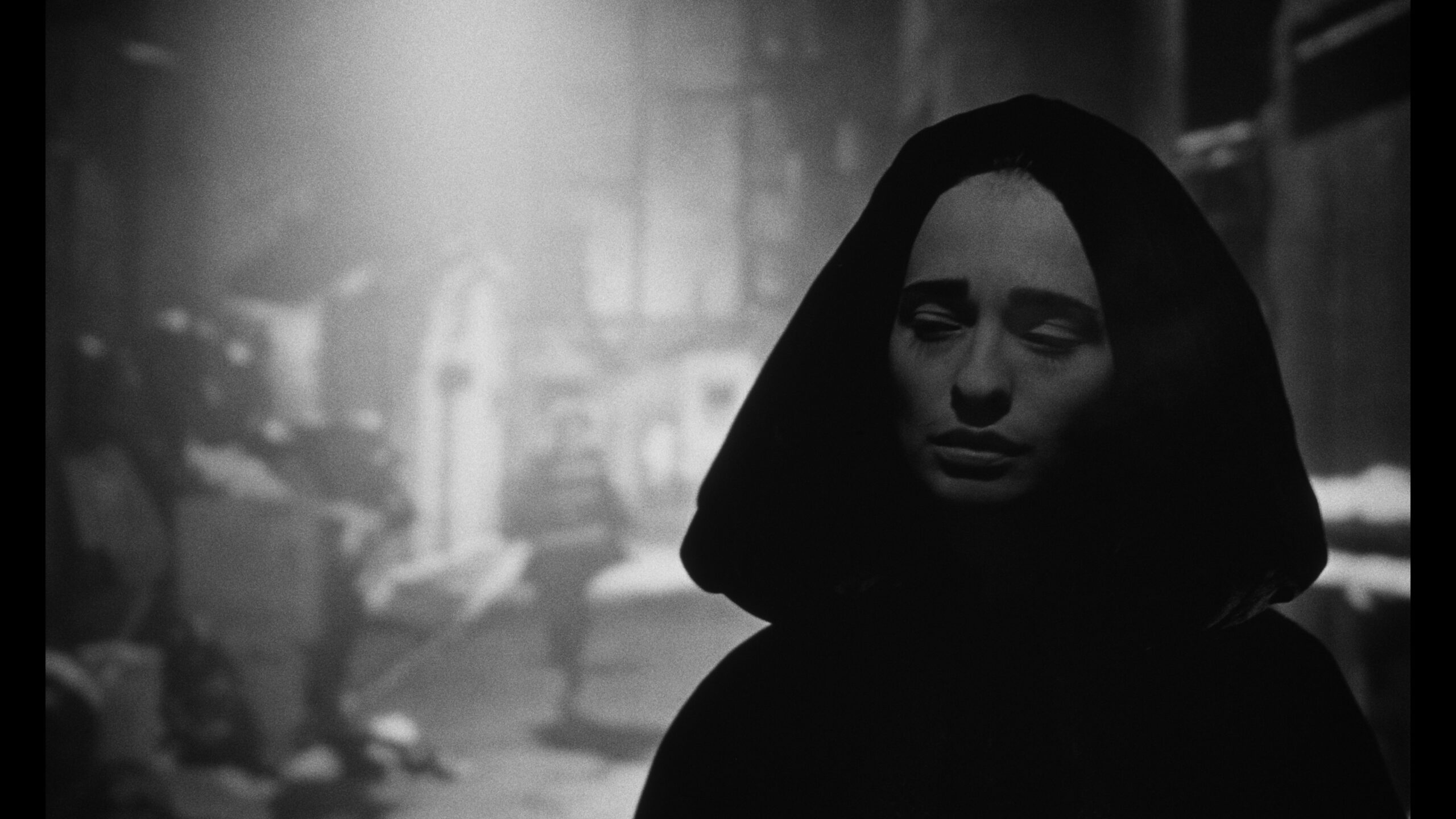
David Lynch makes a very brief appearance as a security guard in the morgue from which Nadja and her brother Edgar attempt to steal their father’s corpse. Credited as the film’s producer, Lynch provided the financing when the original backers pulled out at the last minute. The two filmmakers share a vision of identity as a haunting, but their means of expression have little in common. Nadja meanders a bit in the middle, but I beg you to stay with it because the final sequence is rapturous. Indeed, it’s on my list of the most rapturous endings in movie history. An enormous close-up of Nadja’s face fills the screen, first with her head covered with a white cap like a ghost from the land of the undead, and then with the black loose-fitting hood she’s worn through most of the film, a suggestion of mystery picked up for pennies, perhaps from one of the second-hand stores that lined East 9th Street. The text which she speaks directly to us is in part taken from Breton’s novel: “Who goes there? Is it you, Nadja? Is it true that the beyond, that everything beyond is here in this life? I can’t hear you. Who goes there? Is it only me? Is it myself?”
Nadja screens February 6-12 at BAM. Michael Almereyda will be in attendance for Q&As tonight and tomorrow night.