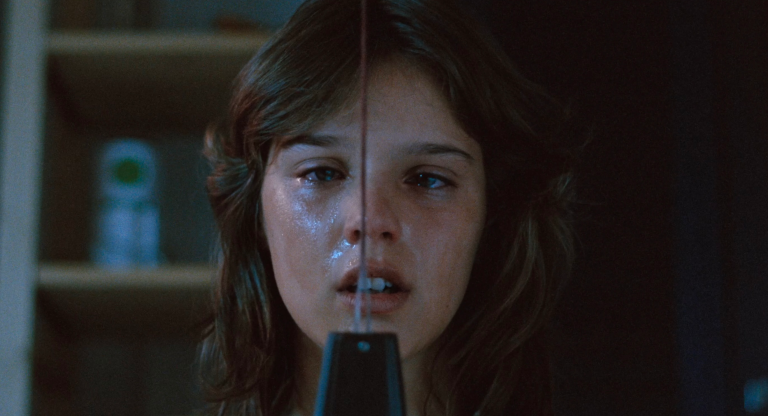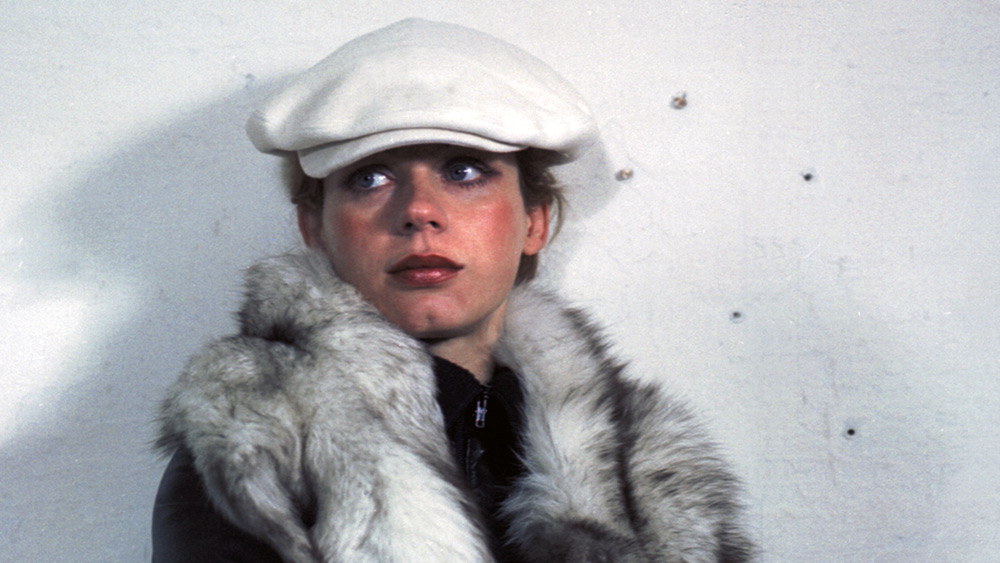
Konrad Wolf’s Solo Sunny (1980) follows a nightclub singer (Renate Krößner) dealing with the trials of love and show business in East Germany, slogging her way through an unglamorous club circuit performing to unenthusiastic audiences night after night. Sunny’s hair is cropped short. Her makeup is larger than life. So are her eyes. And she never leaves the house without a snug pair of jeans and generously tall heels, drawing suspicion and contempt from her elderly neighbors. She's got style, she’s cool, and she doesn’t take any shit. When the show she’s performing in loses its sax player for a bit, she starts a relationship with his replacement (Alexander Lang), a stoic philosopher who lives in a small apartment-cum-hermit-hole filled with books. All the while, she’s also trying to find lyrics for a new song. Things get tough for Sunny as she fends off unwanted advances (and an attack) from would be suitors, and then loses her job in the show. Her time in the spotlight comes to a quick end and with it a crisis of faith.
Wolf’s film was a surprise hit in East Germany when it came out, offering a character study of one woman’s individualism in a society seemingly opposed to such principles. The world of entertainment Sunny inhabits isn’t dazzling, but her small role in it still draws admiration from her former co-workers. Like performers everywhere, no matter their stature, she’s following a different path than most people. This world of music, late nights, and sweaty performances at venues where you can practically smell the stale beer is one of the best parts of Solo Sunny. Wolf rarely gives the viewer a full musical number, instead opting for a sensory impression of the life of a show person and fusing Fosse with documentary realism.
Solo Sunny was Wolf’s final completed film. It’s rich with humor and raw emotion, and a unique entry into the history of East German cinema. All told, East Germany produced a relatively small amount of feature films (the state-owned DEFA film studio produced around 900), and this perhaps makes Wolf’s film shine more brightly. This idea of standing out from the crowd provides fertile ground for the director. While Solo Sunny’s protagonist must endure multiple hardships to do her thing, the film’s final verdict does not condemn her, instead leaving us on a surprising note of hope.
Solo Sunny screens this evening, February 5, and on February 11, at Anthology Film Archives on 35mm as part of the series “Konrad Wolf Centennial.”