When Motown impresario Barry Gordy instructed Diana Ross to mention Billie Holiday’s influence in a 1969 Life magazine cover feature, the singer responded with “Who?” Over the course of the 1960s, The Supremes, eventually Diana Ross & the Supremes, released a parade of Top 40 hits, charting a course for Black women on mainstream pop charts and selling more records than any other female group, a title they hold to this day. By the end of the decade Berry was orchestrating a solo career for Ross, his lover and biggest star. The PR push included television specials, guest appearances, and popular culture’s zenith: a leading role in a major motion picture. Since Holiday’s autobiography, Lady Sings the Blues, was published in 1956, a hilariously, depressingly diverse list of actors were considered to play the singer onscreen, including actor-singers Dorothy Dandridge, and Diahann Carroll, but also, somehow, Lana Turner and Ava Gardner. Ross had no acting experience beyond comedic skits for TV, but she was by then the most visible Black woman in America, and she had gotten there largely through sheer grit and Gordy’s business acumen. Director Sidney J. Furie reportedly caught her impersonating Charles Chaplin and Harpo Marx on television and became convinced: “She is Billie Holiday.” Ross’s utter ignorance of the legend’s life and work was a manageable hurdle.
As many commentators of the day noted, Ross’s thin voice, slight frame, and palatable star appeal were poorly suited to inhabit Holiday’s husky contralto, robust physique, and gravitas. According to Gordy, Ross perfected a facsimile of the most famous voice in jazz, but then he, as the primary creative force behind the movie, ultimately decided it was “too much Billie Holiday” and had Ross rerecord the soundtrack to sound more like herself. At first glance the decision sounds like pure hubris, a risible head-scratcher probably meant to divert attention from the limits of his star’s talent. But upon further reflection Gordy’s concern that a biopic of Billie Holiday could suffer from “too much Billie” prompts us to consider what we even want out of the genre. Uncanny imitations along the lines of Rami Malek’s Freddy Mercury are the current rage, and their beat-by-beat exhumations of cherished pop figures profitably tickle our nostalgia centers without contributing meaningfully to any discussion about music or celebrity. Lady Sings the Blues offers something very different, something more rewarding but far more chaotic.
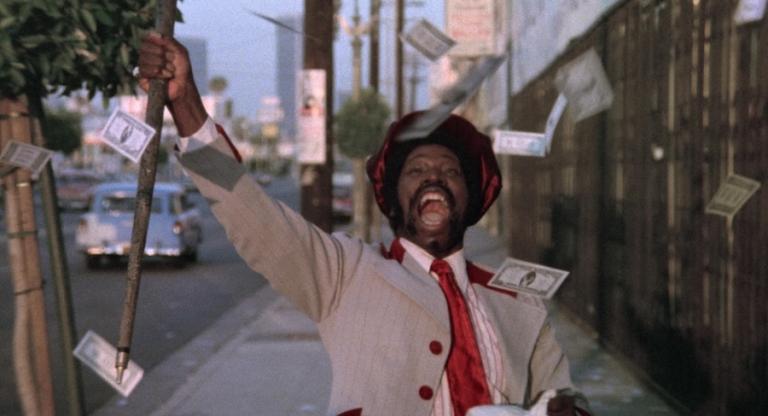
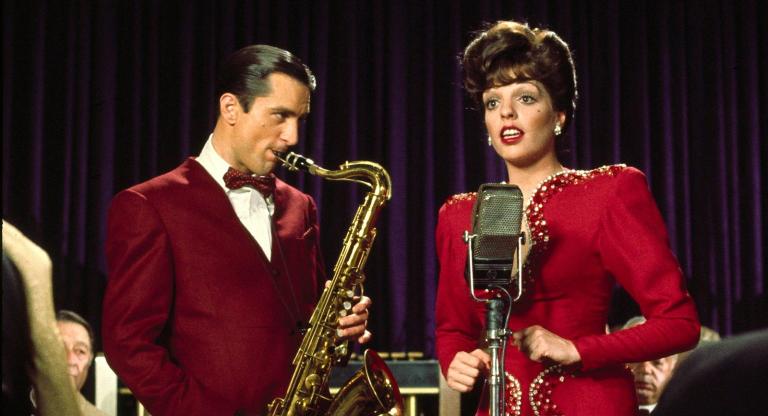
Ross and Gordy’s apostatic approach commits insult after insult on both the tragedies and triumphs of the historical Billie Holiday while fashioning what is ultimately a deeply compelling self-portrait of the pair themselves. Ross’s superhuman charisma, the fine-tuned product of her boundless need for adoration, powers the whole enterprise despite Gordy’s oppressive roles as financier, shadow director, re-editor, and producer. They collapse Holiday’s three abusive husbands into Billy Dee Williams’s paternalistic Louis McKay, who only gets handsy when he discovers track marks on his true love’s arm. It isn’t hard to imagine that McKay is how Gordy fancies himself, the self-effacing, eternally patient man-behind-the-diva. He’s desperate to get her off the road and away from fictionalized bandleader Harry Hanley (a singularly creepy Paul Hampton) who’s gotten her hooked on morphine. While touring the south with an all-white band, she encounters lynchings and Klan rallies while sinking deeper into addiction. She is arrested and institutionalized before a victorious concert at Carnegie Hall secures her legacy. At every stage her artistry is only ever admired, never explicated.
As much as contemporary decency standards and Gordy’s insistence on uplift allow, the narrative’s broadstrokes map crudely onto Holiday’s life, but the film works best, works beautifully in fact, as an exploration of the star text that is Diana Ross. The performance has this in common with Lady Gaga’s unhinged performance in House of Gucci, or Madonna’s Evita, or most of Joan Crawford’s best vehicles. She embellishes every line reading with bouncy improvisation, wringing each moment dry. When Ross breaks down in her dressing room and attacks her mirror with lipstick, or screams in withdrawal, wild-eyed and strait-jacketed in a padded room, the result is less a channeling of Holiday’s tortured soul than a monument to Ross’s own desperation to please us. This need is at the core of a certain type of star whose resolve outweighs their (not-insignificant) talent. When their unseemly lust for notoriety is this close to the surface, our worship is tempered by contempt as they become all too relatable. We can then sit comfortably superior in our ability to deny them life-giving appreciation, while narcissistically enjoying our own awe at their divine stature. The no-chill performers with sweaty, beseeching personae—Tom Cruise, Anne Hathaway, Jeremy Strong, Will Smith— are the most appropriate icons of a culture that prizes willpower above all virtues. Ross tells her own story while fumbling Holiday’s, and the rabbit warren of motivation and charm and sympathy proves more combustible than a thousand Bohemian Rhapsodies.
Lady Sings the Blues shows at Museum of the Moving Image from a 35mm IB Technicolor print today at 3:00pm and tomorrow, Sunday, January 4 at 5:30pm.