The Museum of Modern Art and Cinema Tropical are teaming up to present two classic—and long thought lost—Latin American films tonight as part of “To Save and Project.” These films are Ciro Durán’s La Paga (1962) and Jomí García Ascot’s On the Empty Balcony (1961). They are both first films and absolute outliers within their regional traditions, Venezuela and Mexico respectively. And, while it might seem that MoMA’s pairing of these films rises from convenient parallels regarding their provenance and runtime, their similarities are much more profound.
Both La Paga and On the Empty Balcony were collaborative ventures. They were made between filmmakers and members of their community, but authored by each filmmaker alongside their partner; Durán’s then-wife Marina Gil produced his film and García Ascot’s wife María Luisa Elío supplied the stories that make up his. They are both, of course, also fiercely political films. La Paga addresses labor exploitation in rural Venezuela, while On the Empty Balcony examines the psychological fallout of Spain's Civil War. And, because of how its makers straddled national borders, both restorations are also the result of complex transnational efforts to locate, clean up, and restore each title. The restoration of La Paga involved a collaboration between multiple film preservation bodies in Colombia and the understandably difficult-to-reach Fundación Cinemateca Nacional de Venezuela. On the Balcony was restored thanks to efforts on behalf of Filmoteca de la UNAM in Mexico and the Elías Querejeta Zine Eskola in Spain’s Basque Country. What differentiates these films is their approach to montage.
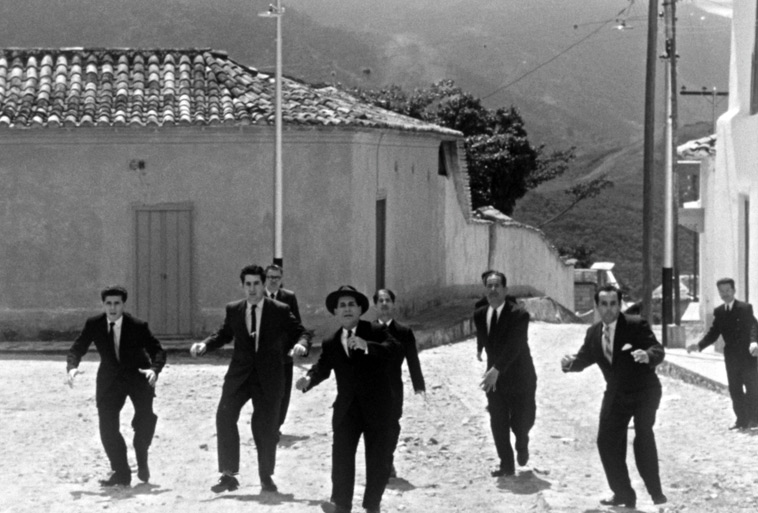
Durán was a hardcore Eisensteinian. Despite paltry origins as the son of a dentist in a small Colombian bordertown near the Catatumbo jungle, Durán made his way to Caracas in 1959 and became involved in the intellectual scene propped up by the economic oil boom that Venezuela experienced in the ‘60s. He got involved in politics and cinema, and eventually, at the age of 23, gathered enough financing to make La Paga, an incendiary featurette that drew on his own childhood observations of agricultural exploitation in the Colombian-Venezuelan Andes. Because of its depiction of labor exploitation and a dream scene involving farmhands raising their machetes against a bunch of weak landowners, La Paga was deemed “subversive” by the Venezuelan government and Durán was sentenced to 30 years in jail. Luckily, the Communist Party made an amnesty with the government and Durán was set free within a year. He moved back to Colombia, directed the anti-landlord western Aquileo Vengaza (1968), and soon secured his place in the annals of Colombian film history as one of its most outstanding and prolific directors.
García Ascot, on the other hand, only managed to make a few films. (Although, his renown in Latin American literature is well-fixed; Gabriel García Márquez dedicated One Hundred Years of Solitude to him and wife.) Both García Ascot and Elío were Republican exiles who emigrated to Mexico in the wake of Francisco Franco’s fascist takeover of Spain. Having moved to Mexico City as young children, they grew up into the rich cultural scene that characterized the city in the 1950s, which involved such luminaries as Leonora Carrington, Juan Rulfo, Carlos Fuentes, and many more. They married in 1952 and started filming On the Empty Balcony in the late ‘50s alongside a group of friends that became synonymous with the Grupo Nuevo Cine (New Cinema Group), a film-crazy faction of their cosmopolitan intelligentsia that sought to reinvent the whole of Mexican cinema.
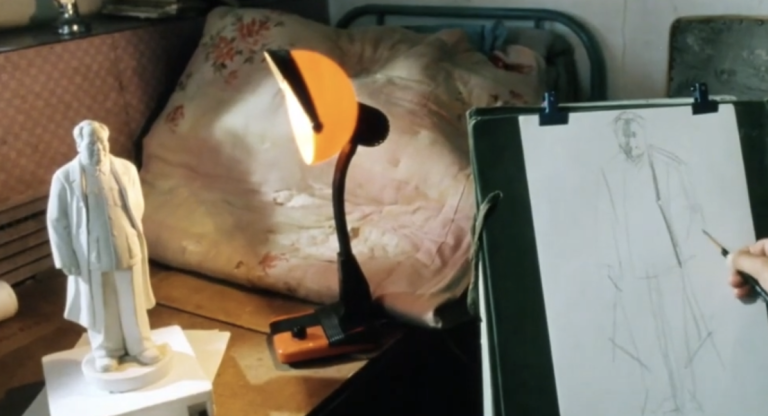
While this crazy bunch was unable to reinvent Mexican cinema with small films like On the Empty Balcony, their efforts did not go unacknowledged and were taken up by a future generation of filmmakers in the ‘70s following the downfall of Mexico’s popular Golden Age. For these reasons, On the Empty Balcony’s place in Mexican, not to mention Spanish, film history remains slippery. It is a film of rare poetic expressionism that evokes Alain Resnais’s contemporaneous experiments and anticipates future works of displacement like Marilú Mallet’s Unfinished Diary (1982). Its ruminations on time are aptly modern and its commitment to sound-and-image discrepancy, though financially-motivated, as affecting as that of similar experiments in the American avant-garde of the ‘60s. It is a strange film and for this reason also a beautiful one, a work made by a couple of singularly independent voices putting their ideas in service of a new direction in filmmaking.
La Paga and On the Empty Balcony screen this evening, January 20, at the Museum of Modern Art as part of the series “To Save and Project: The 22nd MoMA International Festival of Film Preservation.”