Improbable though it may seem, the life and work of the Austrian auteur G. W. Pabst is presently a subject of great intrigue. A new documentary (Angela Christlieb’s Pandora’s Legacy), the English translation of an acclaimed novel that fictionalizes Pabst’s tumultuous sound-era career (The Director by Daniel Kehlmann), and a retrospective at Anthology Film Archives all offer opportunities to explore Pabst beyond the two silent masterpieces that cemented both his legacy—Pandora’s Box and Diary of a Lost Girl (both 1929)—and that of their immortal star, the iconic Louise Brooks.
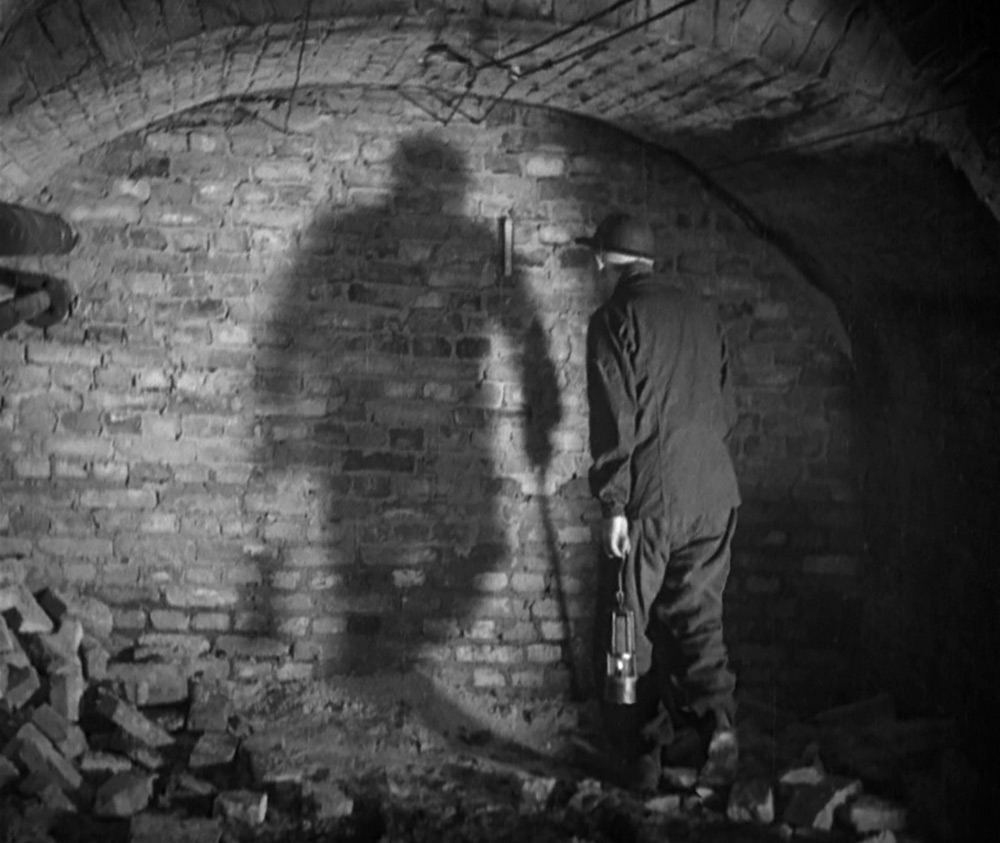
Kameradschaft (1931) is perhaps an indicator of Pabst’s enduring relevance. Thus far in his career, a recurring theme for the director had been modernity’s power dynamics and how they manifest through sexual exploitation. At first glance, Kameradschaft may not seem to fit this précis, but a closer look reveals that it is also a film about bodies being exploited. Albeit, through a different form of labor. The bodies in Kameradschaft are sweaty and coal-streaked. They belong to the men and boys toiling two-thousand feet beneath the German–French border—all for the profit of unseen industrial magnates. (Much like Fritz Lang’s Metropolis, Kameradschaft is a film about those above and those below.) After a fire and subsequent collapse occur on the French side of the mine—all rendered with ghastly flame-belching, claustrophobic realism—help arrives in the form of a German rescue team volunteering their services in solidarity (the film’s title translates into English as “Camaraderie”). Although partially shot on location in the Ruhr Valley and northern France, the film’s astonishing mining sequences were staged in a converted Berlin hangar. Production designer Ernő Metzner crafts a shadowy labyrinth of stone that Pabst navigates with his gracefully gliding camera. The director calls on all the elements—fire, water, earth and air—in his chiaroscuro symphony of destruction, scored solely with the cataclysmic sounds of collapse.
Though based on the tragic 1901 Courrières mining disaster in France, Kameradschaft is updated by Pabst and his collaborators to post-Great War Europe to haunting effect—a startling smash cut even returns us briefly to the battlefront for a jarring plunge into hand-to-hand combat. A flop in Germany—where the Nazis all but banned it—and a hit in France, Kameradschaft boasts a literal cry for working-class unity in its final moments. As Pabst makes clear—from the film’s allegorical opening, where a game of marbles between two boys becomes a battle for territory, to its ceremonial closing moments deep in the earth—borders are nothing more than man-made vanities.
Kameradschaft screens tonight, December 1, at Anthology Film Archives as part of the series “G.W. Pabst.”
See Also