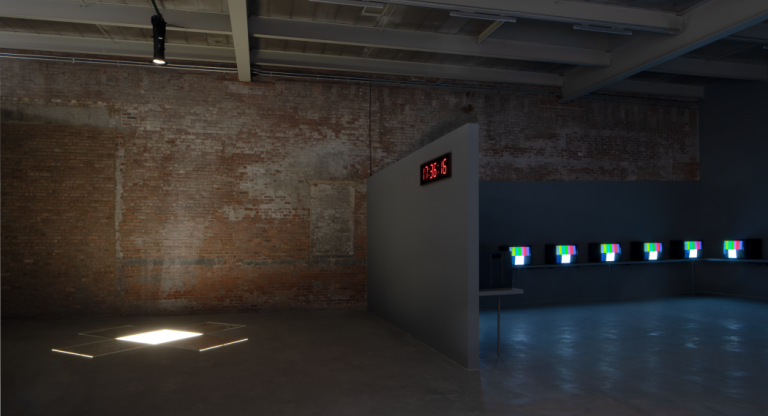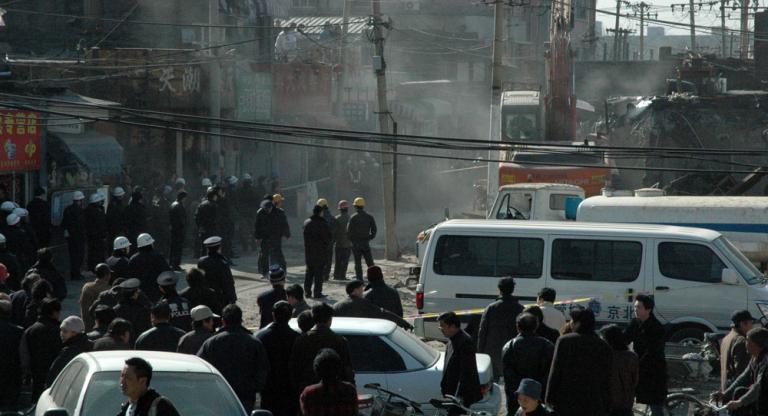
The 1997 British Handover of Hong Kong to China marked the de jure conclusion of over a century and a half of colonial rule. But nearly three decades later, the question of sovereignty still looms overhead for its nearly 7.5 million residents. Currently on view at SculptureCenter are over a dozen videos and installations from the pioneering Hong Kong filmmaker and artist Ellen Pau. The featured works, spanning the 1980s to the present, and their spectral quality constitute a potent evocation of colonial hauntology and its various corporeal manifestations. They also demonstrate an ongoing preoccupation with the far-reaching possibilities of image technology. (In addition to her many contributions to Hong Kong’s media arts scene, including as co-founder of Videotage, Pau maintained a decades-long radiography career.) Most of these works can be found in the gallery’s lower floor, a subterranean concrete labyrinth where ambient light and sound leakage from disparate pieces produce a further cohesion.
In one corridor, there is a large open palm with a black hole in the center, fingers pointing downward. Red Stock (1997/2018)—a term which refers to mainland Chinese companies incorporated in Hong Kong—evokes the Buddhist mudras and Christian stigmata, a simultaneous gesture toward hope and sacrifice. Against the backdrop of similar transitional anxieties, Pau positions herself as a statue in a shrine, sitting crosslegged on the floor in Pledge: I Can Only Tell It to Strangers (1996/2018). An earlier work in the series, Pledge: Bik Lai Chu (1993/2018), interpolates the same footage so that Pau can now be seen from the front and the back, banging her head on the wall, metallic clanging echoing.
Such palindromic inversions—the motion of history—appear throughout the exhibition. A roving lens pans back and forth surveying the steady movement of highway vehicles in Recycling Cinema (2000), presented as part of Hong Kong’s first-ever Venice Biennale pavilion. The Shape of Light (2022), first commissioned for the exterior of Hong Kong’s M+ museum, engages with the Buddhist sutra: “Form is emptiness, emptiness is form.”
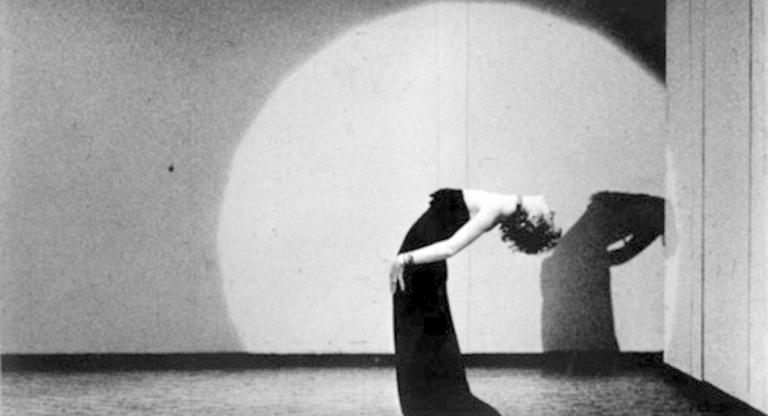
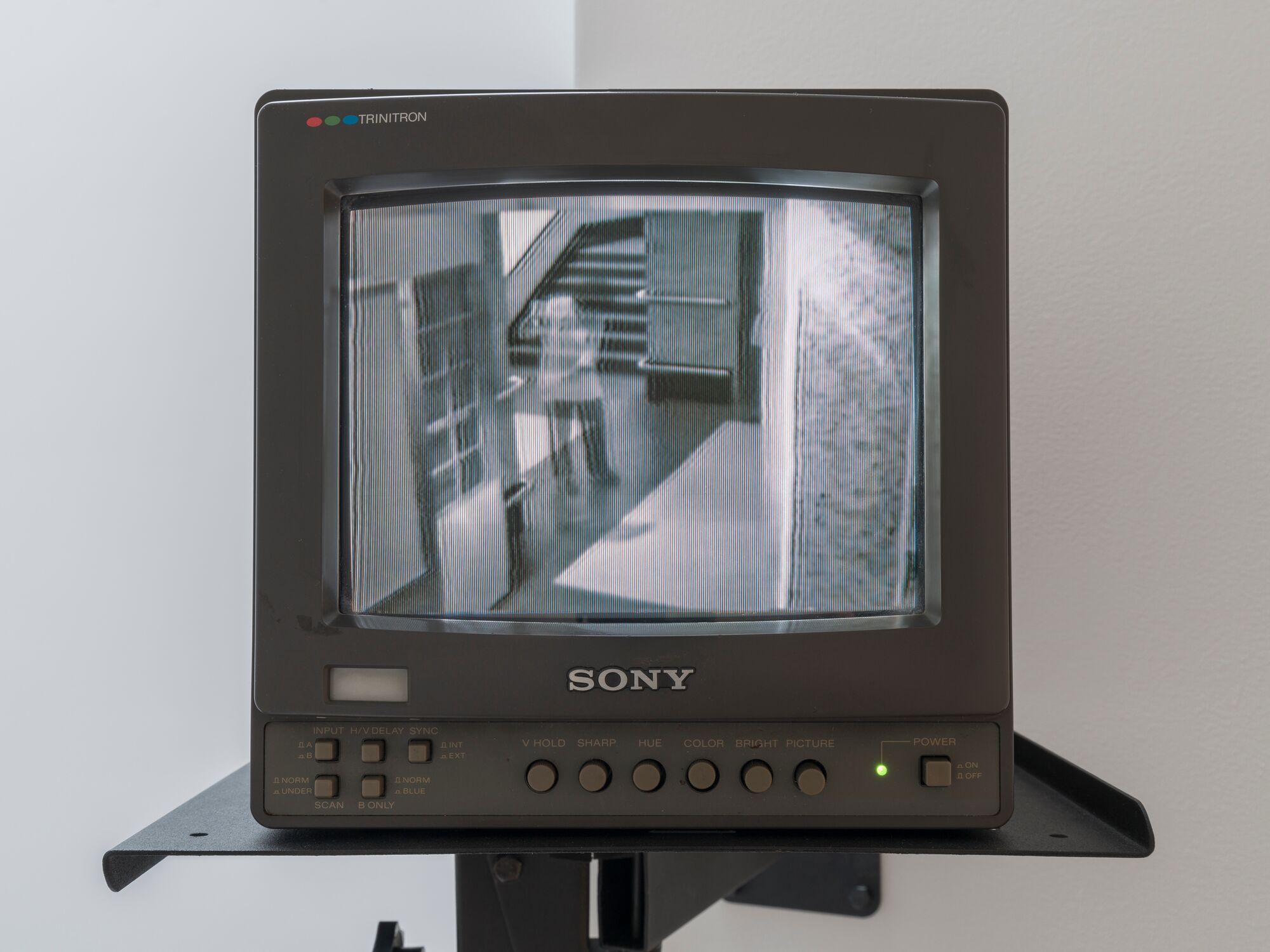
Works like Operation Theatre (1995, pictured above) and Drained II (1989) reflect Pau’s longstanding engagement with the stage and performance. The latter is a brilliant piece of structuralist filmmaking in which footage of the experimental Hong Kong theater troupe Zuni Icosahedron—featuring actors moving in between and behind black curtains—is digitally manipulated, rewinded and played back, then increasingly multiplied such that a fractal emerges. Adjacent strips foreground the role of framing in the construction of architectural and cinematic space. Details of the original scene recede as the image explodes into a grid that resembles one of the vertical city’s many behemoth apartment complexes, with a distant female figure running across the floors. In doing so, Pau reminds us that individual narratives are inseparable from the whole—from the places we call home.
Ellen Pau: She Moves is on view through August 16 at SculptureCenter.