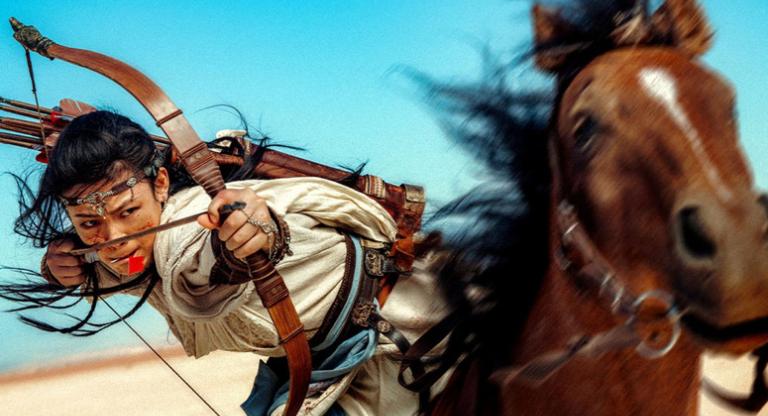
After only two features, Bi Gan had already developed a fervent following from viewers who left the theater walking on air from the unfastened-camera showmanship of Kaili Blues (2015) and Long Day’s Journey Into Night (2018). It seemed only natural that Bi’s next film, Resurrection, would be a dream of cinephilia, quite literally. The sci-fi premise imagines that people have ceased to dream for fear of death, except for a few “fantasmers,” who in turn have devoted pursuers.
After two viewings, I still wonder whether Bi cooked up the backstory after completing this multiple-world movie traversing different time periods and styles of 20th-century cinema through a chameleonic character played by Jackson Yee. Who cares: it’s a film of delirious sensations that believes deeply in the escapist joys of cinema, especially as experienced in the theater.
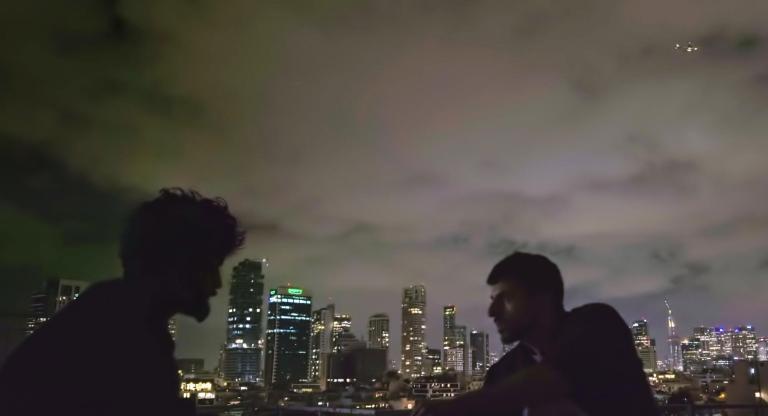
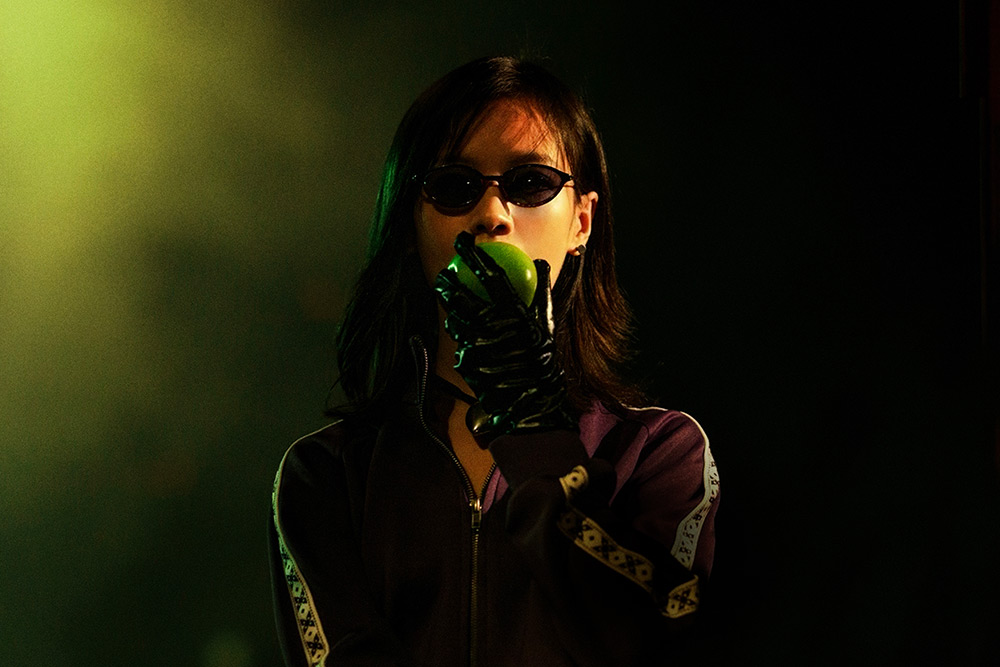
The five chapters of Resurrection begin with a silent-cinema overture, in which Yee’s fantasmer is tracked by Shu Qi (star of Hou Hsiao-hsien’s also sometimes nebulous, unfathomably beautiful The Assassin ten years ago). Bi takes us through German Expressionist dogleg passageways and a deep dollhouse set of an opium den that was the only moment I wished I was watching this film at home to pause and peer at every corner. From there, the film speeds through varied segments (ostensibly pegged to particular senses): murkily plotted 1940s espionage intrigue done in fractured neo-noir; a kind of folktale of theft and belief at a snowy Buddhist temple; an elegant gambling yarn involving a hustler and a kid he recruits to cheat a gangster; and the romantic joyride of two strangers on the night before a new millennium. It’s the last one that has the pushing-30-minute take that Bi has somehow conditioned people to expect.
After seeing Resurrection, I had little desire to clarify points about the story or characters (much as I did not for, say, 2046 or Tenet). But I did want to know how Bi pulled off that final real-time journey through the ramshackle buildings of a port city at night, variously tinted red, strafed with rain, and bobbing and weaving indoors and out, with musical interludes, karaoke, fisticuffs, and a barge jaunt at dawn. The urge to obsess over the making of Resurrection feels all of a piece with the movie madness that is its lifeblood, culminating in a finale that expresses the sheer mortal need for cinema that many of us feel and might explain some of the film’s rapturous reviews.
I interviewed Bi during the New York Film Festival (where Resurrection screened) at the Criterion Collection offices with the assistance of a translator. Our conversation became a deserved tribute to Bi’s talented collaborators across departments.
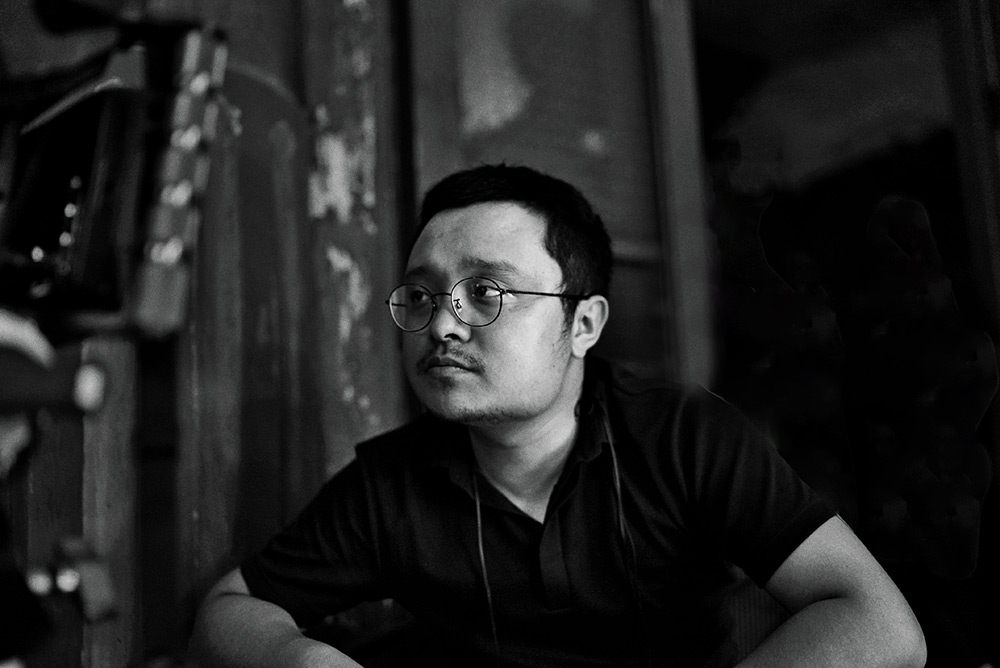
Nicolas Rapold: I just want to know how you did it. [Laughter] Let's talk about the big shot at the end, the long take. How many times did you shoot that?
Bi Gan: For the entire shot, from beginning to end, it took us about one month. And toward the end, we had to actually do one take per night for about a week. In the beginning it was a lot of preparation and rehearsal, and then, in that last week, every single night we had one take per day.
The reason for this is that we shot in Chongqing, and it all really depends on the weather. It’s a very foggy city, and you'll have completely different results. And at the end, we really wanted to have the sunrise happen in real time. We were hoping to have divine intervention to make everything happen the way we wanted it to. During the preparation period, we were trying to go out and start shooting and, through trial and error, maybe we went out too early or too late [for sunrise]. Sometimes, we had to make adjustments for the next time, and sometimes at the end it was still too early to get the sunrise. It’s a lot of trial and error, and learning from our past experience.
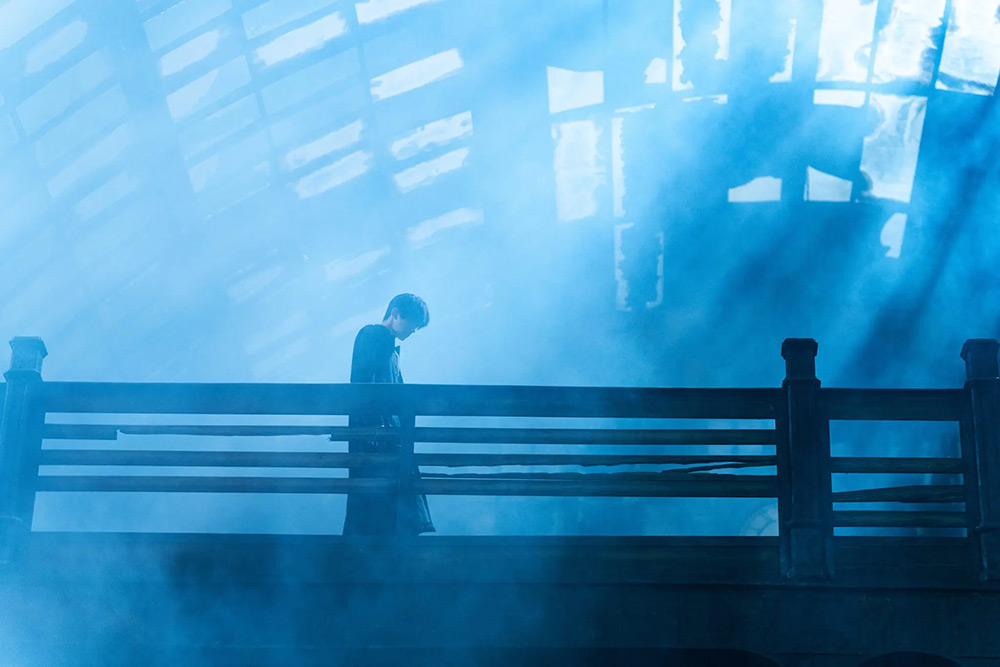
NR: How did the lighting work? Because you’re going indoors and outdoors a fair amount, and then there’s the onset of daylight.
BG: For me, it all really depends on the master, the lighting director I work with by the name of Wong Chi Ming. He has an encyclopedic knowledge of his craft. He worked with Wong Kar Wai on many films and was a quintessential figure during the golden era of Hong Kong cinema. I have been working with him on a few projects, including Long Day’s Journey Into Night, as a lighting director. My DP, Dong Jingsong, and I really feel like we could not do what we did without him.
Since the three of us worked on Long Day’s Journey Into Night, he knows how I work and knows how Dong Jingsong works. Somehow he preemptively anticipated what kind of lighting design he would need to set up before we even started shooting. They know very well that I’m going to go in and out, interior and exterior, and even though it’s this very particular space, he anticipated that the director and DP also want to use all of what’s so nicely, beautifully, and perfectly set up by our art director, Liu Qiang.
[Wong Chi Ming] needed to anticipate how we were going to do the blocking and the maneuvering, and he also had to pay close attention to the rain, especially in the long take. How are you going to make the raindrops visible by using the lighting design to really tease that out? That was a big challenge, and I'm glad that he was there to help us do that. That is the kind of collaboration that we had to have to make this possible. He is up there in age, and I hope that he will be around enough for me to work with him again on future films.
One particular incident that touched me the most is in the last scene—the last part of the long take. I approached him [knowing him] as a lighting designer with a lot of baggage, thinking about the density of light and how even with natural light, they also have some kind of setup just to enhance it. So I just said: since this is a couple madly in love and this is the end of the elopement, I really want to have something as real as possible in terms of lighting for the last part of the long take. I wanted the break of the first light coming out of the sunrise, and I wanted it to be natural light rather than something that's been set up. I do think that if this were any other lighting designer, they might think, okay, in that case, you might want to set this up to make it look real. But he was very supportive of the idea and said that there's nothing better than natural light. That's why I find working with him very, very rewarding.
NR: Part of the dramatic look earlier in the sequence is the red tinting. How did you do that?
BG: This was a collaboration among three different parts. One part is doing the test shots with my DP. We were trying to figure out the best way to do this—whether we’d need to use gels or filters in the camera in order to create the kind of atmospheres, and the color tone and temperature, that we wanted for this particular sequence. Then we talked to our color grading specialist, who is someone that I have been working with since Kaili Blues. He told me that maybe, instead of manipulating with the gels or filters, it'd be better to do everything in post-production because that's the best way to get it so precise and have the effects that we want to have. So, with that in mind, when Wong Chi Ming designed the lighting, it was not so much in terms of lighting the set the color red that you would see on screen. He’s thinking: how can I create the kind of temperature that would be best for the manipulations and the adjustments that can be done during the post-production through color grading at the end.
NR: This reminds me of early silent cinema and how people would put on green makeup or something for the black-and-white film.
BG: It’s interesting that you mention this, because we thought about the same techniques we might utilize for the silent film vignette in the beginning. We realized that the reason they did it is because the film stock technology at the time was not mature. But we are actually using digital to get the feeling of film stock. So we decided not to use this. And we couldn’t bring ourselves to paint Shu Qi’s face! [Laughter]
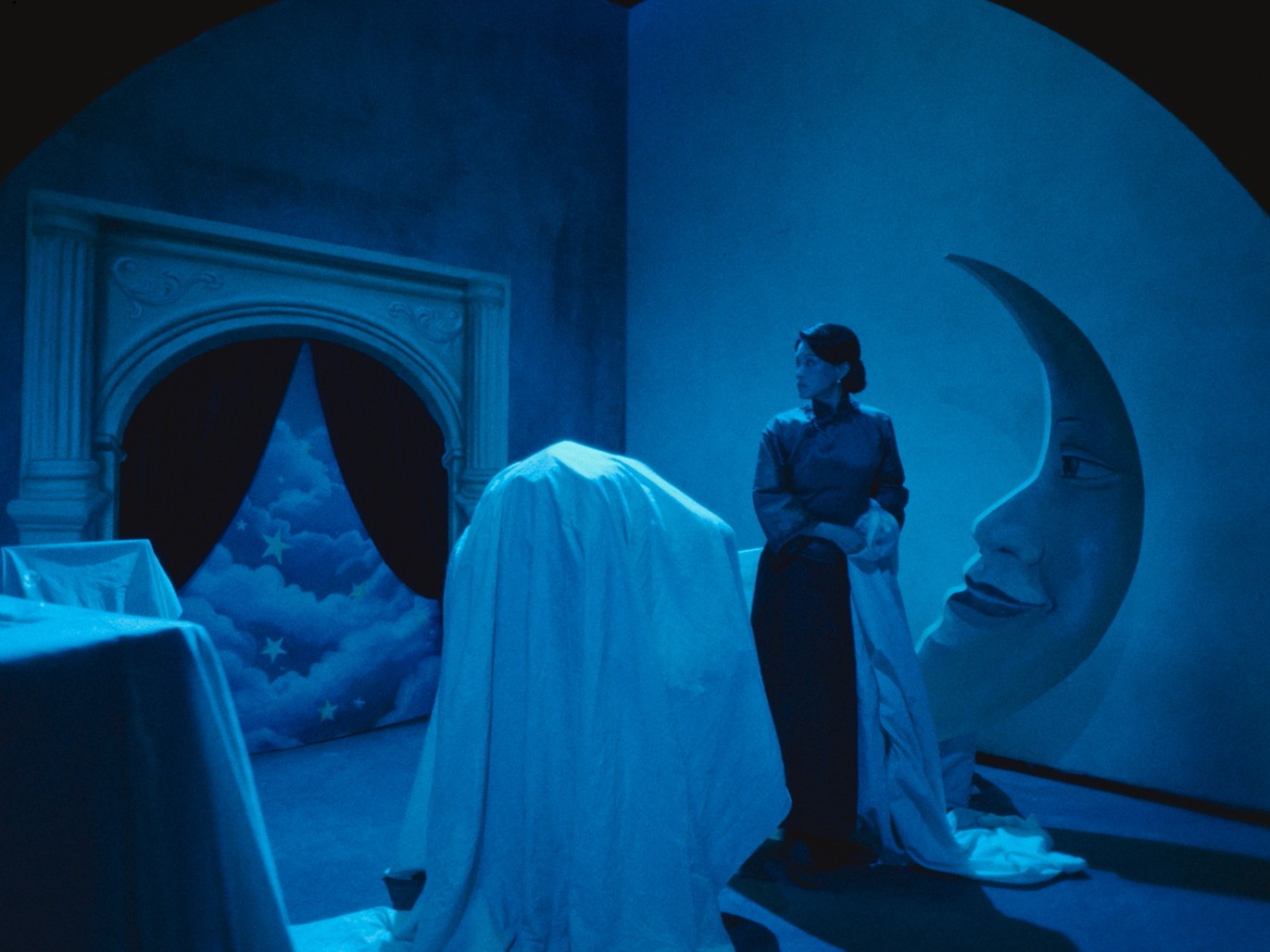
NR: That would be wrong. Let’s talk about the film’s settings, which are all over the place. What was the mix of sets and locations?
BG: I’m just going to talk about anything that comes to mind in terms of the set and the locations, and how we scouted these locations. For the second story, with that particular train station, I actually went to many different film studios that already had built sets. But they looked so ugly and didn’t really represent the kind of train station in the ‘40s that I was looking for, so we ended up using these tracks and empty lots that are in this industrial zone. We decided to build around that particular track and then re-create this particular train station in the ‘40s that we had in mind.
Then, for the last long take, that was thanks to the assistant director that I have been working with since Kaili Blues. We were trying to find a perfect location, and then he did a lot of research and found this particular port called the White Sand Wharf. It’s unique in that it’s not just a port, it is a cargo ship port with a lot of other transportation already built in. So, they have many ways of not only bringing the cargo in, but also taking the cargo out, including train tracks, canals, everything. We thought that this was perfect for the last scenes.
I remember that in order for us to be able to use this particular location that my assistant director scouted, we had this long drinking session with the person in charge of the port. I guess that we got him drunk, and then he was very happy and that made our collaboration that much better and smoothed the way for us to use that particular location.
NR: The secrets of filmmaking!
BG: Yeah!
NR: Another big location I loved was for the temple chapter. Where is that, and how did you select it?
BG: For this particular temple, one of our art directors, Tu Nan, did many, many sketches and scouted different locations around Chongqing. This was one of the locations that was already in the book of research that our art director had done. But when we were doing this particular story, we didn't really have that particular temple in mind. It was not until later that we realized this story could be best told in this particular setting. Even more interestingly, I remember when I entered that particular space, I saw the lighting tape that the camera crew uses was already on the ground. I thought that maybe the crew had already visited this particular place, but that wasn't the case. It was the crew from an internet or TV production that had filmed on the same location. That was like a sign for me that this was a perfect place.
Then, when we were using this real temple and shooting a few times, and the other art director, Liu Qiang, and I were looking at what we got, I just felt for some reason that we hadn’t gotten it just yet. I couldn’t really articulate why that was. I just felt we weren’t there yet, or we hadn’t gotten the shot that we needed. It was not until later on that we saw a picture of this particular temple with snow. [The crew] saw me look at the picture and they knew that's exactly what I wanted. So they made that happen, and when the snow was there, everything just fell right into place. All we needed to do was put the actor in that particular space with the snow.
NR: What kind of temple is it?
BG: It’s a temple where you can acknowledge and recognize any doubts in your life.
NR: Wow. I could use that. [Laughter] When I see all this movie does, I begin to wonder about the scale of the production, and how much it costs to put together these spectacles.
BG: What I can share with you is that in terms of production cost, it’s about a third more than Long Day's Journey Into Night. And that's not the end of it. That was the budget, but then we went over budget for about 20% to 30% at the end.
NR: Finally, I know this movie is all about the history of cinema. But I have also read that you are a gamer, and there’s something about the multiple worlds that remind me of a video game. Are you inspired by games, or is there one you especially like to play?
BG: For me, as a filmmaker, illusion or this kind of fantasy world is very much what I do. I am into any of the artistic vessels for this type of world-building, illusion-building, fantasy-building, including literature, film, and also video games. There is a video game I love to play for this same reason of a worldview that has been created, and the philosophy and the lessons that you can learn from that particular worldview. The game has had a huge impact on me: Death Stranding.
NR: Have you met Hideo Kojima?
BG: We’re online friends. I only played [Death Stranding] One. He sent Two to me already, but I’ve been so busy I haven’t had time to play it.
Resurrection is now in select theaters nationwide.