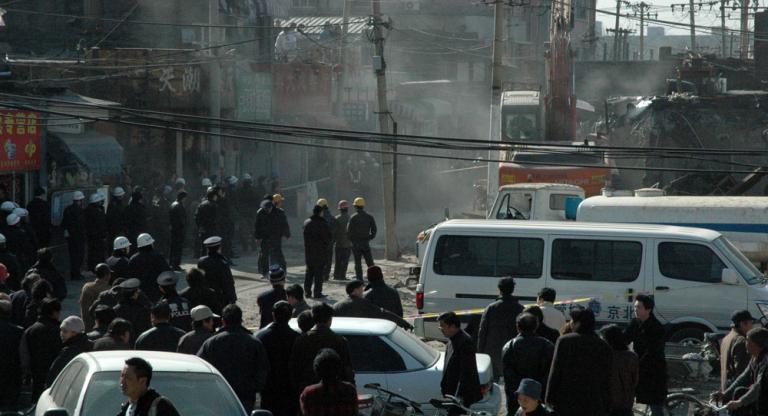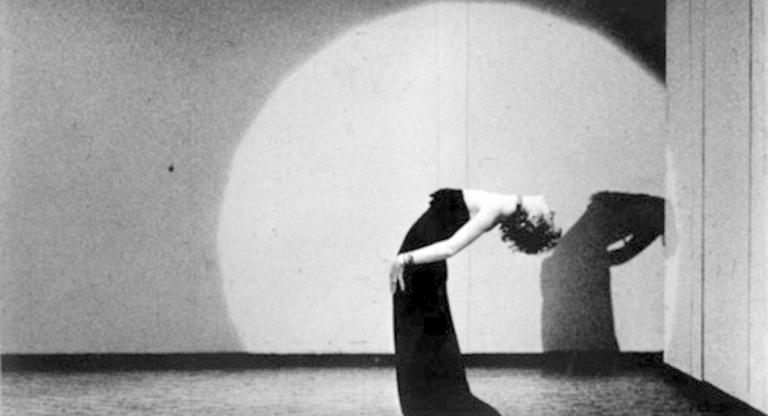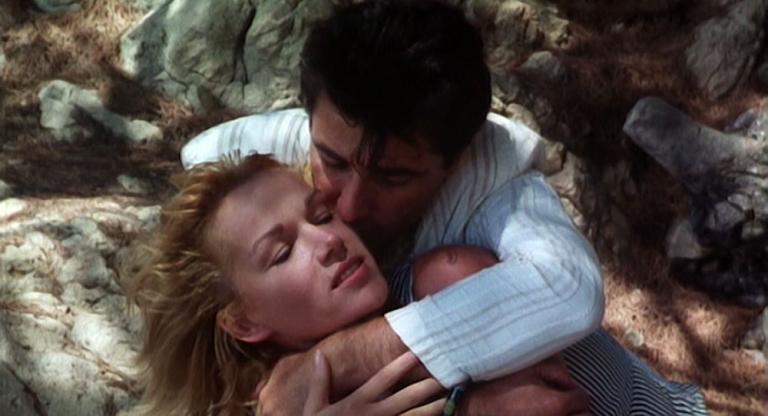
Any film made by Robinson Devor and Charles Mudede is an event, and this year makes 20 since their first collaboration, Police Beat (2005): a gorgeous widescreen psychodrama about an alienated immigrant bike cop in Seattle, adapted from Mudede’s eponymous police blotter column in the port city’s alt-weekly The Stranger. Their documentary Zoo (2007) was marked by a willingness to “go there” that set it apart from other docs, attracting infamy for telling the story of a man in rural Washington who died of injuries suffered during sex with a horse. Suburban Fury is no less courageous. It’s a stunning portrait of Sara Jane Moore, a housewife-turned-failed radical who tried and failed to shoot President Gerald Ford outside the St. Francis Hotel in San Francisco on September 22, 1975. It exists because the filmmakers agreed to Moore’s stipulation that she be the film’s only direct interviewee, a mesmerizing but unreliable narrator.
What drives a person to the breaking point? “SMJ” was not just a failed assassin, but an FBI informant and a restless divorcee who had drifted into the Black Power movement while obsessed with the kidnapped Patty Hearst. She got involved with People in Need, the short-lived volunteer food organization founded by Hearst’s father Randall while his daughter was held captive by the Symbionese Liberation Army in 1974. Over 18 months, she began reporting to the Bureau, then tried to come clean to her comrades at P.I.N., alienating both parties. Hers is an insane, quintessentially American story. Working with editor Bob Fink, Devor and Mudede zero in on the contradictions between Sara Jane’s version of the story, and the historical record as it came into being. One of the year’s essential films, it plays at Alamo (Lower Manhattan) thru this Thursday; ahead of those screenings, I caught up with Devor and Mudede via ZOOM
Steve Macfarlane: Sara Jane Moore’s life story is crazy. She was born to first generation Jewish parents in West Virginia, coal-miner country, but she never talks about her religion or heritage. She goes out West, creates a new persona for herself. It seems there’s a lifelong endeavor to forge a coherent identity, or narrative, but the pieces don’t add up.
Robinson Devor: I mean, we all control our own narratives, and I wouldn’t want to talk about things that were painful to me, either. I would never agree to let someone make a documentary about me.
Charles Mudede: It was important to us to stress that, while everyone’s talking about how divided this country is, a lot of those divisions have always been there. She sort of exemplifies this America that keeps going back and forth, except in her own personality.
RD: Late in the film, we have an FBI agent reading a personal ad Sara Jane published, and it talks about her sense of wonder about the world. I think her best trait was probably her curiosity. If she was in a room with FBI agents, she was going to be curious about how they did what they did. If she was in a room with radicals and militants, same thing. She had a curiosity bump a mile high.
SM: I have to say this film immediately reminded me of Zoo, in the sense of radical empathy with SMJ. Only later did I realize you started shooting over ten years ago.
RD: Charles, does the phrase “radical empathy” resonate with you?
CM: I mean, we play good cop and bad cop with our subjects. And I’m the bad cop. [Laughs] On Zoo, everybody loved Rob, and they were always suspicious of me. Rob is usually the one who’s much more sensitive, better at meeting with subjects, feeling them out, getting them to a place where they’re comfortable expressing themselves. But this time, I hit it off pretty well with Sara Jane Moore, and so I was sometimes the one calming her in situations where something went wrong.
RD: Charles is a very experienced journalist who has interviewed many, many different people—cops, criminals, everybody. So I think he has a very level-headed approach to things. I doubt Sara Jane Moore ever watched Zoo, but she had a handler in D.C. who we had to go through, and I think it was good we had just made Zoo, because if anyone was ever shunned in the media, who was ever laughed at and denied a fair shake, it was the subjects of our prior film. Sara Jane and her handler read up on us, and I believe that meant something to her.
SM: Maybe “empathy” is not the right word. I just mean these films force you to sit with disquieting things and really spend time thinking about what it must be like for these people. That’s pretty contrary to the way people form judgments today when watching the news, documentaries, TikTok videos, whatever.
RD: She had a great recall of the period and the time, so when you went somewhere she did not wanna go, there was a great deal of resistance. Because in a way, that period was still alive for her. I got the sense that she hadn’t really processed everything. I think her narrative was imprinted in her mind from years and years of telling it as a story, orally, to entertain.
CM: The job was to knock her out of that habit, to get her to stop telling us the story she told a thousand times already. We got new stuff out of her and it was not easy.
SM: There’s also a scene where Sara Jane seems to be fed up with you guys.
RD: Just so you know, she yelled at me off-camera too. [Laughs] She might have tried to exert some control over the way things were going, but other than that scene, I don’t remember a lot of shouting. Do you, Charles?
CM: She would say, “You’re pushing my buttons! You’re pushing my buttons!” I think seeing her anger is really important, though.
RD: He was pushing her buttons because he was trying to dig into places she didn’t want to go. One of them was the death of Popeye Jackson, and her involvement in that. He was a prison reform advocate who she was very drawn to. It all began to unravel for her after he was killed, presumably by a member of the Tribal Thumb that was working undercover for the FBI.
CM: Rob was digging there because he wanted to figure out how she was involved.
SM: At times, she sounds proud of her work with the militants, albeit aware she stuck out like a sore thumb. Other times, she’s rationalizing her decision to be an informant. It occurred to me that this is almost a privileged, bourgeois position.
CM: Her class confused me. I come from the British system, so I’m very used to pinning people down, figuring out where their background is. SMJ was a little more complicated. Her upbringing was spottier, and I’m not sure I would use the word “bourgeois.” She had a working-class background, she was flamboyant within the world of Hollywood, [and] then with a physician husband, living in the suburbs in Danville, but interacting with these radicals in San Francisco. Her background enabled her to make these kinds of transitions. Wherever she was, that’s the class she was in.
RD: Something that doesn’t come out in the film is her long history of mental disturbances, suicide attempts, times in sanatoriums. We couldn't resist talking to the lead psychiatrist, Gustav Weiland, because he’s still around. He was the counsel for the defense, which meant SMJ was interviewed by him several days a week. Well, we talked about this concept of her two loyalties and he said, “You cannot live life betwixt and between.” He said that because it disrupts everything. It’s a whole other thing to discuss who she was more loyal to, but the force of the contradiction was so great that it resulted in a bullet flying in the direction of Gerald Ford.
SM: The way she explains the assassination attempt is: if she killed Ford, then Nelson Rockefeller would accede the presidency, and people would wake up to the fact that neither had been democratically elected president. Rockefeller was appointed, under the 25th Amendment, as Ford’s VP because Agnew and Nixon had both resigned.
There’s a rich tapestry of reasons why Kamala Harris lost in 2024, but I think the lack of a primary, the smoke-filled-room politics of the modern Democratic party, and the kingmaking that anointed her as the nominee was a big factor.
CM: Rob and I always talk about other films when we’re making a film. For this one, we talked a lot about the paranoid cinema of the 1970s. Parallax View, The Conversation, All the President’s Men. Because you’re like: who is pulling the strings? How long ago did we lose control? All these films were in our minds.
I was also thinking about Robert Kramer’s documentary Milestones. The hippies return to the city, give up on their dreams, and pretty much get ready for the Reagan years. You have a sense that this whole chapter in American history has closed.
SM: As opposed to going out in a blaze of glory. In one scene, Sara Jane talks about being stopped by a police officer and reaching into her purse, and assuming—fantasizing?—that she’s going to be blown away then and there. In another, she recalls outing herself as a “pig,” and how the person she told decided not to make a big deal of it. It’s almost like she wanted to self-immolate instead of living through the crisis she created for herself.
CM: It’s crazy the film premiered so soon after the assassination attempt on Donald Trump. There hadn’t been an attempt like that since Reagan was shot, in 1981, so I think we went through a period of time where that type of violence was a thing of the past.
RD: I have to say I was surprised how little dialogue there was about political violence after the Trump assassination attempt.
SM: Biden went to the DNC a few days after and he said, “There is no place in America for political violence.” And it’s like… I would love to believe that. But political violence is our main export. America is political violence.
CM: Reagan’s situation wasn't. It was someone with a deranged obsession with Reagan, but it wasn’t because he hated his platform or his politics. Saw him as someone who was pulling the strings, someone who had to be stopped. It wasn’t because somebody wanted to save democracy. It returned to us very suddenly. So we’re having this resurgence and it’s hard to discuss it. We haven’t seen this kind of thing in a while. And everybody knows the Patty Hearst story, but nobody knows the Sara Jane Moore story.
RD: And no one was more obsessed with Patty Hearst than Sara Jane Moore. She had all of her communiques typed up in a special container under her bed. She was obsessed with the story, of course, as was everybody in San Francisco, but I just think it hit her so hard on so many levels. She was impregnated with those sensations and possibilities.
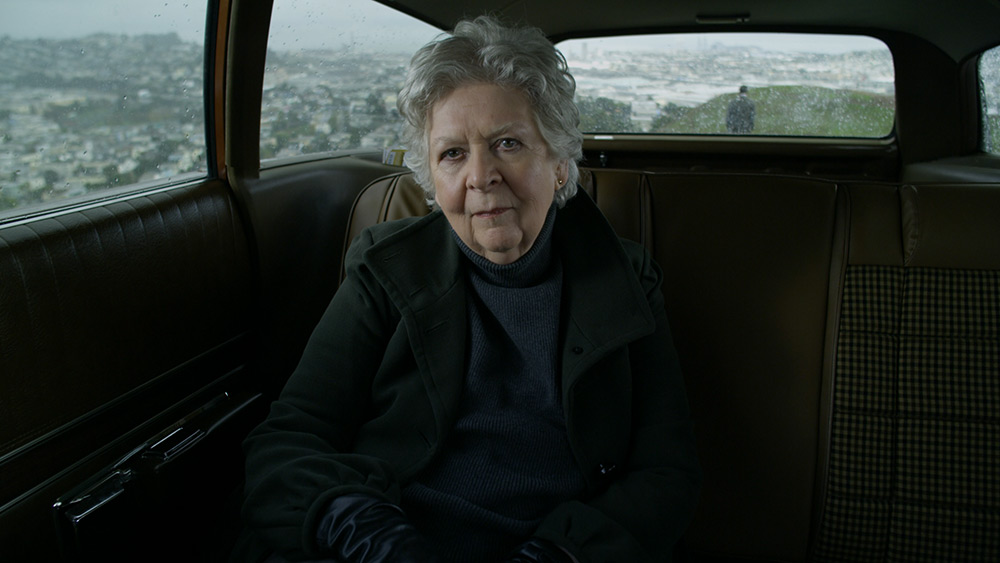
SM: With your regular DP, Sean Kirby, you capture menacing wide shots of the Bay, static shots of the canted San Francisco streets, shots of Sara Jane in the back of a 1970s stationwagon, all with incredible depth-of-field. And there are these kind of low-rent feds pacing around outside the car. Sometimes I’d catch myself thinking it was meant to be a period recreation and a contemporary car would come into the frame, looking for parking. This stuff is not just transitional b-roll. You’re collapsing past and present.
CM: One of my favorite shots is a slow zoom on this FBI building in San Francisco. The world has changed around her, and she's still in that past. That was a way of accentuating that, of emphasizing that we are in her past right now. I’ve always loved the modernist aesthetic of exposing how something is built. Don’t cover it up, don’t hide the construction: show the pipes, the concrete, all that stuff.
RD: I've been working and thinking and just naturally dealing with blackouts quite a bit in the last couple of years. A lot of shots end abruptly with her on camera. One of the structural strengths suggested by Bob Fink was that we look at this like a paperback novel where you could have some small mysterious thing live as a chapter, and then you could move past it, and reset, go on to the next.
When you start to fictionalize stuff, it just gets sad. It gets so simplified. We’re trying to do something people haven’t already seen before. There’s one interview where we put her behind glass, and she’s speaking through glass to people that are outside. It’s nerve-wracking to shoot, because you don't know if it's going to play. And then you're committed, and you don’t know if you just wasted a whole day or not. There was one full day of footage that just didn’t work. None of it got into the finished film. But when you’re gambling, there’s a percentage of loss, for sure. And you should always gamble.
SM: We’ve all seen the documentary where someone is talking and the filmmaker is afraid that's not interesting enough, so you get a shaky handheld close-up of their hands while gesticulating, or their eyes darting around, or just, you know, a montage of the Beatles on Ed Sullivan because it's the ‘60s.
CM: That thing you just said—I call it “local color.” This fake sense of nostalgia. If you're going to talk about the 1920s, then you're going to have local color, like a famous boxing match, or a reference to Great Gatsby, or you'll play big band jazz or something like that. I want to avoid that at every opportunity, especially with a film like this. Anyway, I need to go.
[Charles leaves]
SM: Sounds like you missed your chance to do a Haight-Ashbury montage set to “Time of the Season” or whatever.
RD: Bob Fink, editor and co-writer, actually convinced me, in the rough-cut stage, to put the Jefferson Airplane song “Volunteers” at the end of the film. It’s a great tune, but I was like, Bob, I can’t do that.
SM: Thought experiment: A UFO touches down. A Hollywood executive steps out and says, “I'm going to give you guys $150 million to make the narrative version of Suburban Fury.” Would you want to go that route?
RD: Our hybrid film was moving in that direction. The documentary aspects were getting smaller and smaller, and the fictional stuff was getting larger. Charles talked me out of it. And I’ve spent so much time with Sara Jane Moore already that I have other things in my short time left on Earth that I would like to work on. I mean, my feeling is, I could always use the money. [Laughs] But I would also say, every time I’ve taken the money in this business—and there are not a lot of times that’s happened—it has never worked out. It has never been sustainable, nor fun.
SM: At our Zoo Q+A at Spectacle this summer, you told a story that’s been living rent-free in my mind, about the film’s distribution, and the promotion…
RD: Well, Zoo was a magical ride for us. It got shot and made very quickly. I went to LA, hooked up with a major agency, the money was raised, they got us into Sundance, into Cannes… What’s not to like about that? But the distributor insisted on this poster for the movie which we totally hated, where the guy is reflected in the eye of the horse. We didn’t fight it, because they didn’t ask us to change anything about the film itself.
SM: You said you hated the poster, and then you also said you had a different title.
RD: In the Forest There Is Every Kind of Bird.
SM: Charles said he was reading a lot of Foucault at the time you guys came up with that. Don’t shoot me but I think Zoo is, at least, a more gripping title.
RD: I think the old title was influenced by Herzog, or by a Rousseau painting, or something like that. But look, I have been in some power struggles over creativity that you would not believe. They become life-and-death stakes. When you get into those kinds of disagreements, boy, it is not pretty. Never with Charles, by the way. Never.
SM: I really believe Zoo and Suburban Fury are documentaries people will be revisiting for a long, long time. What’s your next project?
RD: It’s another documentary, about Richard Russell, who was a Horizon Airlines ground agent with no flying experience. In 2018, he hijacked a plane at Seattle-Tacoma International Airport and went for the final ride of his life. The internet called him the “Sky King.” We’re working with Tim Satre, another Seattle-based writer/producer, and his company. We’ll look at Russell’s life and legacy, cultural and spiritual factors in the incident. But we’re trying to find the truth and humanity of his story.
Suburban Fury screens this afternoon, December 6, and throughout the week, at Alamo Lower Manhattan.