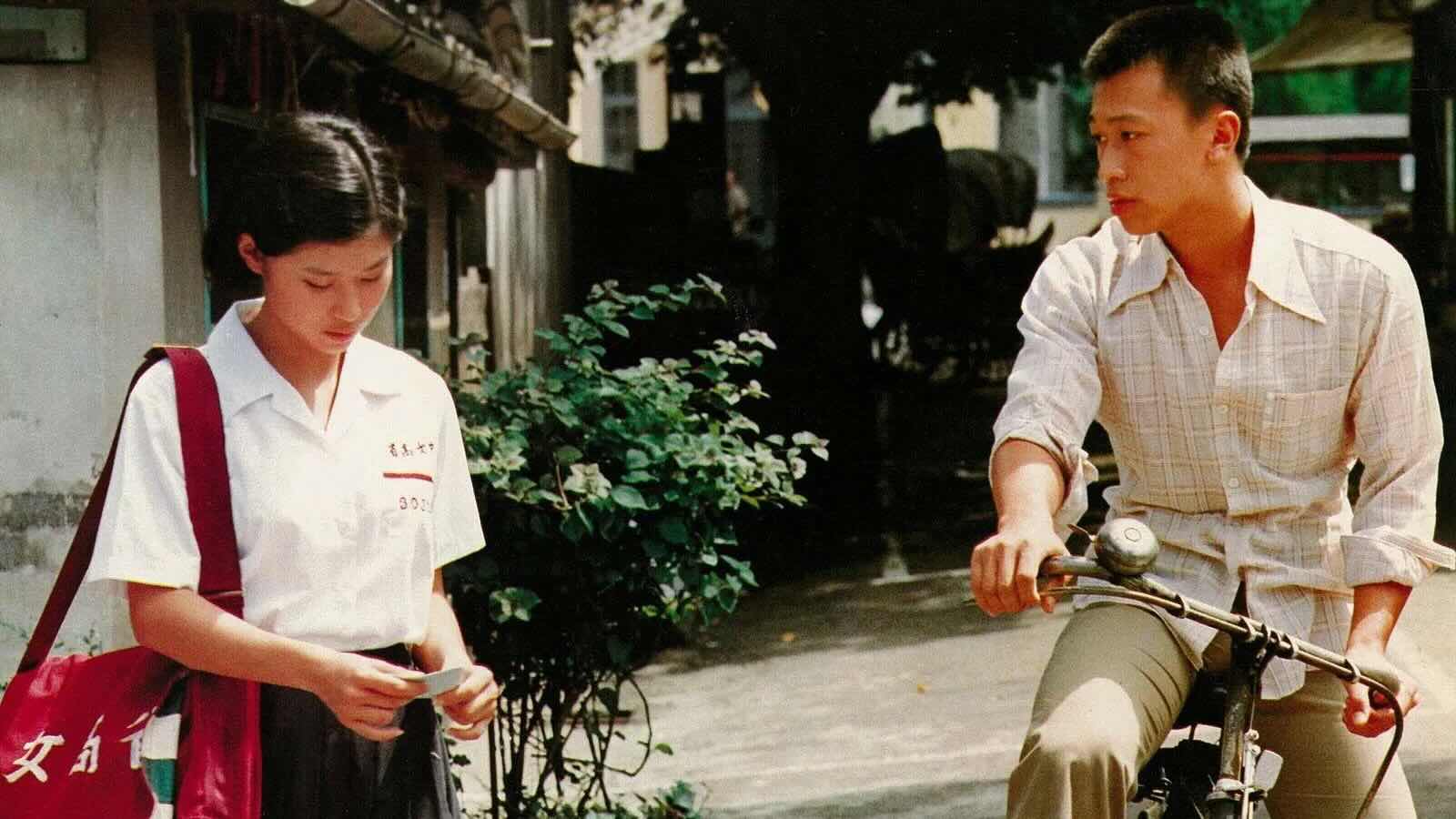
Scrapbooks have the unearned reputation of being quicksand traps that await hapless partners meeting the family for the first time. Even if Granny natters a bit during her recitation of generations of proper nouns, her invitation to tour family media is a tremendous gift. Perhaps the tide will turn as our visual legacies move to the indiscriminate, endless cloud, which unwittingly reinstates the magic of old polaroids and school portraits thoughtfully selected and labeled by loving stewards of family history. Hou Hsiao-Hsien’s quietly devastating fifth feature, A Time to Live, a Time to Die (1985), often feels like a run through the family photo archive, with all of the mystery, detachment, and profundity that implies.
The film is the second installment of a coming-of-age trilogy that started with 1984’s A Summer at Grandpa’s (also screening at Metrograph, earlier in the day), and concluded with 1986’s Dust in the Wind. Not only shot in Hou’s hometown of Kaohsiung, but in the exact home in which he grew up, the film reconstructs the transition to adolescence of a Hou stand-in also called Hsiao (Yu An-Shun). Hou’s own voice introduces the film with an explanation of his family’s transcultural context. Originally from Guangdong, China, Hou’s father moved the family to southern Taiwan while seeking treatment for tuberculosis. Their intention of a short stay became complicated by health crises and political turmoil. Aside from his ailing father, Hsiao’s household includes his stalwart mother, four siblings, and a sundowning grandmother with implausible plans of repatriation.
Hsiao comes of age silently, observing his father’s pain and the family’s poverty largely without comment. As a boy, he occupies himself playing marbles with friends and effortlessly excelling at school. But, his melancholy curdles in the wake of his father’s decline and he joins a petty gang whose pitiful efforts at extortion exemplify the unbearable impotence of teenage boyhood. It’s a story we’ve seen plenty of times, but the film is largely uninterested in cinematic analogues to Hsiao’s chaos of hormones and tragedy.
Hou, retired from filmmaking since 2023, reportedly instructed his cinematographers to “keep a distance, and be cooler.” The approach denies cinema’s ostensibly intrinsic preference for speed and heat. But like a photograph, Hou’s vision makes fewer demands on the nervous system than most films, and consequently encourages the eye to wander. The film recreates the intimacy of peering into family photos—noticing the recurring cast of furniture pieces, reading intrigue into glances—while dedicating itself to the unpreserved aspects of family life, namely the corporeal realities of shared space. In Hou’s unsentimental nostalgia, heartbreaking monologues of foiled dreams spill out while scrubbing floors, but wet dreams and bathroom stink are constituents of autobiography as crucial as malignant growths and bloody coughs.
A Time to Live, a Time to Die screens this evening, December 29, at Metrograph on 35mm as part of the series “The Memory Palace.” It will be introduced by film programmer Edo Choi.