97 Orchard Street saw many renovations during its lifetime as a tenement from 1863 through 1935, but one constant feature was the handrail for the staircase going up from the first floor. It remains today, and the building is one of two used by the Tenement Museum to host its living history tours. As you ascend the stairs, gripping that handrail physically links you with the thousands of people who lived there over the decades, from when the neighborhood was Kleindeutschland through when it was a Jewish enclave. The psychic links between the self, community, and disparate times and places are central to the oeuvre of the late great filmmaker Joan Micklin Silver. Historical and modern Jewish life in New York are bookended by her films Hester Street (1975) and Crossing Delancey (1988). The former, her debut feature, is part of Film Forum’s series “Tenement Stories: From Immigrants to Bohemians,” presented in partnership with the Tenement Museum.
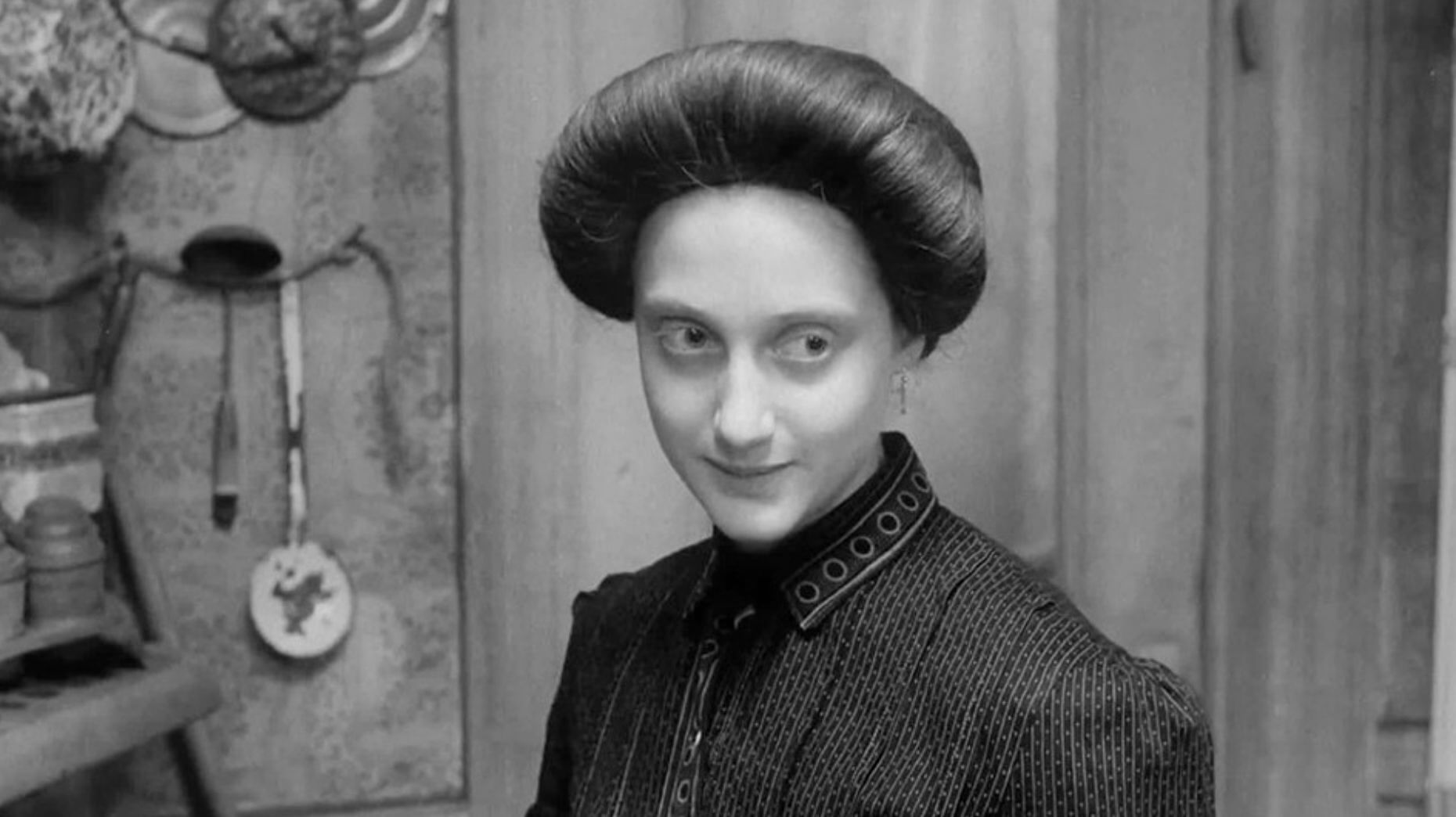
Silver adapted Abraham Cahan’s 1896 novel Yekl: A Tale of the New York Ghetto into the script for Hester Street, in the process flipping the story’s perspective from that of Yankel (Steven Keats), who has been in the United States for several years and assimilated so enthusiastically that he insists on going by “Jake”, to his wife Gitl (Carol Kane), who has just followed him to Manhattan. The film faithfully reproduces the parable-like quality of old tenement stories by Jewish immigrant authors of the period like Cahan and Anzia Yezierska. Yankel represents worldlier Jews who have sacrificed their values for the sake of success, Gitl those who cling more fiercely to tradition. These writers gauged their new lives in America with caution, intrigued by the possibilities it offered but wary of its pitfalls, particularly the loss of their cultural identity.
The division isn't quite so neat, though; Gitl is not a hardliner, and she gradually acquiesces to learning English and adopts American dress as the film goes on. Kane’s marvelously nuanced performance evinces her constant internal negotiation over what’s worth holding onto and what might be discarded, a synecdoche for the larger story of the American Jewish immigrant.
Made toward the tail end of the New-Hollywood-adjacent independent film movement of the ‘60s and ‘70s (from which Silver was one of the few female directors to benefit), Hester Street is impressively transportive considering its limited budget. The movie is mostly confined to tenements and the backrooms of different businesses, but a few detailed bustling street scenes (shot on Morton Street rather than the eponymous one since the neighborhood had continued to evolve and at that time was Loisaida) convincingly sell that there’s a greater world beyond those sets. In one noteworthy scene, a peddler comes up to the apartment to sell to Gitl, their bargaining tenderly evoking a sense of the mundane everyday of a bygone era. That visceral cinematic conjuration of the past is nearly as good as touching the same wood that now-gone people have, through more than a century of them going through their own lives.
Hester Street screens tonight, February 9, and throughout the month, at Film Forum as part of the series “Tenement Stories: From Immigrants to Bohemians.”