Nicholas Meyer’s Time After Time (1979) would have us believe H.G. Wells’s second wife wasn’t in fact the London student and writer with whom he’d had a home-wrecking affair, but instead a hapless San Francisco bank teller 87 years his junior. Also, that he built a time machine just like the one in his book only for Jack the Ripper—then Wells’s regular dinner guest, philosophical foil, and chess rival—to run away with it across several decades and longitudinal time zones, forcing Wells to chase him and, relatedly, find romance. Just go with it, said no one ever, until along came that author of the bestseller and film about Sigmund Freud helping Sherlock Holmes kick cocaine (The Seven-Per-Cent Solution, 1976) talking Warner Bros. into a feature directing debut. And so posterity records the perpetual charms of Time After Time, this genre-fluid lark, or if you prefer, tenderly elevated fan-fiction pastiche, from future Star Trek franchise revitalizer and evident San Francisco enthusiast Nicholas Meyer, who’ll be at the Vogue on Saturday to discuss his films.
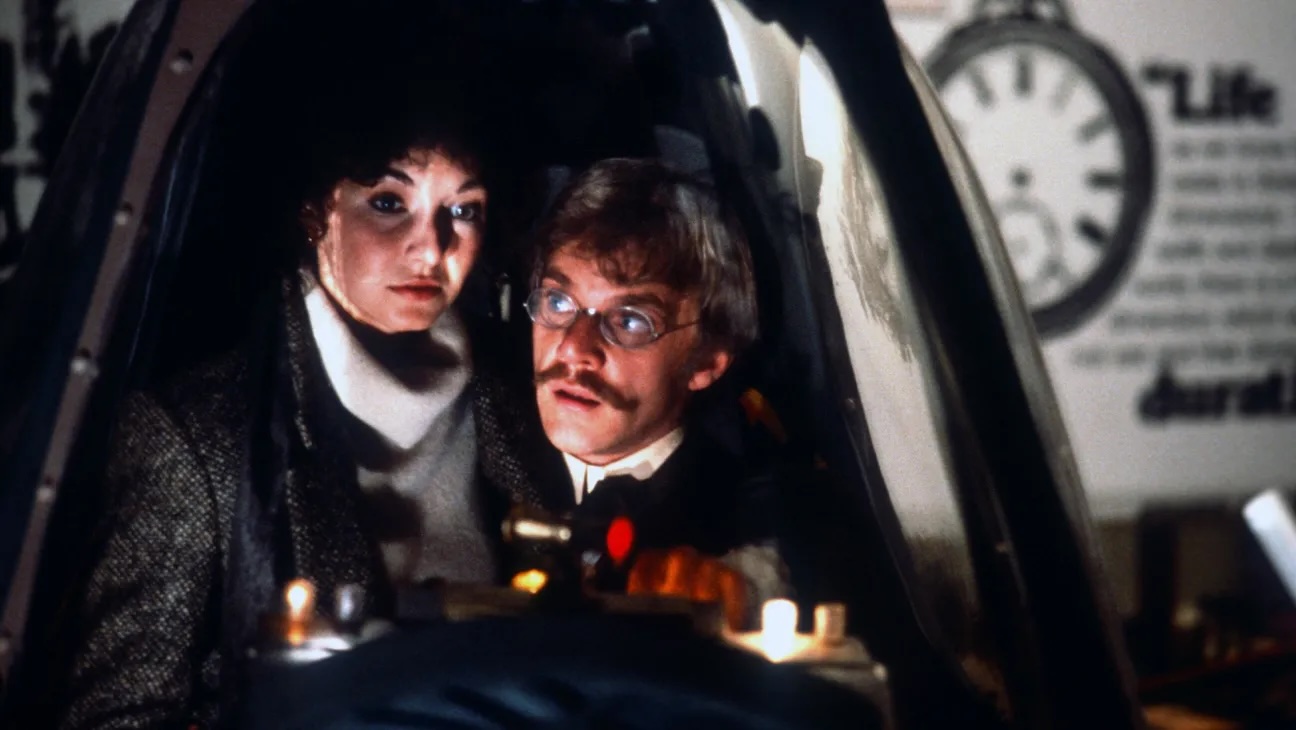
Like its hero, Time After Time is gangly and endearing. In what might have seemed a wan attempt at public-image rehab after the brutality of A Clockwork Orange (1971), Malcolm McDowell appears genuinely delighted to portray a paragon of mild-mannered sincerity. Landing in our fallen left-coast paradise of progressivism, from which the Summer of Love has come and gone, his Wells wears an appropriately anachronistic herringbone tweed suit, little round wiry glasses, and the right mix of wide-eyed and woundedly melancholic.
For all its fluctuations of genre and tone—this is a movie with sight gags like running after a time-traveling serial killer the wrong way on an escalator—Time After Time is at its core the tale of a gently cerebral fellow whose utopian 19th-century ideals suffer the rude awakening of 20th-century reality. Warner Bros. reportedly suggested Mick Jagger for the Ripper, and that would have been something, but Meyer made the excellent choice to go with David Warner, another low-key dignifier of the whole affair. “Ninety years ago I was a freak,” Warner’s dapper villain says in one key scene, pointedly sharing a TV doomscroll with his pursuer. “Today I’m an amateur.” It’s hard not to think: Wait until you guys see century 21.
Their peculiar love triangle would not be complete, of course, without the aforementioned bank teller, that independent woman (by 1970s standards) who magnanimously serves as a fulcrum of history. Maybe the most delightful and least preposterous thing about Time After Time is that aspect for which credulity is least strained, disbelief least in need of suspension: young McDowell’s chemistry with young Mary Steenburgen. Not long after making this film, they got married.
Time After Time screens this Saturday, June 13, at the Vogue Theatre as part of the series “Bay Area Movies.” Director Nicholas Meyer will be in attendance for a Q&A.