Movies and TV shows often struggle to depict digital communication in a cinematic way, which has generated no end of discourse over the past 20 or so years—particularly around how much this is to blame for certain auteurs sticking to period and genre pieces. It’s thus striking to look back at when texting, email, and internet forums had only just been integrated into the mainstream and yet some filmmakers had an almost intuitive grasp on naturally integrating these elements into their work. 2001’s All About Lily Chou-Chou is a widely cited example, but a South Korean film from the same year that has its own cult following deserves just as much praise. Despite winning myriad festival plaudits and quickly attracting a small but devoted audience, Jeong Jae-eun’s Take Care of My Cat has remained hard to see in the years since. Metrograph showing the film as part of its tribute series to the actress Bae Doona is a rare and vital opportunity.
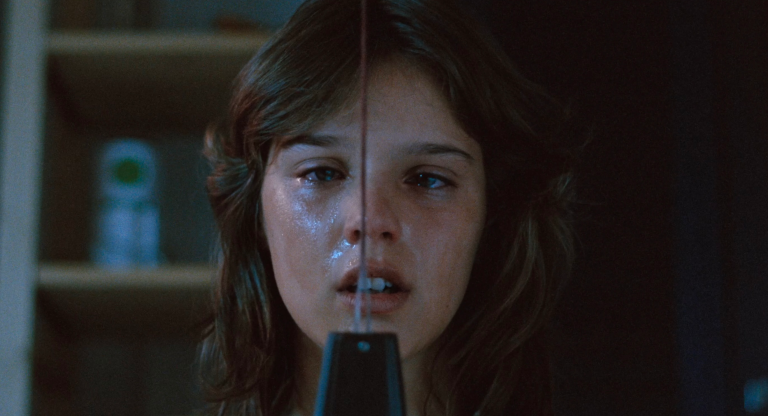
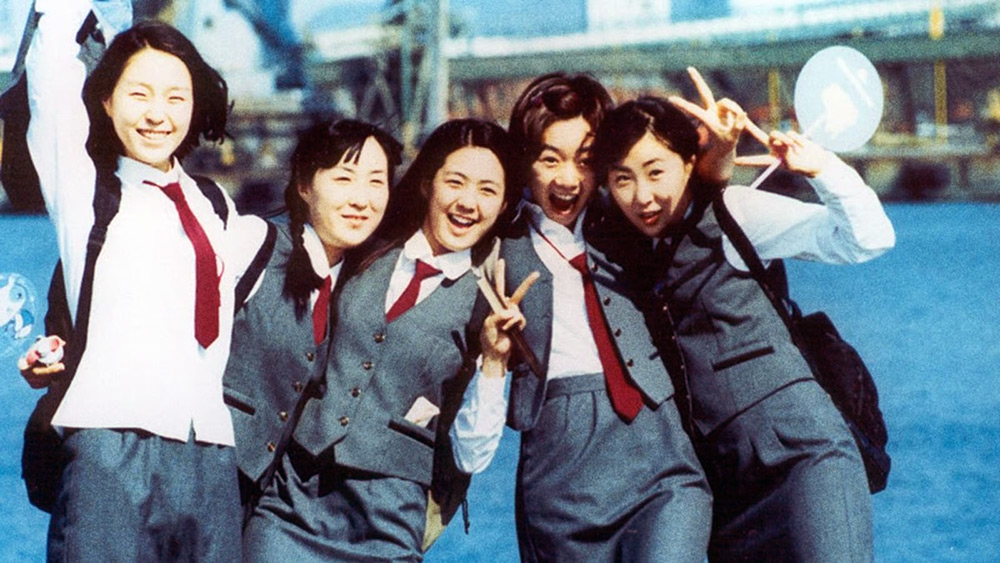
The film’s incorporation of cellphones is vital to its portrait of a formerly close friend group that, a year out from graduating high school, is fraying apart. One early scene in particular, in which the five young women use their phones to play a birthday tune during a party, beautifully evokes the way these devices felt more like friendly accessories than all-consuming proxies for socializing two decades ago. The fact that a flip phone can be opened and closed, while a smartphone’s black mirror always stares at you, appropriately suggests how much easier it was to compartmentalize them in one’s everyday life. When the girls get separated while shopping and call each other to rendezvous, the conversation is edited as if they could be walking right next to each other, demonstrating how portable phones can collapse physical distance. Text messages scroll across building edifices, symbolizing how they take up a character’s mental space as they read their screens. Jeong can even evoke a more traditional cinematic phone call technique, the split screen, in a novel way. One group call is shown through four parallel columns (while this was before video calling, the way this scene turns the widescreen frame into a collage of portrait-mode images does make it look like each girl is inside a phone screen), with the viewer having to track various big and small reactions among the characters at an increasing clip as the conversation gets more contentious.
The girls live in the port city of Incheon, where they feel very far away from anything worthwhile happening in the world. One of them, Hae-joo, moves to Seoul to pursue a corporate job early in the story, precipitating what in retrospect is clearly the end of the group. She finds office life utterly enervating, but insists that this still counts as doing something meaningful. Jeong, who in the decades since this feature debut has mostly worked on socially conscious documentaries, infuses many such sharp little observations of economic stresses into Take Care of My Cat. Bae’s character, Tae-hee, is the only other financially secure member of the group, but her small-business-running family mocks her aspirations to find more fulfilling work, like how she volunteers as an amanuensis for a disabled poet. The other characters scrape by at menial jobs, grappling with the idea that this might be all they have to look forward to for the rest of their lives.
The title cat, Tee-tee, swaps hands several times over the course of the movie, watched out for by all of the main characters at one point or another. Tee-tee can be read to represent the bond between the girls, or to reflect their respective circumstances whenever they take custody of her, or to symbolize fleeting transitory periods of youth. One can imagine that, a few years after the events of the film, whoever has Tee-tee would post pictures of her on CyWorld, and then Facebook, and then Instagram. Hae-joo, Tae-hee, and the others would by then have lost touch, save for being connected on these various platforms. Today, they presumably still like each other’s posts on occasion. It’s not as fun to talk on the phone anymore, though. Life goes on.
Take Care of My Cat screens this evening, December 21, and on December 24 and 26, at Metrograph as part of the series “Doona, Doona, Doona.”