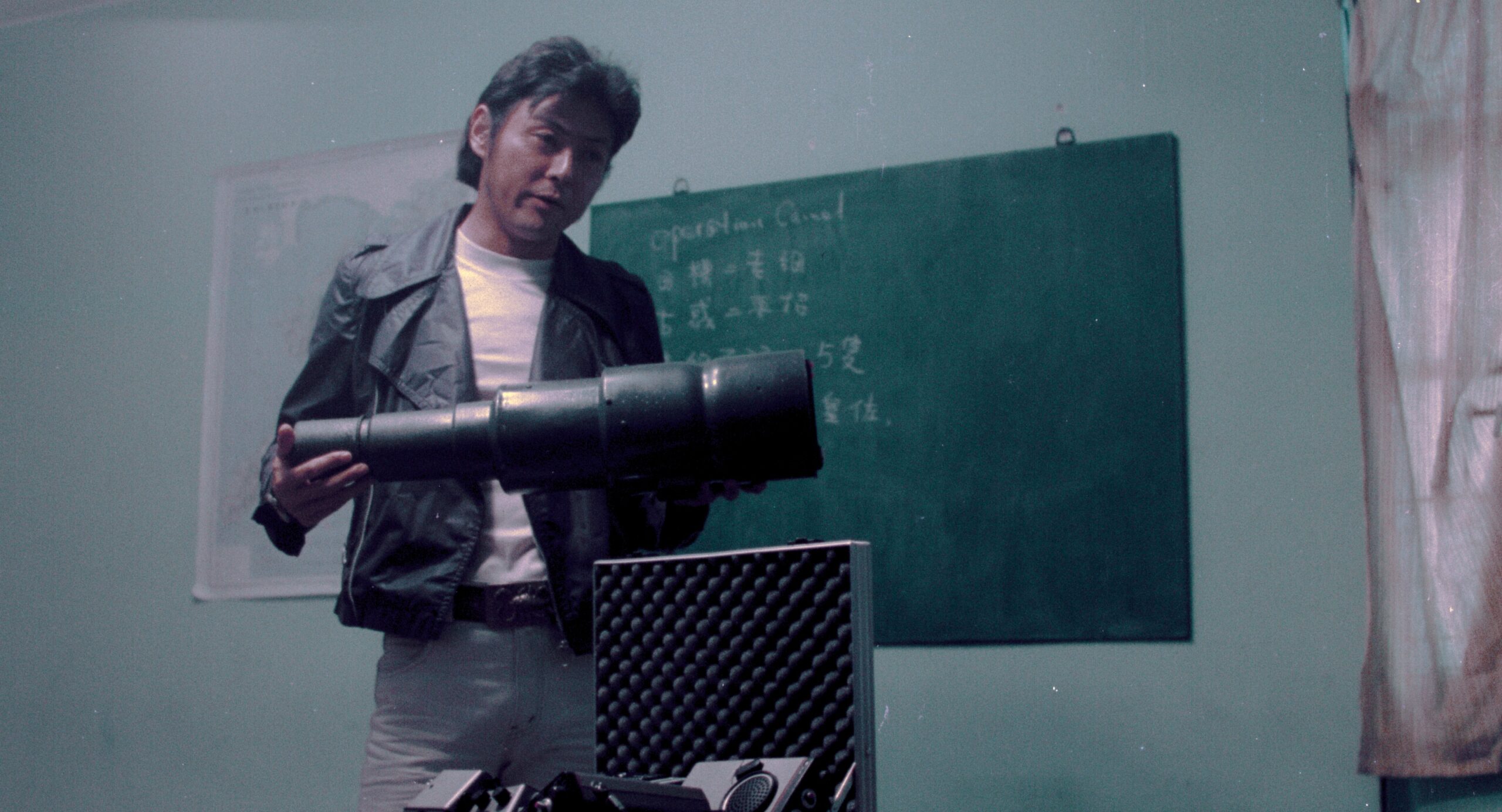
The photographer and filmmaker Peter Yung’s feature debut The System (1979) is closer to a product of sociological fieldwork than an unrestrained cop-and-robber flick. After being mentored by the Chinese-American cinematographer James Wong Howe in Los Angeles in the late ‘60s, Yung returned to Hong Kong. There, he researched and helped film a documentary for the now defunct British Broadcaster ATV on the colony’s vital role in the international drug trade. It was based on this research that Yung crafted his meticulous debut: a cat-and-mouse game of surveillance, bribes, and lies between Special Inspector Chan (Sek Kin) and criminal informant Tam (Pai Ying). Shooting on-location around ‘70s Hong Kong, which was still a British Crown Colony at the time, Yung’s camera observes the dynamics between narcotics officers and narcos alike. Viewers sit in on backroom meetings, listen to frenzied radio chatter, and spy on suspects through infrared telephoto lenses.
Cop thrillers were everywhere in the 1970s. Locally, the Shaw Brothers produced wuxia maestro Chang Cheh’s Police Force (1973), a propaganda flick made in cooperation with the Royal Hong Kong Police Force. That same year, Ted Post’s Magnum Force (1973) outperformed its predecessor at the box office. The image of Clint Eastwood and his murderous Inspector Harry Callahan circulated cinemas globally. Though it’s convenient to read Yung’s directorial debut as a response to the lucrative success of violent copaganda releases, its gritty true crime approach offers something more nuanced than many of its sadistic, right-wing-coded peers.
Most morally grey cop films coming out of the Hollywood studio system focus on the individual compromises of anti-hero lawmen. Whether these are meant to be critiques of policing practices or a fascistic fantasy of judicial control, their often shallow analyses are hamstrung by their larger-than-life protagonists. The System realizes a narrative that subjugates both its lead cop and criminal informant, in the end sacrificing them to ensure the survival of an oppressive social order. Instead of taking an ambivalent approach, vaguely resigning to the reality that criminal organizations and police departments are co-dependent entities, Yung characterizes both groups in the same light: as conforming mechanisms of authoritarian control.
Both Chan and Tam spend the film trying to defy their positions within their respective sides. The inspector aggressively pursues the head of the drug trafficking ring, constantly slowed down by interdepartmental feuds, the complicity of white British supervisors, and his increasing reliance on unreliable informant tips. On the other hand, Tam tries to con the police and his mob superiors only to be harassed and used until the very end of his life. When Chan asks why Tam keeps returning to the mob, the informant retorts, “If I don’t do it, someone else will,” only for them to be ambushed by mob assailants seconds later. Yung tragically articulates the brutal logic of the system: a collective order that will never hesitate to churn out renegade acolytes in the name of self-preservation.
The System screens this afternoon, January 25, at the Museum of Modern Art as part of the series “To Save and Project: The 22nd MoMA International Film Festival.”