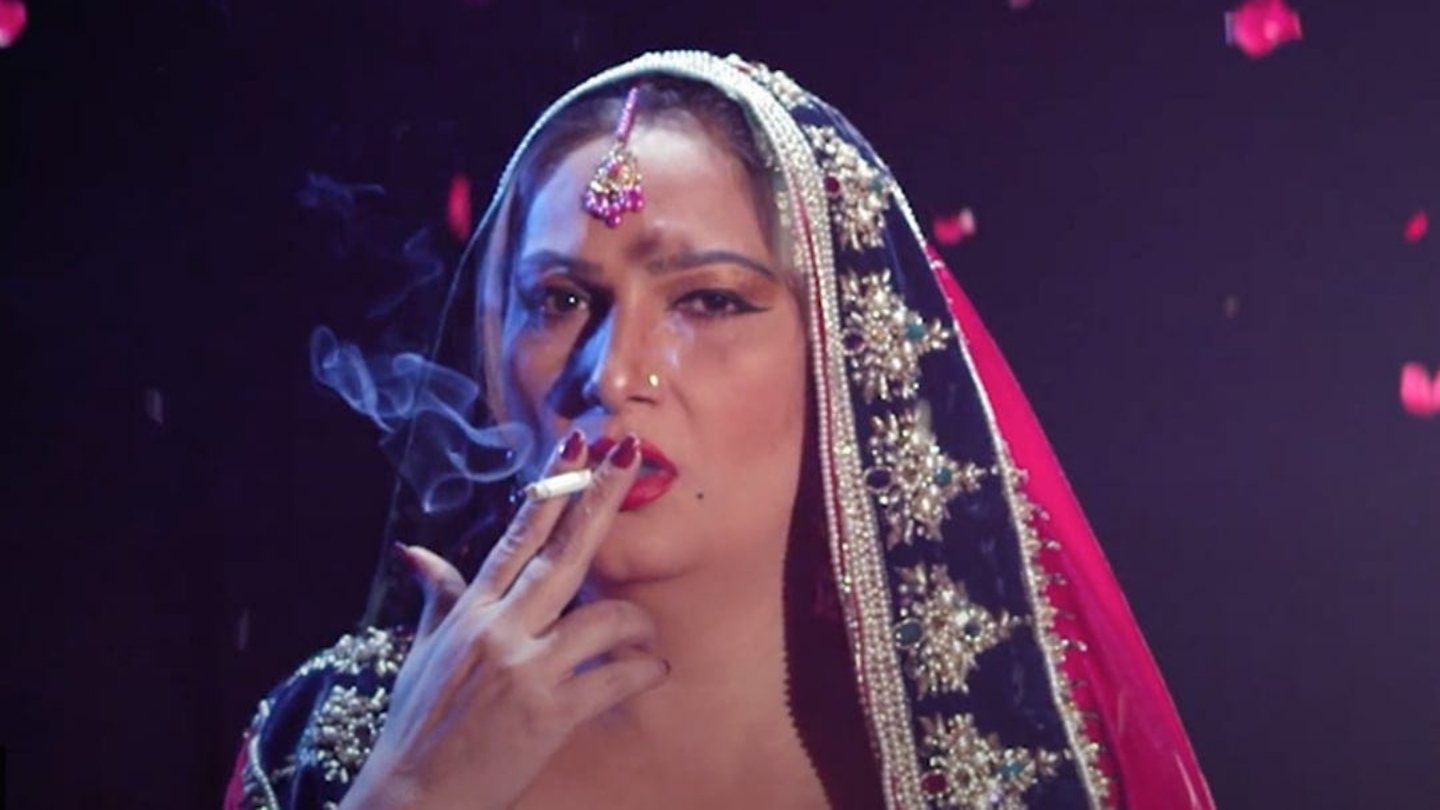
Much like Saad Khan’s archival project “Khajistan,” Showgirls of Pakistan (2020) is adorned by a maximalistic, kitschy, almost otherworldly aesthetic. The documentary follows the lives of three Mujra dancers—Afreen Khan, Uzma Khan and Reema Jaan—as they practice their craft while navigating harsh censorship rules, controlling and predatory men, and the inflated social stigma surrounding their performances. The Mujra tradition dates back centuries to the Mughal Empire, when it was originally performed by esteemed dancers in courts for the entertainment of the elite class. Today, it is performed by working-class women in theaters, weddings, celebrations, and private parties.
Each of the women in the documentary present a different type of Mujra dancer. Afreen is a notable star on the Lahore theater circuit. While she enjoys admiration from her fans online, she is also at the center of a dangerous public platform where dancers are often beaten, harassed, kidnapped, or shot. Uzma dances at private parties and is trying to get recruited to Dubai, where there is significant demand for performers. Instead, she gets in a tremendous fight with her manager-turned-boyfriend who attempts to hire someone to beat her up. Reema is a khawaja sira (legally recognized as Pakistan’s third gender) who was once an up-and-coming stage dancer with a promising career ahead of her. After falling out with her community, she now struggles to find work.
Despite being continuously harassed, shamed, and ostracized by society, all three women remain phenomenally self-assured in their talents, beauty, strength, and devoted fanbase. Khan follows the dancers closely and surpasses their public personas to capture private moments with their family, friends, and lovers. In addition to vérité footage, Khan deftly weaves in the dancers’ own social media videos with archival footage from decades of Pakistani film and television. The result is at once a grim record of modern-day Mujra dancers, but also a fantastical, whimsical, and near-stratospheric depiction of these fabulous divas and their pursuit of stardom at all costs.
Khan’s film stands out for its insightful narrative, fervent examination of Pakistan’s visual culture, and, most importantly, as a significant document of these women’s lives, thoughts, desires, dialects, habits, and styles—all of which are under constant threat of erasure. In demonstration of the Khajistan manifesto, the film acts as an archive of a “forgotten or silenced community” that is usually “banned, censored, and [...] excluded from the official record,” thus reflecting the moral panics of a hyper-patriarchal society. Khan proposes that these women are not just significant figures of a bygone era in Pakistan, but rather the key to understanding its contemporary culture and society.
Showgirls of Pakistan screens this Sunday, April 19, at the Roxie. Director Saad Khan will be in attendance for a conversation with scholar and programmer Delaney Chieyen Holton.