Sophy Romvari has quietly amassed a profound body of work that reckons with the unmoored nature of memory. Despite the best intentions of documentarians, the past cannot be adequately captured, comfortably analyzed, or satisfactorily solved. Romvari, working across documentary and fiction, investigates her own past, as well as that of her parents, her siblings, and her pets, while acknowledging this tenuous connection between author and objective remembrance.
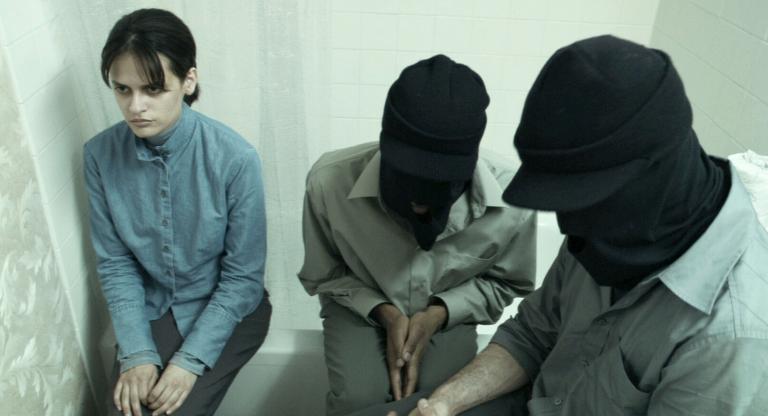
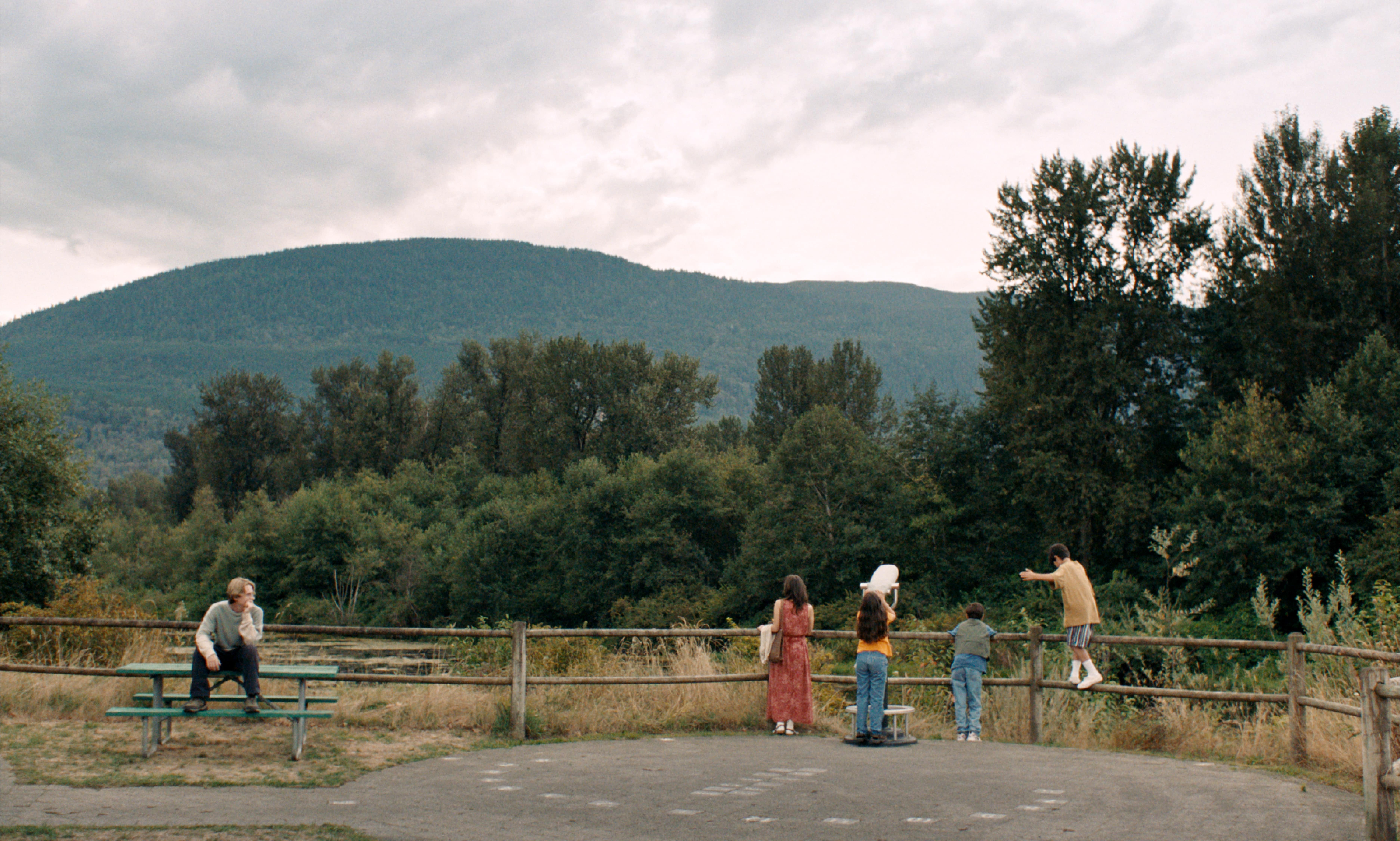
In Blue Heron (2025), the Canadian-Hungarian filmmaker’s first feature film, which arrives stateside at IFC Center via Janus Films, Romvari excavates childhood remembrances of her family’s arrival in Vancouver Island from Hungary. Their homemaking is rendered especially uneasy by the behavior of the family’s eldest son, Jeremy (Edik Beddoes), which ranges from steely and sullen to erratic and temperamental. Jeremy’s parents’ frustration over their inability to connect with him is seen from the perspective of youngest daughter Sasha, played by Eylul Guven as a youth and Amy Zimmer as an adult. Sasha and her family’s search for a diagnosis or explanation follows her for decades to come, culminating in a metacritical second act in which Sasha, now a filmmaker, questions the benefit of hindsight and just how far we have actually come in understanding cases like Jeremy’s.
Since I first met Romvari at True/False Film Festival in 2018, our conversations over the years have tended to include the utility of autofiction, the frustrations of personal filmmaking in the contemporary independent film landscape, and dogs. The following, recorded on the occasion of Blue Heron’s New York release, is no different.
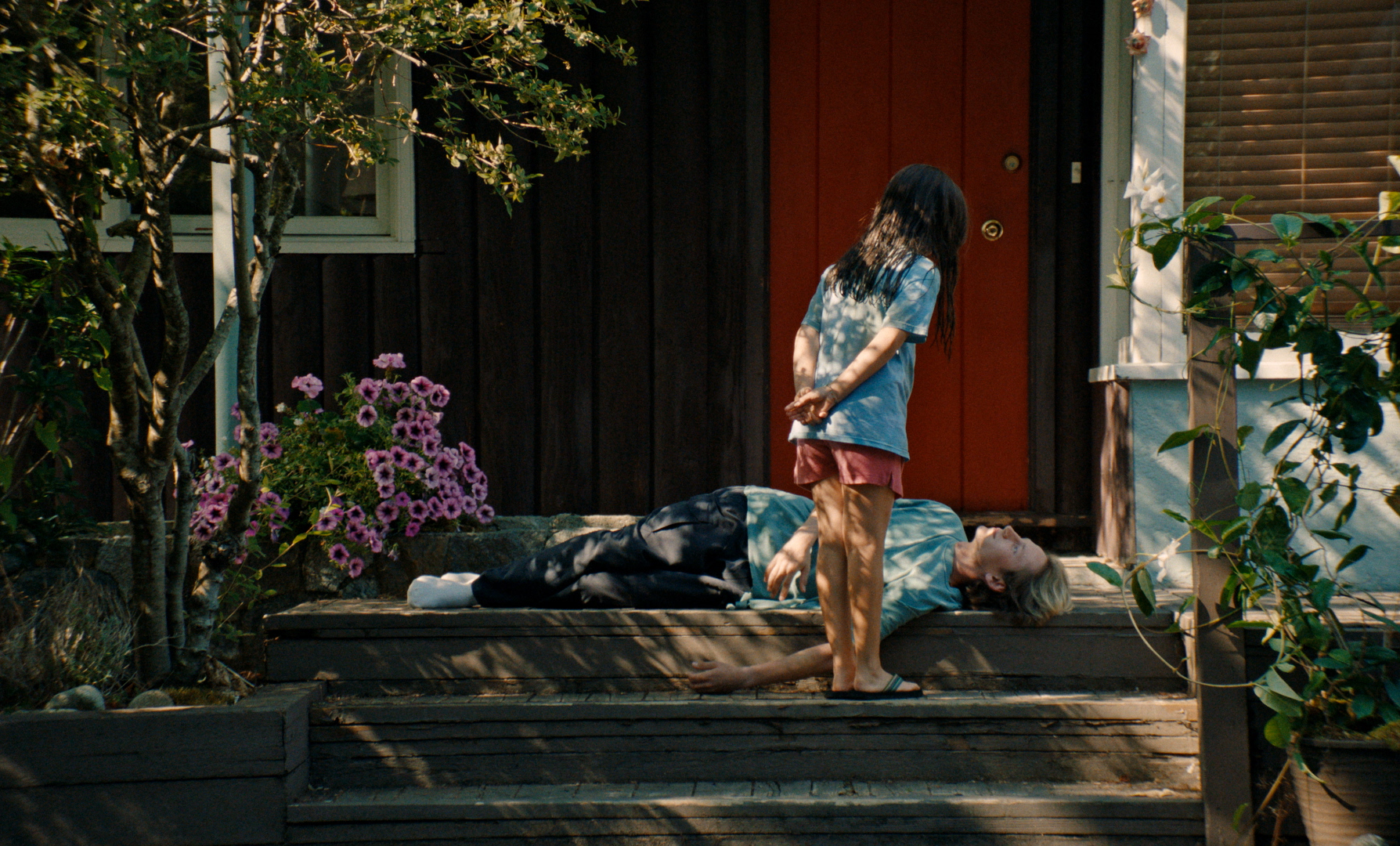
Mackenzie Lukenbill: What does recreation or restaging mean to you?
Sophy Romvari: I would never actually apply those words, even though I know when you make autobiographical work, that's, I guess, technically what you're doing. I was just thinking of directing scenes that I wrote. It wasn't so much an investment in trying to accurately depict something that occurred as it was directing a scene that I had written [and] that happened to be based upon a memory. Once you start trying to recreate something, then the creative liberty goes out the window and you start to get caught up on details that don't actually matter.
ML: Those details do matter a lot to some filmmakers who do that kind of memory work; like, this house needs to look exactly like the house I grew up in…
SR: Yeah. This house looks completely different. We chose it because there were windows that we could shoot through at the ground level, and thus light it both artificially and with natural light. A lot of the decisions are technical. There were some things that came from memory, like, my dad did paint the door red. But the priorities were more about finding a house that didn’t have a renovated kitchen.
ML: I think it's interesting because a lot of filmmakers who work in that autofictional, memoiristic space, Jennifer Montgomery or Su Friedrich, for example, are using the form to try and take ownership or authorship over something that happened in their life. But, that doesn’t seem like what you’re trying to do at all. You’re not even really the main character.
SR: I think all of my work previous to this was some sort of self-interrogation of the past. This film is still that. It’s just more controlled and precise, and that partly came from working on the script for a significant amount of time. The reason I wanted to make this film was to intentionally play with form. It was never something I was going to leave to find in the edit.
ML: I think the last time we hung out in person was in 2019, when you were in New York for the UnionDocs residency. You were thinking of making a feature specifically about the therapeutic release of restaging memories in documentary. Have your ideas around this shifted at all?
SR: I just don’t think I could’ve sustained the film in the first half. The recreation half. I think the point at which it cuts to the present is exactly when I exhausted that form. That hinge is where I was actually titillated artistically.
ML: The structure and how shots, scenes, and thoughts are replayed ends up becoming really remarkable and meaningful.
SR: It’s quite one-to-one with the script, which came from a fear of being on set or in the edit and not knowing or having what I wanted. I did the hard thinking in the script so that I had more freedom to make decisions on set. Even something like the heron keychain—that was not an object that I actually received from my brother, but it became a conduit that I figured out at the script level of how to have Sasha re-enter the past.
ML: The diegetic needle-drops feel incredibly specific: the mix of classical music, Hungarian music, and popular English-language songs. Were those pulled from memory?
SR: I had been watching all of this home movie footage and it struck me that there was always music playing in my house. Interestingly, it felt like a score. There’s footage of me using the toilet for the first time on my own and really loud Mozart playing. I loved the juxtaposition. Of course, it’s also an insane thing to do in a movie when you’re also paying for the music. You’re mixing it to sound like it’s coming from these tinny Windows 95 speakers, but you’re also paying the licensing fees for the full track. I did cheat a little with the Daniel Johnston song at the end; there’s an alignment with the movie in terms of his innocence, his vulnerability, and really his biography. I can’t listen to his songs without thinking of his life.
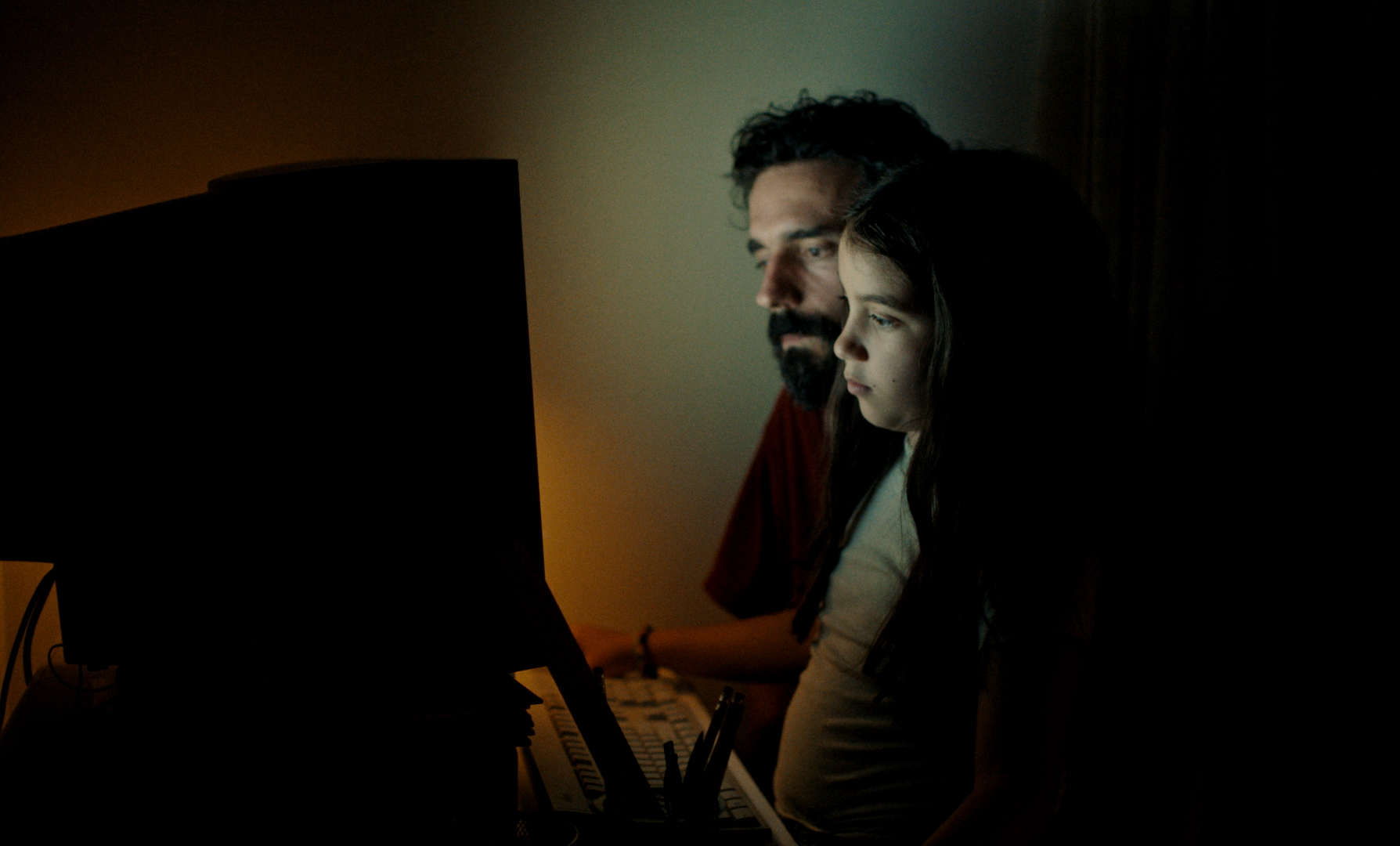
ML: I got really excited that you actually emulated a Windows 95 PC instead of just compositing it onto a screen in post.
SR: I mean, computers and TVs were a really big part of the ‘90s! We actually rented it from the camera house where we got our lenses. They had a shell of a Windows 95 that they had retrofitted with an LCD screen. So, we were emulating the OS on a laptop that was then connected via HDMI to the LCD screen so that we could just shoot the computer with MSPaint and WinAmp on the screen instead of doing anything in post.
The art director was controlling the laptop and trying to match the cursor with Ádám Tompa [who plays the father] scrolling on the mouse. It was like puppetry.
ML: I first encountered Amy Zimmer at a comedy show [an event for Rachel Wolther and Alex Fischer’s Snowy Bing Bongs Across the North Star Combat Zone at Nitehawk] like a decade ago and was really surprised and excited when I found out you cast her. How did you find each other?
SR: I did try to do traditional casting for this role and a lot of what I did was give actors prompts where I just wanted them to play themselves. I asked them, what was it like to grow up in your family? What does your family think of your choice to become an actor? I just wanted them to speak from their own perspective. It was fascinating how that seems to be very difficult for many actors. To just answer the questions in their own voice. There was a high level of performativity. They couldn't undo the conditioning of auditioning, I think. What I really wanted was for them to just be themselves and it was hard to get that.
My producer, Ryan Bobkin, was in New York, and he went to this variety show where people were reading monologues. He thought Amy was funny, and maybe had some, you know, visual alignment to what we were looking for. I realized that I had seen Amy in India Donaldson’s short film Hannahs at Oak Cliff in 2018. I remembered loving that short and thinking that the performances were interesting, so I reached out to India and asked her about working with Amy and she just had glowing praise. Amy’s audition was our other producer, Sara Wylie, playing a social worker on Zoom and Amy had to respond in character. She nailed it.
So much of her role is just watching, listening, taking in information. I think that if you are bringing too much of a performativity to that, it won't have that naturalism. You should feel when you're watching the movie, is that the filmmaker?
ML: Was it difficult to place that much trust in a fictional analog in the documentary scenes? Did you ever want to be the interviewer during the scenes with the social workers?
SR: I shot a camera test where I did play that character, and a couple of the social workers who are present in the film were part of that camera test. That was just a trial to see how it could work. It was part of what led to me to decide not to be in this movie, which I'm so fucking glad I'm not. It's a film that I actually enjoy watching, and I don't think that would be the case otherwise. I would not have had the technical skill or capability to perform that Amy does.
Based on the test I was able to write a sort of predictive script of what that scene would look like. So, a little Nathan Fielder-esque, I guess. You know, predicting human behavior and knowing the narrative outcome. Sarah, who produced the doc elements, interviewed a whole bunch of social workers, explained to them that this was going to be a narrative fiction film, and they would essentially be playing themselves. They'd be given a case file that they need to respond to from a professional perspective.
Amy and I had spent so much time talking about the background of the case; we were using actual psychological reports and social worker reports about my brother. She had looked at these things herself and done the research, and I gave her an overview of what I thought she should ask and where the conversation should lead. Ultimately, I knew it would lead to them saying, yes, things have changed [in how we diagnose and treat behavioral disorders since the 1990s], but not that much. It was not difficult for that to happen and it wasn't forced. It just was by nature of reality.
We shot with three cameras for over three hours with Amy guiding the conversation, but I was off camera writing notes and handing them to her. That’s where her improvisational background, I think, really came into play. We watched a lot of Wiseman together. Even if the content is maybe dry, it was such an exciting scene to shoot because I feel like it builds towards the point of the film.
ML: I think it’s pretty thrilling to watch; it feels so alive and organic. This film is very related to your previous short documentary, Still Processing [2020], though obviously it’s not a strict adaptation, and the making of Still Processing is referenced in Blue Heron. At what point did you realize there was more that you wanted to say, or say in a different mode and structure?
SR: I think Still Processing was more about that moment of catharsis and emotional exploration whereas Blue Heron, just in terms of where I’m at as a person, is about acceptance of what I can and can’t do. Jeremy’s one spoken line, basically, is, “I think there’s a lot of things you don’t remember.” I can’t control that. I can’t reanimate a person. I don’t think there’s going to be a third in the trilogy. Catharsis, acceptance… Hopefully that’s the end of the cycle.
I will say the second half of the movie, when Sasha is in that interrogative moment looking through all of the files and doing all of those Zoom calls and stuff, felt very much to me like a functional recreation of me making Still Processing. I wasn’t even intentionally aware of it. There are a few lines from the opening monologue that are from Still Processing as well.
ML: When you say “the point of the film,” was there an activist angle to it? There’s such a frustration even as an audience member when the psychiatrist throws the ODD [oppositional defiant disorder] diagnosis at Jeremy. Like, great, he’s saddled with letters that spell “ODD” now and there’s still no relief or path forward for anyone.
SR: It was one of many, many diagnoses that was thrown his way. And, you get disagreements: it’s a personality disorder; no, it’s environmental; no, it’s genetic. There was never a roadmap of how to move forward or anything to help him or my parents navigate an endlessly difficult situation. I think it’s so tragic and fucking devastating, but what happened to Rob and Michele Reiner is, I think, really societally important to pay attention to, because this was a family who had all the resources, and tried everything, and could not help their son. It had nothing to do with the economic reality and everything to do with society’s lack of understanding around how to help people who are just not fitting in, apart from putting them in a facility and forgetting they exist. I think part of what I’m trying to do is to acknowledge that lack of an answer, how it has not changed, and how we still have to grapple with it.
ML: I’m curious about the specifics of this being a Canadian-Hungarian co-production, especially in this moment where in the United States anyway, independent films like this are becoming increasingly rare.
SR: I still have family in Hungary. We tried casting the parents within Canada, but it was difficult to find Hungarian actors in Canada who were also fluent in English. Ryan met a Hungarian producer at Berlinale who helped us realize we were able to apply for funding out of Hungary.
The Hungarian financing ended up covering both of the actors, their fees, the Hungarian casting director, post color, and post sound. It’s still an unimaginably small budget, but it was just enough to pull it off. I couldn’t have made this film in America. It was essential that it was grant-financed because it wasn’t made with commercial intention. American independent funding is cast-dependent, and you couldn’t have a big, bankable name in this movie. It lives and dies on naturalism.
ML: There’s one bankable star: how is Hector [Romvari’s dog, who appears in the film] to direct? He looks really distinguished now. I thought he did a great job.
SR: Hector honestly blew me away. I'm not even kidding. I swear he was performing. Normally when I put his breakfast down he’ll look at me and wait, like, I don’t wanna eat that. But when Amy put his breakfast down and I said action, he just walked into the kitchen and started eating kibble. He knew exactly what to do. He’s got some levity to him, so I thought it would be nice to bring him in at the second half of the film. His brother [the late Norman, seen in Romvari’s 2018 short Norman Norman] got a whole movie so I figured he deserved it.
The most autobiographical scene in the film is when Sasha’s making breakfast while Hector’s eating his. That’s my daily life. That and when Sasha’s having a bath and watching His Girl Friday [1940] and Hector walks in. That’s real.
Blue Heron runs April 16-23 at IFC Center. Director Sophy Romvari and actor Amy Zimmer will be in attendance for a series of Q&As starting tomorrow.