It’s hardly a spoiler to state that Richard Brooks’s Looking for Mr. Goodbar (1977), based on Judith Rossner’s novel of the same name, itself inspired by the real-life killing of Roseann Quinn, ends with a murder. The 1975 novel, about a New York schoolteacher with an erotically saturated nightlife, was a New York Times #1 Best Seller, and Quinn’s death was front-page news in the Times and tabloids alike. Yet the expectant doom that haunts Brooks’s film is at odds with the vibrant, idiosyncratic woman Diane Keaton embodies in it.
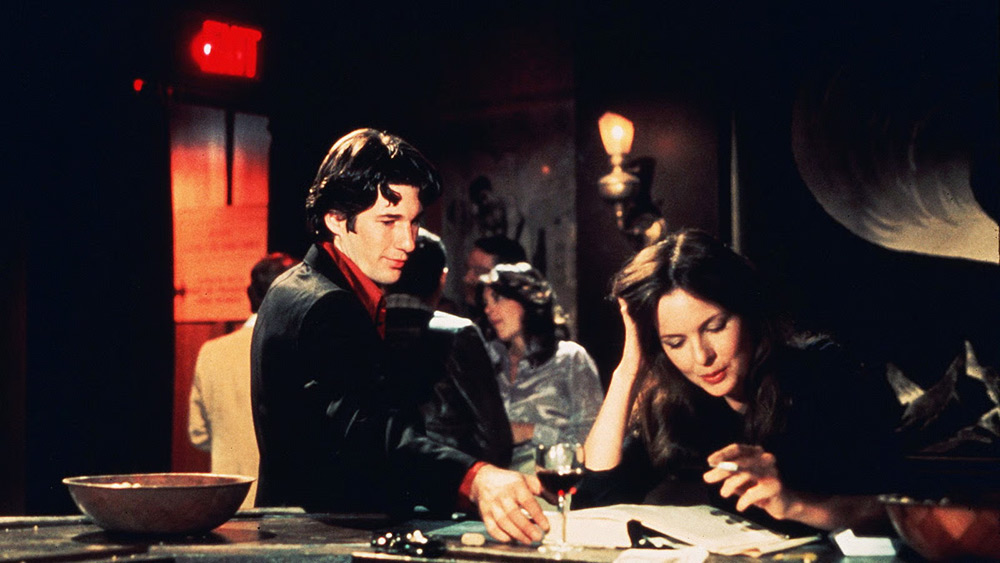
Keaton plays Theresa, a bright young woman from a caustic and combative Irish Catholic family. When she moves out of her parents’ place and takes a teaching job at a school for deaf children, her sex life blossoms. Initially self-conscious about a large scar on her back from a childhood scoliosis surgery, she grows comfortable in her skin and throws herself into sexual liaisons with an unstable Vietnam vet named Tony (Richard Gere) and a string of unnamed men she picks up at singles’ bars.
Alongside her after-hours routine, Theresa fiercely advocates for her deaf students. She brings Amy, a Black girl whose family is on welfare, home from school one day and overhears a social worker telling Amy’s mother that she’ll stop receiving assistance if her boyfriend keeps staying at her apartment. Theresa takes the social worker to task—“You and your welfare got something against fun?”—and tells him to lie in his report. The scene suggests that her righteous devotion to her working-class students comes from the same part of her character that celebrates sexual freedom.
A later scene, in which Theresa shows up late to work after oversleeping on a quaalude taken to bring her down from coke-mania and finds her class in chaos, evokes a very different movie from a few years later: Frank Ripploh’s recently-restored 1980 self-portrait Taxi Zum Klo. Ripploh’s homonymous character, also a schoolteacher with a robust sex life, comes straight to work from an all-night queer party and encourages his students to follow their most anarchic wishes to “paint on the blackboard” and “break things.” In her sexual liberation, and the treacherous and blurry boundaries between her parallel lives, Theresa’s story has a queer undercurrent. Even in her death, Rossner and Brooks suggest (with some basis in the real circumstances of the Quinn murder) her proximity to gay life.
Given the film’s ending, it’s difficult not to see Looking for Mr. Goodbar as a warning about the dangers of women’s sexual autonomy—a reactionary parable on unchecked free love and hedonism. But the rest of the plot belies such a simple analysis. Before her untimely end, Theresa is precisely the kind of woman free love freed: a refugee from a childhood of repression and illness emerging triumphant into a life of pleasure and tenderness for those at the margins.
Looking for Mr. Goodbar this evening, Saturday 20, and tomorrow, December 21, at the Museum of Moving Image on 35mm as part of the series “American Women: Reframing ‘70s Cinema.”