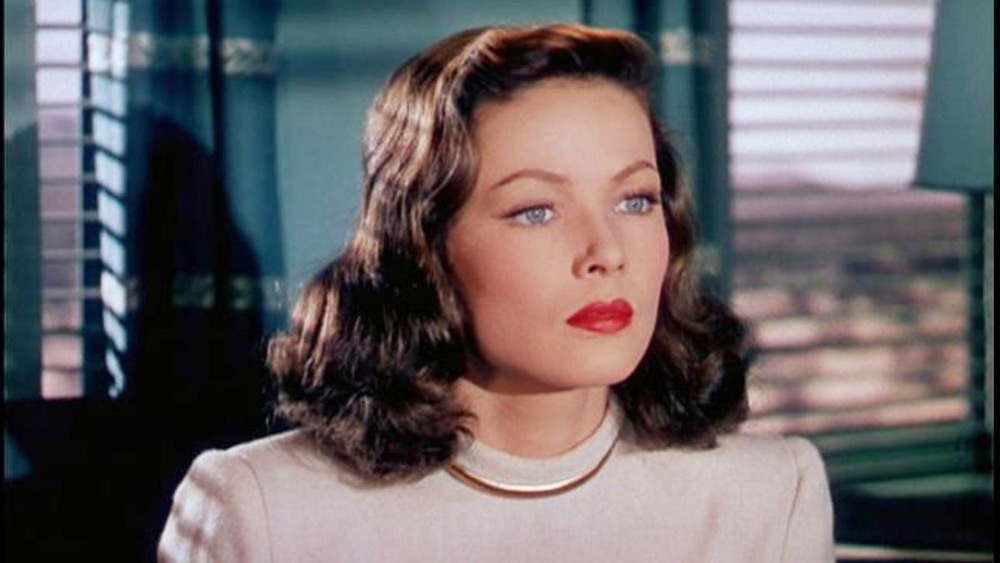
At the center of John M. Stahl’s Leave Her to Heaven (1945) is actress Gene Tierney as Ellen Berent, a young wife determined to have her husband to herself no matter what. Tierny is alternately consumed by passion and icily calculating, offering up a nuanced performance that equals her star turn in Otto Premiger’s Laura the previous year. Based on a Ben Ames Williams’s novel (although the film rights were purchased before its publication), Stahl’s film is subtly complex, blending allusions to myth and classical tragedy, particularly Medea, with well drawn psychological detail. The result is such that the human frailty it dramatizes is emphasized by the film’s breathtaking expansive settings. It’s like a Douglas Sirk melodrama crossbred with a Hitchcock thriller—a sophisticated and decidedly adult work of film art.
Leave Her to Heaven starts with novelist Richard Harland (Cornel Wilde) traveling to a ranch retreat in New Mexico. On the train, he meets Ellen, a strange and impossibly beautiful woman who just so happens to be reading his latest novel. It turns out they are both heading to the same place: Richard to relax and write; Ellen to spread her dearly departed father’s ashes. Although she is engaged, Ellen quickly falls in love with Richard, breaks her previous engagement, and marries him. Then, they decide to honeymoon near Richard’s chronically ill brother Danny (Darryln Hickman). At first, Ellen showers Danny with love and attention. But, when he seems to threaten her total possession of Richard, she begins to resent the young man. Similarly, when Richard brings Ellen’s family to visit them at his isolated cabin, her possessiveness only grows more intense. After some unpleasantness, her family leaves. With only Danny standing in the way of her and Richard, Ellen takes him out on the lake to practice swimming, but when he cramps up and sinks she lets him drown. Things somehow deteriorate from here, with Ellen throwing herself down the stairs to induce a miscarriage when she fears the child will come between her and Richard. Meanwhile, Richard finds comfort with Ellen’s sister, Ruth (Jeanne Crane), prompting the unstable woman to concoct an elaborate revenge plot.
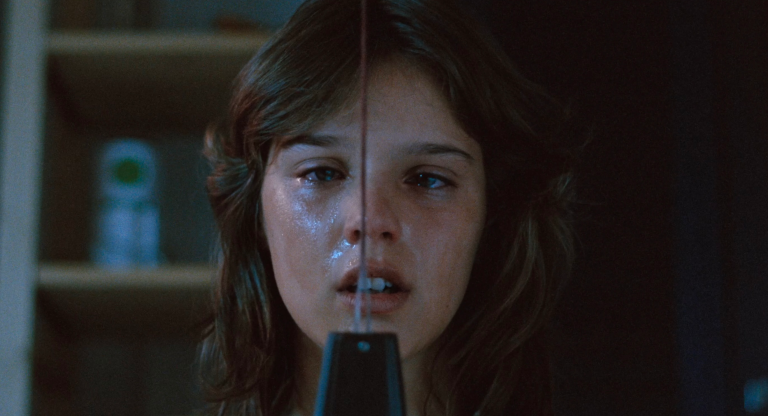
Tierney’s performance earned her an Oscar nomination for Best Actress, and it’s easy to see why. Her portrayal of Ellen seems pulled from an archetypical ether. She is both Elektra and Medea, but also a fully realized character unto herself. Her upturned face begs to be loved and her eyes shine with passion while haunted by something lost. Wilde, who went on to star in a number of pioneeringly violent films like Sword of Camelot (1963) and The Naked Prey (1965), plays the perfect good-hearted foil to Tierney. They’re a beautiful couple, but perhaps too beautiful to last. In fact, Stahl’s film plays with this idea of impossible beauty. It even overwhelms the audience with it. Stahl’s sweeping vistas of New Mexico, and his capturing of the cabin and the lake’s isolated splendor, are beautiful. But they are also troubled with the darker streams of the human heart. When Ellen majestically rides her horse across the New Mexican landscape to spread her father’s ashes in what resembles a pagan ritual from time immemorial, beauty and tragedy coexist. The same happens in the film’s best scene, when Ellen’s gorgeous face stands frozen as Danny disappears beneath the water.
Leave Her to Heaven tomorrow morning, December 28, at Nitehawk Williamsburg as part of the series “The Anniversary Party.”