The Illegal Immigrant (1985) forms an unlikely bridge between two worlds: NYU film school, where Mabel Cheung made it as her thesis movie, and that of the Shaw Brothers, the legendary Hong Kong producers who released countless martial arts films, including King Hu’s Come Drink With Me (1966) and Lee Kar-Leung’s The 36th Chamber of Shaolin (1978). It’s two parts social realism, one part gangster film. Cheung cast non-professional actors, including people who lived similar lives to their characters. And, having worked in Chinatown herself, Cheung knew the world she filmed intimately.
The film starts with a raid by U.S. immigration authorities on a warehouse in Chinatown full of workers sewing clothes. Cheng Jien Chiou (Ching Yung-Cho) gets caught and arrested. After his uncle bails him out, he plans a fraudulent marriage to Cindy Li (Cindy Ou) to obtain a green card. But, in order to get the money to pay her, he requires a loan from a local gangster. And even after they get married at City Hall, the U.S. government keeps dogging him as his debts become more and more dangerous.
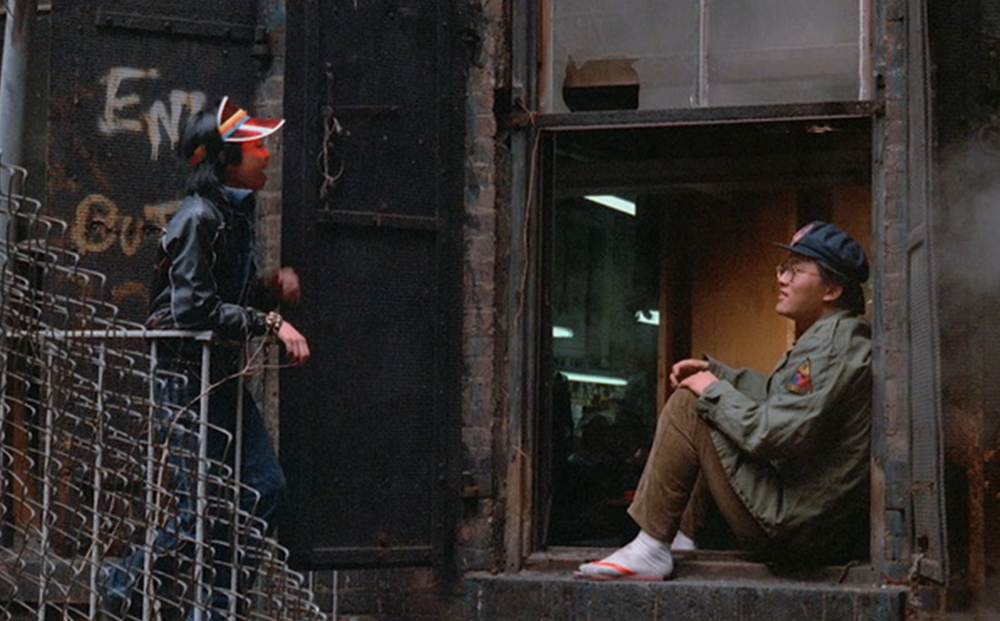
Most of Chinatown’s present-day architecture is still recognizable in The Illegal Immigrant. Since the characters’ apartments are small and crowded, the streets act as a refuge for them. They spend a considerable amount of time in the neighborhood’s parks. And, as valuable as these open spaces are, the time Cheng and Li spend there leaves them open to danger. The film doesn’t shy away from violence, presenting it as another mere aspect of New York life in the ‘80s. The city doesn’t look nearly as seedy as it did in most films from the period, yet the threat of death still haunts its characters. In one key image, Manhattan’s skyline looms menacingly over a graveyard.
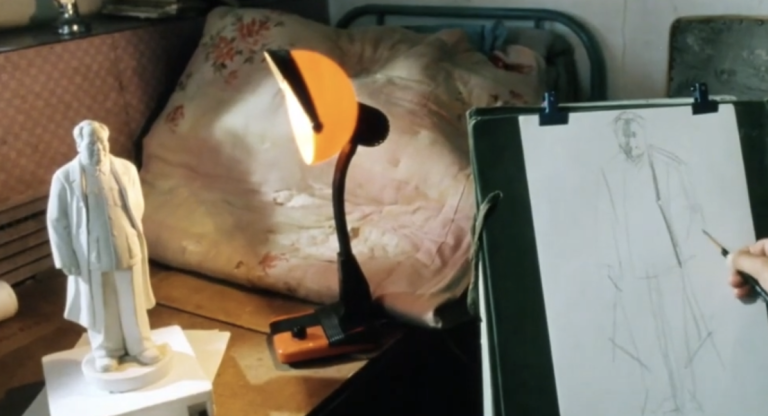
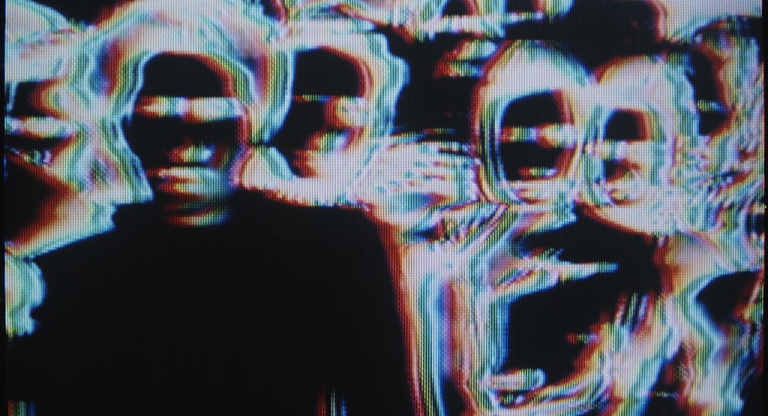
Bob Bukowski’s cinematography looks remarkably polished for a film made on limited resources. One scene takes a trip to a Times Square nightclub, where a diverse crowd dances to electro and even a child is accepted as a regular. Cheung has a knack for sudden, startling images: frogs croaking in the midst of an interrogation, broken wine glasses, a dangling phone amidst the aftermath of a shootout. These shots contribute to the film’s restless dream of escape, in which change is constant and tends to be negative. Cheng has traveled from mainland China to Hong Kong to New York, all without a passport or photo ID. A U.S. citizen, Li wants to travel to Hong Kong—but only as soon as she’s gotten a nose job. Even more than it did in 1985, the film’s title now reads like a provocation. Part of the film’s tragic pull is the idea that a person’s life could ever be reduced to their immigration status.
The Illegal Immigrant screens tonight, February 25, and tomorrow, February 26, at Film Forum as part of the series “Tenement Stories: From Immigrants to Bohemians.” Tonight’s screening will be introduced by news anchor Kaity Tong.