After the United States took the Philippines from Spain in 1898, the American occupying forces initiated nothing less than a race war. The conflict, according to the historian Ken De Bevoise, “contributed directly and indirectly to the loss of more than a million persons from a base population of about 7 million.” For a country that never had former colonies, the U.S. ruled over the Philippines with imperial aplomb. In those years, a new kind of elite society began to take shape, premised on American domination and Filipino collaboration, characterized by luxury and leisure. The days spent suppressing and supervising the natives left ample time reserved for upper-crust passions such as boat racing, polo and, of course, golf.
More than 120 years after the first golf course was foisted upon the Philippines, the archipelagic nation remains beset by similar problems. Today, American imperial decline is in full force, visible most in (after Hormuz) the South China Sea, where Barack Obama’s grand “pivot to Asia” is in Trumpian retreat. Chinese influence, expressed through trade and tourism rather than military force, is on the rise. All the while, climate change and development renders much of the Philippines increasingly uninhabitable; millions of Filipinos have already been displaced due to climate-related disaster.
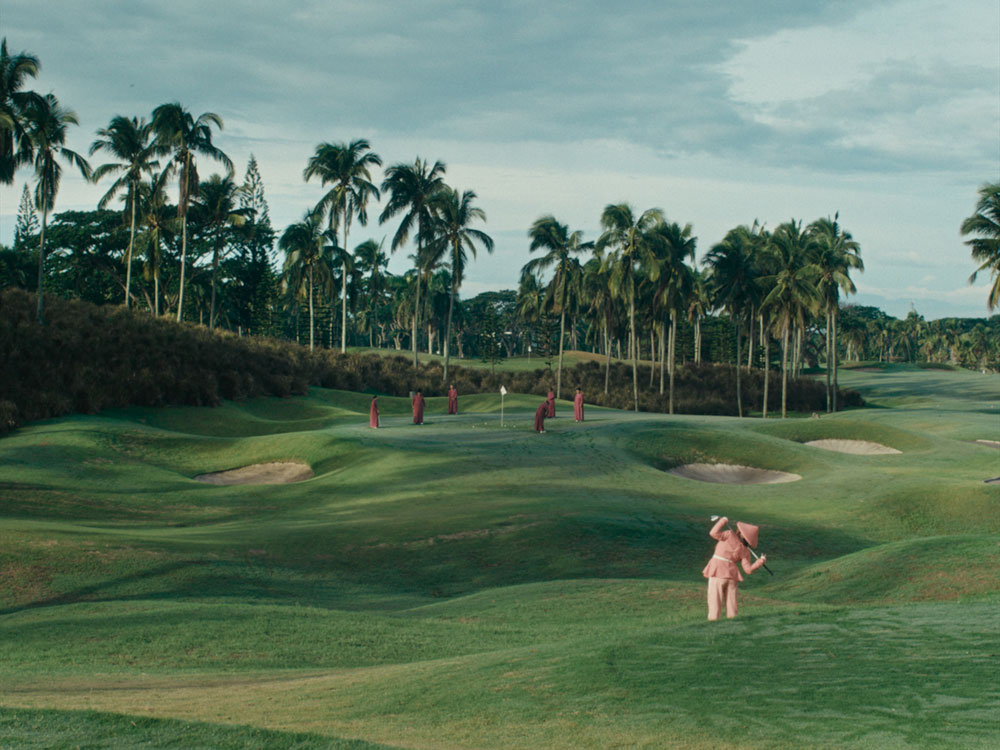
Yet the rich still golf. Rafael Manuel, director of Filipiñana (2026), has found in the golf course an adequate stage on which to present his country’s conundrum. It’s becoming physically uninhabitable and feels more unequal all the time, with its people unable to control their own destiny. The current president is the son of the former dictator. A comprador class runs the show. In an interview, Manuel discussed how his film interprets this reality.
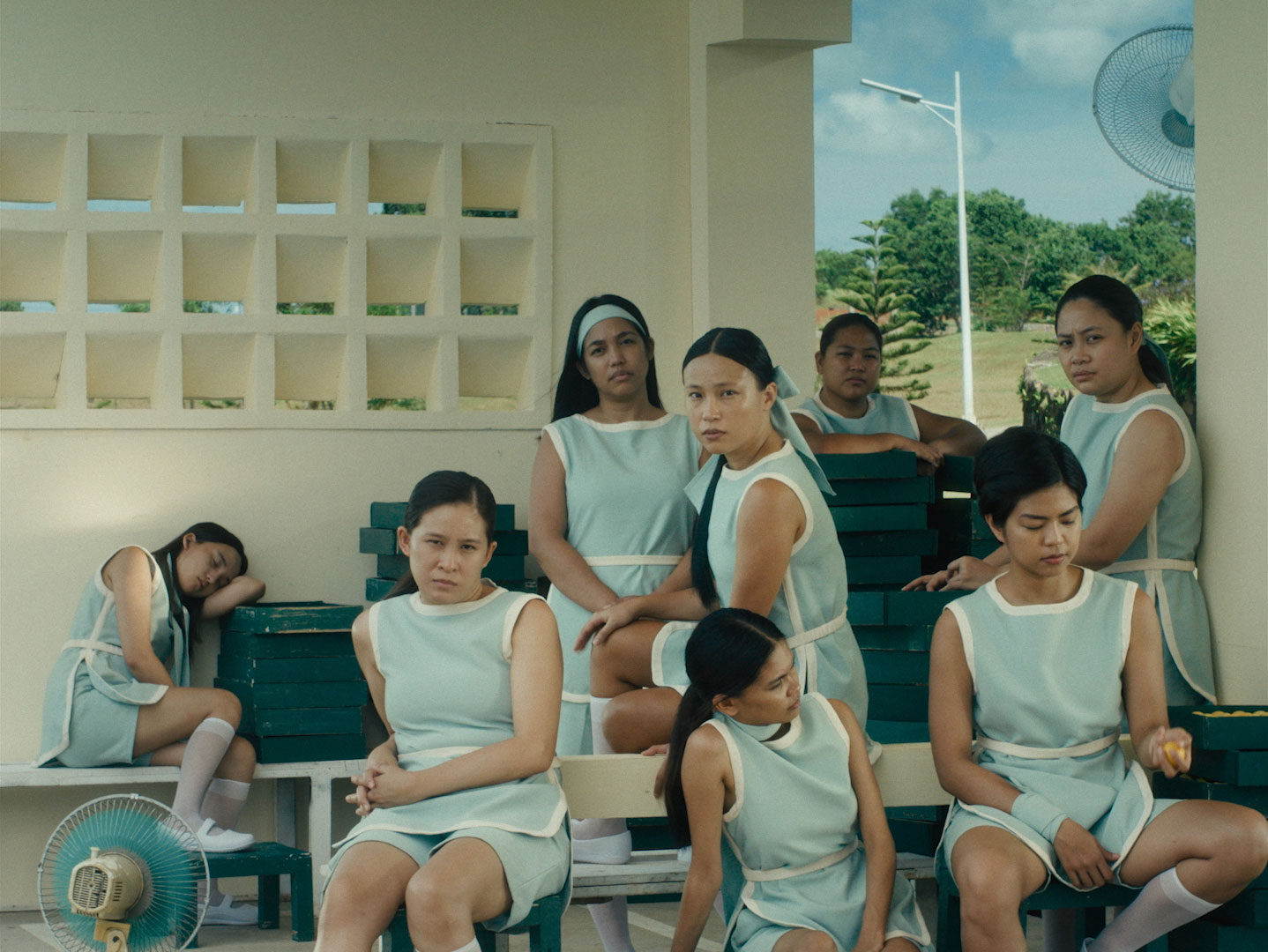
Noah Kulwin: I was so struck by the subtle, implicit commentary on the history of the American presence in the Philippines that forms almost a spiritual basis for your movie. The American occupiers at the end of the 19th century built golf courses and other upper-class pleasure palaces that were for their own amusement, and from which Filipinos were excluded. It felt very clear to me that that's what you were commenting on, or at least inspired by or responding to. I was curious how you got from that heritage to the specific story you wanted to tell about this golf course.
RM: A golf course is the gentrification of land. You're taking something that was once wild, manicuring it, making it safe and pretty and beautiful for human purposes.
I think that's also something that makes it bigger than just the specificity of American colonization of the Philippines. It makes it relevant to the rest of the world, because it could be a golf course in the Philippines, it could be a shopping mall in Dubai, it could be a high street in London. When we talk about gentrification, it's something the whole world is experiencing.
What interested me most is the fact that the violence in places like this is invisible, structural violence. A lot of the cinema that comes out of my country focuses on one particular kind of violence—there's a lot of murder and rape in the cinema that comes out of my country. But, as the world progresses, and the Third World has aspirations of bridging the power distance between the Global South and the Global North… Once progress starts happening, are we just going to forget that this invisible violence exists? Unlike murder and rape, which are easy to spot and obvious to resist, the invisible, structural violence of a golf course is a little more dangerous to my mind, because it has the power to lure and seduce you into inaction and complicity.
NK: One metaphorical level on which the movie works is heat—the ways heat conditions how people and nature act. We see a tree dying and being replaced, which frames the movie. I was curious how you've been thinking about heat, because the Philippines is only getting hotter. Southeast Asia is only getting hotter.
I was in Cambodia and Vietnam a couple of years ago and was struck by the clear evidence of future uninhabitability of large portions of those countries. Aside from being outside one day when it was hot, how did you think to connect the structures of meaning in this movie to heat, and to what heat is doing?
RM:The connection between golf and heat is inaction, which is one of the biggest themes of this film. Golf is a game of inaction, in that the person who takes the least amount of strokes is the person who wins. When you think about a lot of the problems my country is facing—not just my country, but maybe the world at large—a lot of them are rooted in inaction and a lack of political action.
You were in Cambodia. I was in Cambodia as well, to do the sound [on the film], and the humidity in Cambodia is nothing compared to the humidity in the Philippines. When we were shooting on the golf course, it was 50 degrees Celsius [122 degrees Fahrenheit], and that's without the humidity factor, so it would have been closer to 56 [133 degrees Fahrenheit], I think.
When you're in that kind of heat, it's very paralyzing. I liken it to a quagmire. When I've thought about why the revolution hasn't happened in the Philippines, why resistance is so hard to come by there, I think a lot of it has to do with the heat. With the fact that you just want to lie down. You just want to do nothing.
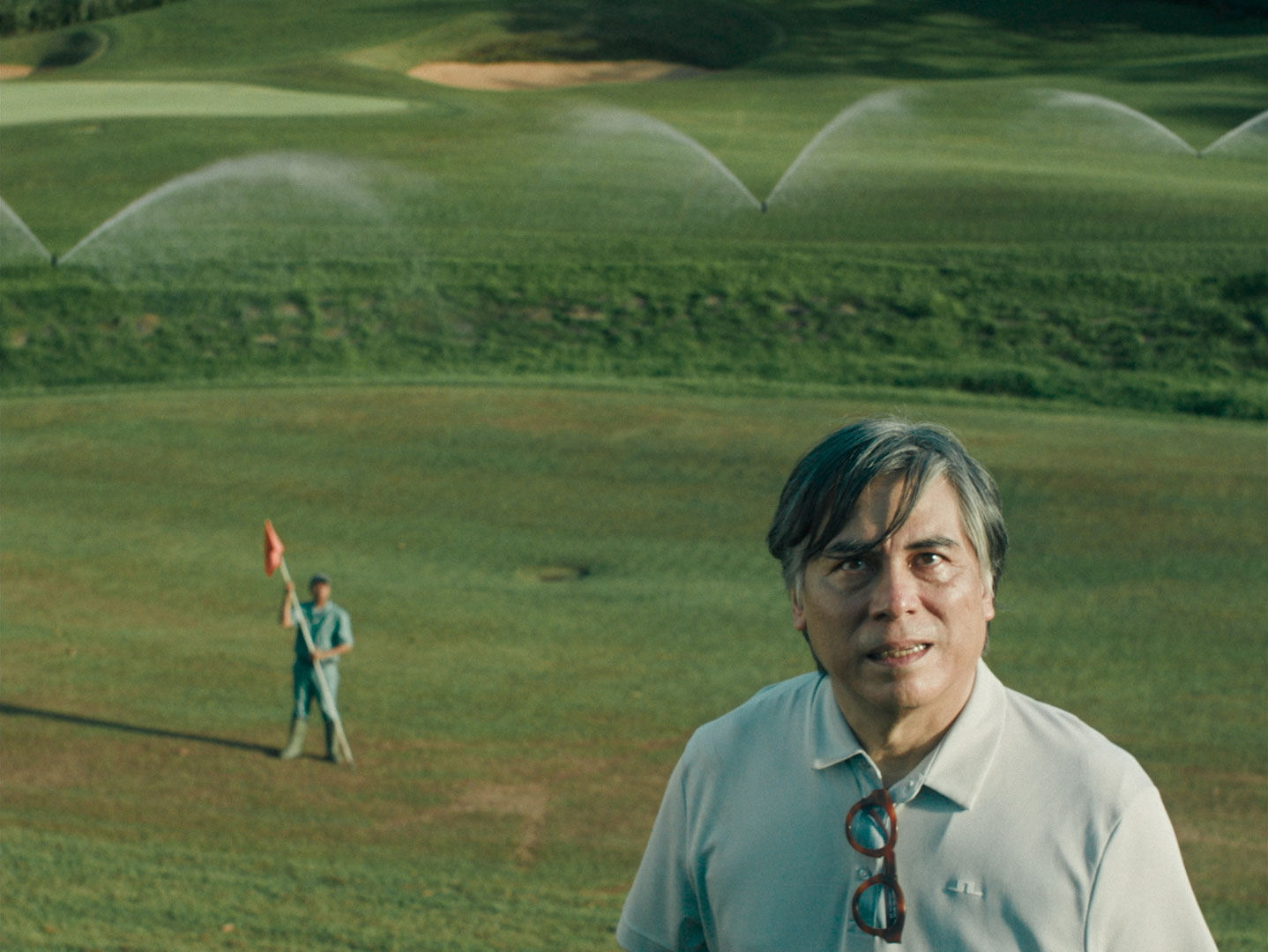
NK: That reframing question is a good segue to something else I noticed, which I think would pass American audiences by. It's the juxtaposition of the legacy of American influence over Filipino culture with the increasing presence of a historic rival of the Philippines, which is China.
RM: Actually, [when] I was shooting the short film Filipiñana, I came back and stopped by this one beach town. I saw so many Chinese cargo ships. The only thing these cargo ships were carrying was sand. Literally, the government back then was taking sand from this really pristine beach in the Philippines and selling it off to China. They’re literally buying our land.
NK: It's a common market these days. Dubai and the countries in the Middle East have to do that as well.
RM: Yeah. You say the Chinese are just now doing what the Americans have been doing, but the Chinese have been doing this since forever as well. It's just that now there's a bit more coverage of it. I mean, the oldest Chinatown in the world is in the Philippines, so we've had this long history of trade.
NK: But there is a difference, right? I do feel weird about the China-picking-up-the-mantle-from-America thing, because China doesn't have military bases all over the Philippines, and they didn't conduct a war of occupation. Your movie does a really good job of this—the Chinese tourists are not outwardly malevolent in a particularly crazy way. You juxtapose them with Clara and her uncle and their very America-philic attitudes.
Part of what you're showing is these different attitudes toward foreigners. Even though it's the Chinese middle-class guys coming to golf and giving the money that sustains the operation, there's this obsession from the beginning with America and with the West. Their eyes are still looking to the West, even as it's the Chinese who are giving them the money.
RM: I think this is an inherited Orientalism from the West. The Philippines is inherently racist toward Chinese tourists, and I think this is learned from the West.
I'm happy you brought that up, because that was another big difference: the way the local Filipino views these Chinese tourists is very different, and the welcome they get is very different from that given to an American colonizer.
NK: I was really intrigued by the relationship among people from different islands, and specifically Ilocos. What is it about the ways people from different places in the Philippines, an archipelago nation, relate to each other? If somebody is from a more provincial part of it, what does it mean when you identify somebody from the place you're from, even if the class differences between you are so vast? What was it about that relationship that made you want to put it at the center of two of the most important characters in the movie?
RM: First, I want to talk about the political relevance of Ilocos. Ilocos is the province our current president, who is the son of Ferdinand Marcos, is from. So Ilocos itself is politically and historically charged.
This tribalism you're talking about expresses itself in politics in a very dangerous way in the Philippines. You can see it in the previous president, [Rodrigo] Duterte, who won 70% of the votes, because in the end it just became the rest of the Philippines versus Manila. There's a danger with that, in that you look past a person's history. Duterte had a history, since he was mayor of Davao, of killing people. People knew what he was doing in Davao. But just because he wasn't from Manila, they all wanted him in power.
This tribalism is really damaging the Philippines. If you take it in a very micro sense, a lot of the corruption in the Philippines is justified by familial matters, which is our own mini-tribe within itself. So, I think it's a macro representation of that.
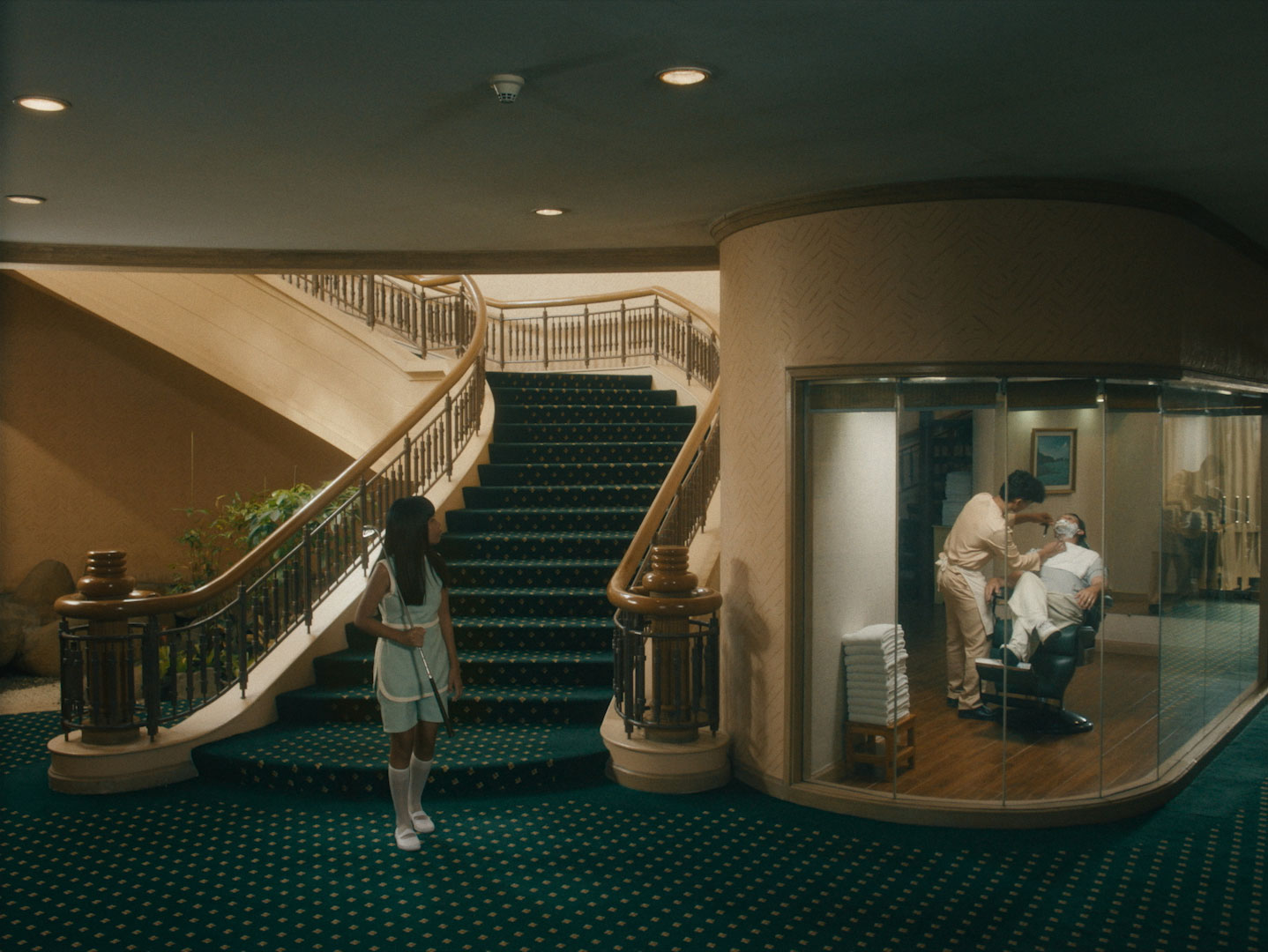
NK: Which, to be fair, you show in the movie—how the tribalism of the family wins out and can cover up all manner of evil, intentional or otherwise.
This is a slow and subtle movie, and what I liked about it so much was that it gave you time to sit and feel. What's the part of the story that best represents the political truth of it to you? After your two-headed climax, when the audience exhales, what was the feeling or idea in your mind as you were putting those words in those characters' mouths and showing them in that space?
RM: I'll try to have a balance with this answer. I'll try to be both vague and specific.
If you notice, the first image we show of Isabel is of her opening her eyes. So, in a way, it's an awakening from slumber. Whereas the last image you see of Clara is of her closing her eyes. So, it's her going into sleep.
Going back to this theme of inaction: both characters are outsiders to the milieu, kind of aliens to it, but because of their different standing in the social strata they have different levels of mobility.
The end feeling I was hoping to impart on the audience, as Isabel swims out—first of all, I don't think this is a sad ending. I think it's quite an optimistic ending, actually. I'm very much influenced by Hannah Arendt's writing on freedom as action. Action as having the possibility of breaking a cycle.
When you think about how inaction is such a major theme of this film… The antithesis is action, resistance. All throughout the film, Isabel has been restricted in her movement and her words. Her biggest action—her running, her swimming out—comes only at the very end. For me, this is a hopeful ending.
NK: What most struck me was that in the theater I was in, nobody got up until the credits were over. Everybody was held in a real amount of suspense—this idea of, is she dead?
I didn't think she was suddenly going to reappear, because to your point, there is something you're meant to consider in this image of her swimming toward this thing, and then what's going on in the top half of the frame, where they're replanting the tree and she's doing something else. She's doing a thing that subverts the cycle of sameness that pervades the whole place.
RM: I love that you brought up that everyone stayed to see the credits, because that isn't usual. It's half and half. Sometimes people stay, sometimes a few people stand up and leave. I find beauty in both.
I don't think I need to explain the beauty in everyone staying and the ending really being seen. But the beauty of people standing up and leaving is that it's very real. If you think about the shot before she goes swimming out—she calls for help. And, the golfers walk away. And, as the end credits roll, people stand up and leave. For me, it's a beautiful mirror.
Filipiñana runs August 27-September 3 at Film Forum. Director Rafael Manuel will be in attendance for a series of Q&As throughout this weekend.