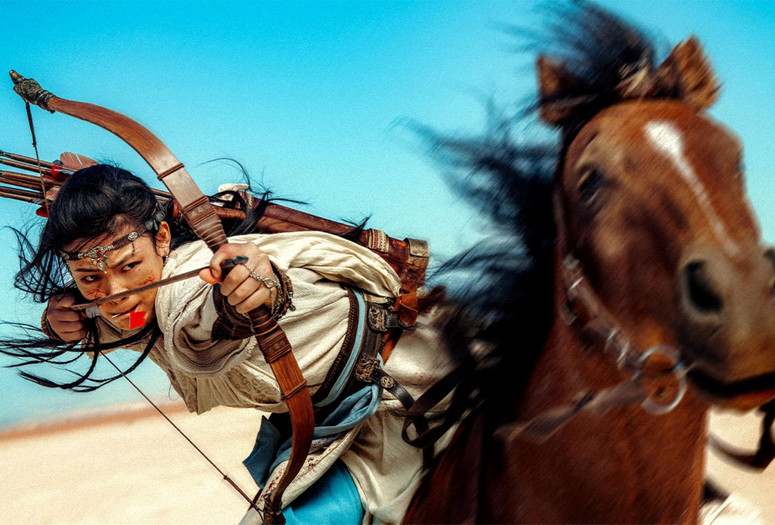
Yuen Woo-ping is one of the most influential filmmakers and stunt choreographers in the history of China and Hollywood, shaping the style and look of action from Jackie Chan through The Matrix (1999) and beyond, leading Jet Li, Donnie Yen, Wu Jing, Uma Thurman and Keanu Reeves to their highest highs (usually on wires). And he never stopped working his magic: 2026’s Blades of the Guardians is a swashbuckling desert adventure wuxia that reinvigorates the exhausted comic book adaptation. That is why MoMA’s retrospective of his work, “Yuen Woo-ping: The Number One Martial Arts Director Under the Sky,” is so essential.
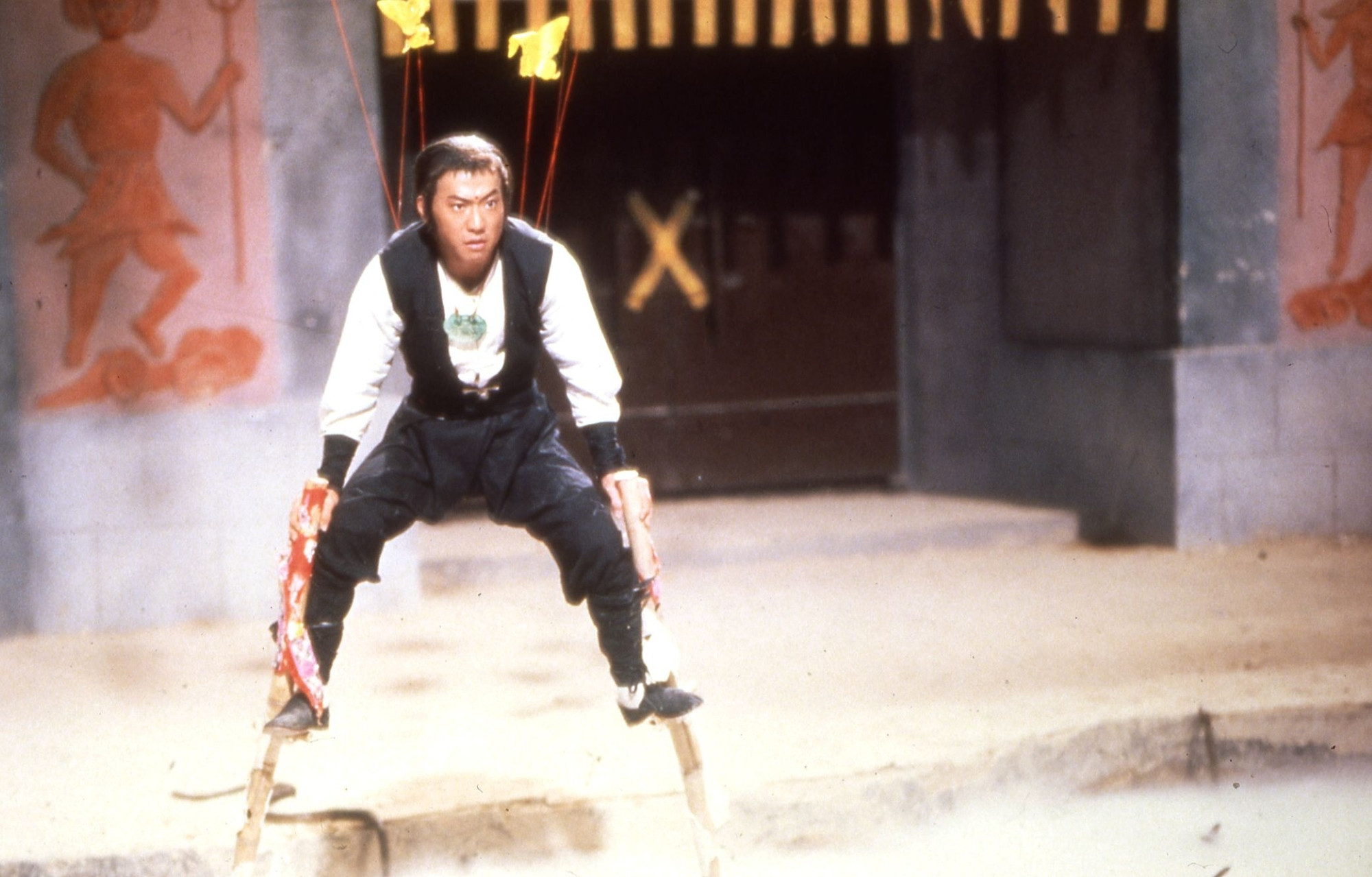
The series pulls from every era of Yuen’s jaw-dropping oeuvre, from the inauguration of “drunken boxing” in Drunken Master (1978), to his delirious slapstick wuxia Miracle Fighters (1982), Jet Li’s star turn in Once Upon a Time in China (1991), and his elegant choreography for Wong Kar Wai’s The Grandmaster (2013). I was honored to have the chance to interview Yuen over email, where we touched on his early training in Chinese Opera, how he netted his first directing gig, and what unique qualities make a martial arts star.
R. Emmet Sweeney: Your father Yuen Siu-tien trained you in Chinese Opera when you were a child. Jackie Chan, Yuen Biao, and Sammo Hung were similarly trained. What skills did you learn in that training that were useful for film stunt work?
Yuen Woo-ping: I studied Peking Opera mainly to learn the fundamentals of being a stuntman: flexibility, agility, basic movements like kicks and flips. Stunt people come from a variety of backgrounds, but in China most come from martial arts schools. This training gives you the basics. But film action is storytelling and the creative part is using these skills to build a character and tell a story.
RES: What is your earliest memory on a film set? Do you remember what your first stunt was?
YW-P: My earliest memories on film sets were helping my father in the stunt department, doing odd jobs and occasionally doing a bit part. I don’t remember my first stunt, but like many stuntmen starting out, it likely involved getting hit.
RES: Were there any stunt choreographers that influenced you, other than your father?
YW-P: At that time, the films were often made quickly with small budgets. Stuntmen went from project to project, and even the credits did not account for everyone who worked on the film. I learned on the job.
RES: Can you recall any lessons in stunt choreography from your father that you still use today?
YW-P: I think the most important lesson I learned from my father is that filmmaking is make-believe. We never put filmmaking above safety. Only if we can accomplish a shot safely and consistently can we protect the performers. Using petrol explosions or falling off a building with no safety equipment leaves too much to luck. And so far I have been lucky where there have been minimal injuries on my films.
RES: Do you recall how you were hired for your first directing job on Snake in the Eagle’s Shadow [1978]?
YW-P: Ng Seeyuen was a director and producer, and we decided comedy and action was something that was underserved in the market. So we developed a script from there. The budget was modest, around 400k HKD. That’s why so many scenes in the film take place in an empty field in the middle of nowhere—it was free to shoot. Even though it was my first time directing, I wasn’t stressed or nervous. It was a joy to figure out and design these scenes. Also, I felt that if I didn’t do well at directing, I could always go back to action choreography!
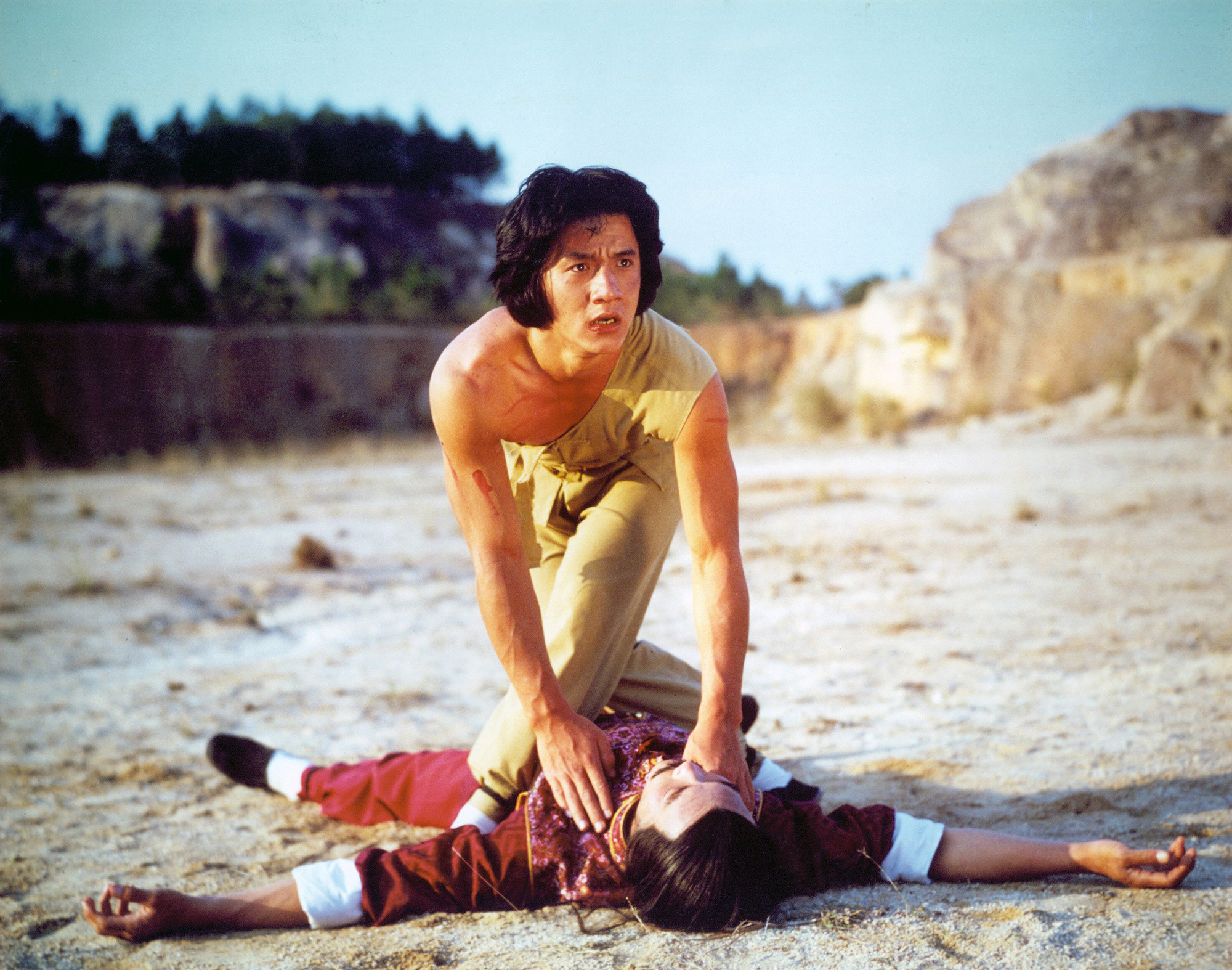
RES: There is a wonderful ending fight in Snake in the Eagle’s Shadow between Jackie Chan and Hwang Jang-lee. Jackie Chan is a legend, but could you say a few words about Hwang Jang-lee? He made some spectacular kicks…
YW-P: Ng Seeyuen had arranged for Hwang to come to work in Hong Kong from Korea. I don’t remember the details, but Hwang was a terrific performer. Very good kicks and punches. Great skill overall.
RES: You have helped Jackie Chan, Jet Li, Donnie Yen, and Wu Jing ascend to stardom. Could you take a moment to discuss each of them and what made them unique performers?
YW-P: The common factor among them is that they were each able to find their unique style and genres. Jet Li is a martial arts prodigy and started acting as a child and shot to stardom. For Jackie, Donnie, and Wu Jing, they spent quite a lot of time as bit players, then in supporting roles, then in different lead roles, until really breaking through big. There is no recipe for success. Jet Li broke through because he is so skilled at every martial art. Jackie Chan, on the other hand, wasn’t as graceful in traditional martial arts but found his specialty in more acrobatic, death-defying stunts. Donnie is a skilled martial artist, but it was the role of Ip Man that made audiences see him as a leading man. For example, Chow Yun Fat doesn’t possess more martial arts skill than any person of average physical ability, but he is very good at looking cool on screen. Combined with a few simple sword moves, audiences are convinced he is a skilled swordsman in Crouching Tiger, Hidden Dragon. Filmmaking is about creating magic, especially where audiences least expect it.
RES: What is the origin of the “drunken boxing” or “drunken fist” style of screen fighting?
YW-P: The idea of drunken boxing goes all the way back to the Song Dynasty in the Eight Drunken Immortals. It is a concept that is not completely unheard of, yet it had not been used in film. Often a good movie starts with an interesting question.
RES: One of my favorite film fights is in Iron Monkey [1993], when Donnie Yen is balancing on stakes while battling the villain. What were the major challenges in staging that sequence? Do you have any rules you follow when using wirework?
YW-P: Action choreography is always like a big puzzle. First you have to work to come up with an interesting idea, then you have to work to figure out a way to bring it to life. With wirework at the time, the wires themselves were a big issue. We didn’t have visual effects to remove them, so we had to use very thin wire. We had to light it in a way that the wire wouldn’t show, or paint it black so it blends into the shadow, or keep the shot short enough where you couldn’t see the wire. It was a lot of experimentation, but we got good at it.
RES: Chad Stahelski and David Leitch were stuntmen on The Matrix. Do you have memories of working with them, and have you seen any of the John Wick features, which are heavily influenced by your films?
YW-P: When I started working on The Matrix, I had a person training every lead actor in martial arts. Because we didn’t know how well the actors would take to training, we also had to train a stunt double that could photo double each actor. Chad was Keanu’s stunt double. We ended up training for four months. Keanu worked very hard and was able to do most of the action himself, but Chad did what Keanu couldn’t. I enjoy the John Wick films, and I am glad Chad and David continued the tradition of stuntmen growing into directors.
RES: Many Western critics have compared Blades of the Guardians to Mad Max: Fury Road [2015], especially for the chase into the sandstorm. Have you seen Fury Road, and was it an influence on you at all?
YW-P: It is a flattering comparison. After we knew we had to bring to life the sandstorm from the manhua, we looked at Fury Road and Mission: Impossible, and immediately noticed they would cover the actor’s face and eyes right at the start of the sequence to make filming easier on the actors and stunt doubles. We couldn’t do that with wuxia combat, so right away we knew we were going to be in for a complicated shoot. Aside from the logistics, the story in Blades dictated the storytelling. Our heroes are both running for their lives while simultaneously turning back for justice—the sandstorm is just a visual representation of the escalation of stakes. Ultimately, I think the emotions and dramatic conflict is what resonates with audiences.
RES: That swordfight inside the sandstorm is my favorite sequence in Blades, very balletic and intense. Could you discuss how you conceived and executed it?
YW-P: The sandstorm in the manhua is a major set-piece. At first, I didn’t want to do it because it would be a filming nightmare. But it is such an important story point that there was no way around it. I did not want to create the entire sequence in visual effects with digital doubles because it would not be convincing. I approached it like any other sequence: beat by beat, shot by shot, finding the best way to keep telling the story.
RES: Blades of the Guardians was based on a manhua, or a graphic novel. Have you read other manhua or manga?
YW-P: I did when I was much younger, but I hadn’t read one in many years. My daughter Allison, who produced this film, discovered the manhua of Blades of the Guardians and I was impressed with the world Xu Xianze created in this story.
RES: Are there any recent books, films, paintings, or poems that have inspired you?
YW-P: I am still looking at new ideas. Some are based on existing books or stories. I have developed adaptations of video games, but have yet to make a film adaptation of a video game. Perhaps in the future.
The Magnificent Butcher + Crouching Tiger, Hidden Dragon screen tomorrow, October 13, at the Museum of Modern Art.
See Also