Time hasn’t been kind to those who saw the emergence of the talking picture as a temporary fad, but they did have a point about the limitations of the new technology at the time. The wonderfully free camera found in late American silent masterpieces like Sunrise: A Song of Two Humans (1927), The Docks of New York (1928), and Street Angel (1928) would soon be bogged down by heavy recording equipment, loud cameras, and the need to mic actors, leading to a short period of relative aesthetic stagnation in American cinema between 1929 to 1931. Not so in Japan, where the talkie tide was stemmed largely by the popularity of benshi, performers who provided live narration and sound effects for silent films. Mikio Naruse was among the directors who resisted the advent of sound, and for good reason. As the silent films in Metrograph’s “Early Naruse” series attest, the Naruse of this period made use of every stylistic flourish available to him, with 1933’s Every Night Dreams being a perfect example.
Though Naruse’s thematic concerns remained remarkably consistent throughout his prolific career, the visual style with which he addressed them went through a massive evolution. Viewers familiar only with the restraint of the director’s better-known ‘50s period might find it hard to believe that the opening minutes of Every Night Dreams, packed with rapid cuts and careening dolly shots, could come from the same filmmaker. By its final minutes, however, one realizes that the film’s lucid social portraiture, feeling for harsh interpersonal emotions, and deep well of empathy could only have come from Naruse.
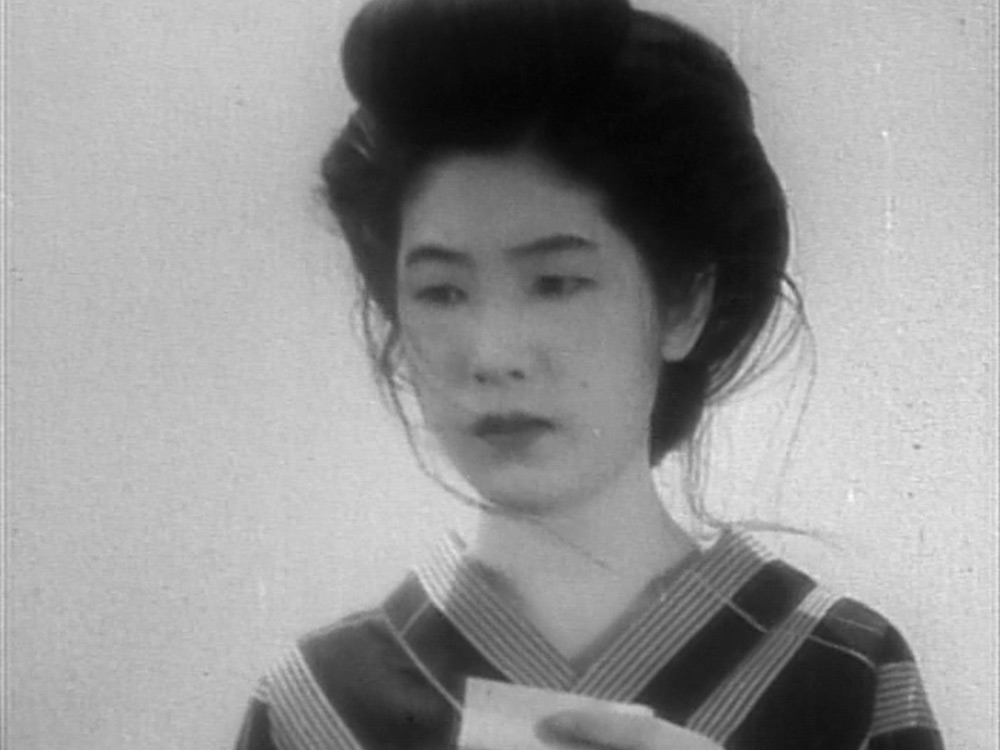
The simple story focuses on Omitsu, a bar waitress in Tokyo’s Ginza district who spends her hours serving leering male customers to support her young son Fumio. Omitsu and Fumio’s world is disrupted by the reappearance of Mizuhara, Fumio’s dissolute and weak-willed absentee father. Naruse works in a sort of visual synecdoche in these early scenes, showing us fragments of the film’s world that only add up to a whole in association with each other. Our first glimpse of Fumio is through a shot of a tower of building blocks that the toddler knocks over as he runs to his mother, a split-second image that instantly conveys the child’s long days without Omitsu and his excitement at seeing her. Likewise, Mizuhara is first introduced via close-ups of classified ads in his hand and of a hole in his shoe, which concisely brings us up to date on his status since walking out on Omitsu.
Mizuhara’s search for a job is fruitless, and the narrative builds to the revelation that Fumio has been hit by a car (people being hit by cars is an oddly recurring motif for Naruse, also present in his next film, Street Without End, and the final two films of his career), which puts the pressure on Omitsu to accept the affections of a well-to-do sea captain. The repeated push-ins that are a staple of Naruse’s silent work reach a fever pitch here, though it’s important to note the less showy but even more sophisticated formal strategies at work alongside them. Naruse’s geometry of bodies and eyelines can be as complex and rule-breaking as any of Ozu’s work, eventually landing on a scene where the two lovers are widely separated in the foreground and background, swapping in the frame with each reverse shot, with Fumio and all the unspoken feelings that go along with him in the gulf between.
The shocking intensity of the film’s climax confirms Naruse as one of the great chroniclers of poverty and its twofold impact on women as both domestic and wage laborers. A chilling final montage of the Tokyo harbor returns us to the world at large, but a vast emotional world has already taken shape before our eyes through pure visual invention. Naruse made three masterpieces in 1935 alone after finally adopting sound, but he may never again have been as truly free as he was here.
Every Night Dreams screens this afternoon, December 7, at Metrograph on 35mm as part of the series “Early Naruse: Five Silents and a Talkie.”