By the time Dog Day Afternoon was released in 1975, Sidney Lumet had already been directing film and television for over two decades. His work across both mediums traded in fact and fiction. His output throughout the ‘70s saw him tackle stories and characters ranging from NYPD whistleblower Frank Serpico in the Al Pacino star-vehicle Serpico (1973), to a suave thief played by Sean Connery in The Anderson Tapes (1971), to Martin Luther King Jr. in the documentary King… A Filmed Record: Montgomery to Memphis (1970). When a Life magazine story about bank robbers John Wojtowicz and Salvatore Naturile captured the attention of Hollywood producers, Lumet was the ideal candidate to direct.
Dog Day Afternoon re-teamed Lumet and Pacino, with the latter portraying Wojtowicz, whose name was changed to Sonny in the film. The inimitable John Cazale portrayed his partner Sal. Lumet was a consummate New Yorker, having grown up in the Lower East Side and beginning his professional career in off-broadway productions before transitioning to screen work. Many of Lumet’s films, both before and after Dog Day Afternoon, were shot on location in New York. His affection for the city’s geography and denizens was always evident. Dog Day Afternoon could have been a rote crime saga, or a cheap studio B-movie that exploited the desperation of its real life characters, but in Lumet’s hands it became a vehicle for empathy and progress—a potent political drama that captured the anger of a city in transition.
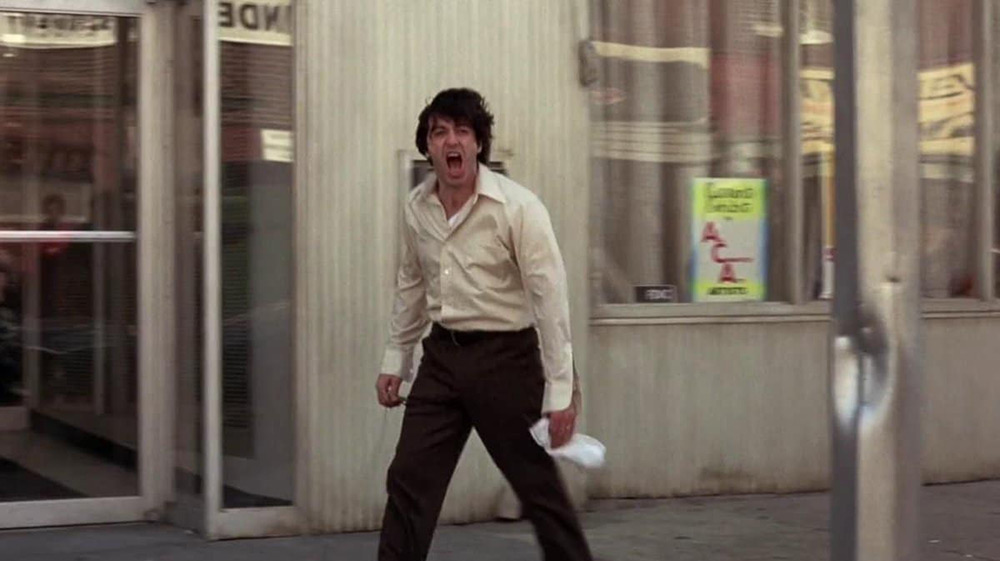
The movie is perhaps most well known for Pacino’s histrionic, improvised “Attica! Attica!” rant, which references a 1971 standoff between inmates and police that took place at an upstate prison and resulted in the deaths of over 30 prisoners. As with many other Lumet films, Dog Day Afternoon is more about its people than its plot; it’s a bank robbery movie where the robbery is a backdrop for the intimate relationship between Sonny and his partner Leon Shermer, who intends to have a sex change. In real life, Wojtowicz was married to a trans woman named Elizabeth Eden, who ultimately was able to afford gender-affirming surgery when Wojtowicz was paid so that his story could be adapted to screen. (All of this is discussed in Allison Berg and François Keraudren’s 2013 documentary The Dog.)
But Lumet’s film isn’t a documentary and it does take its liberties. It uses Wojtowicz’s story as a conduit to express the palpable anger and anxiety that the city felt in the face of economic collapse. Just one month after Dog Day Afternoon was released, The Daily News ran its infamous “Ford to City: Drop Dead” cover page. New York was in dire financial straits, crime was bad enough that “Welcome to Fear City” pamphlets were being dispersed to tourists, and the violent deaths at Attica were still on New Yorkers’ minds. Dog Day Afternoon wasn’t just a movie, it was a rallying cry for the disenfranchised, the dismissed, and the distressed.
Dog Day Afternoon screens this evening, February 16, at Nitehawk Cinema Williamsburg on 35mm as part of the series “Stage and Screen.”