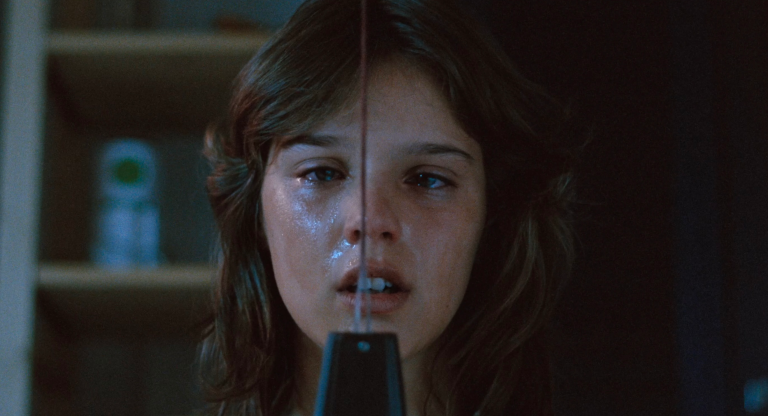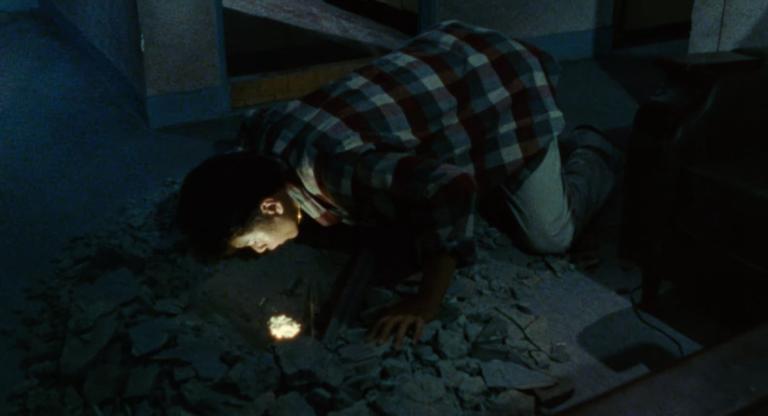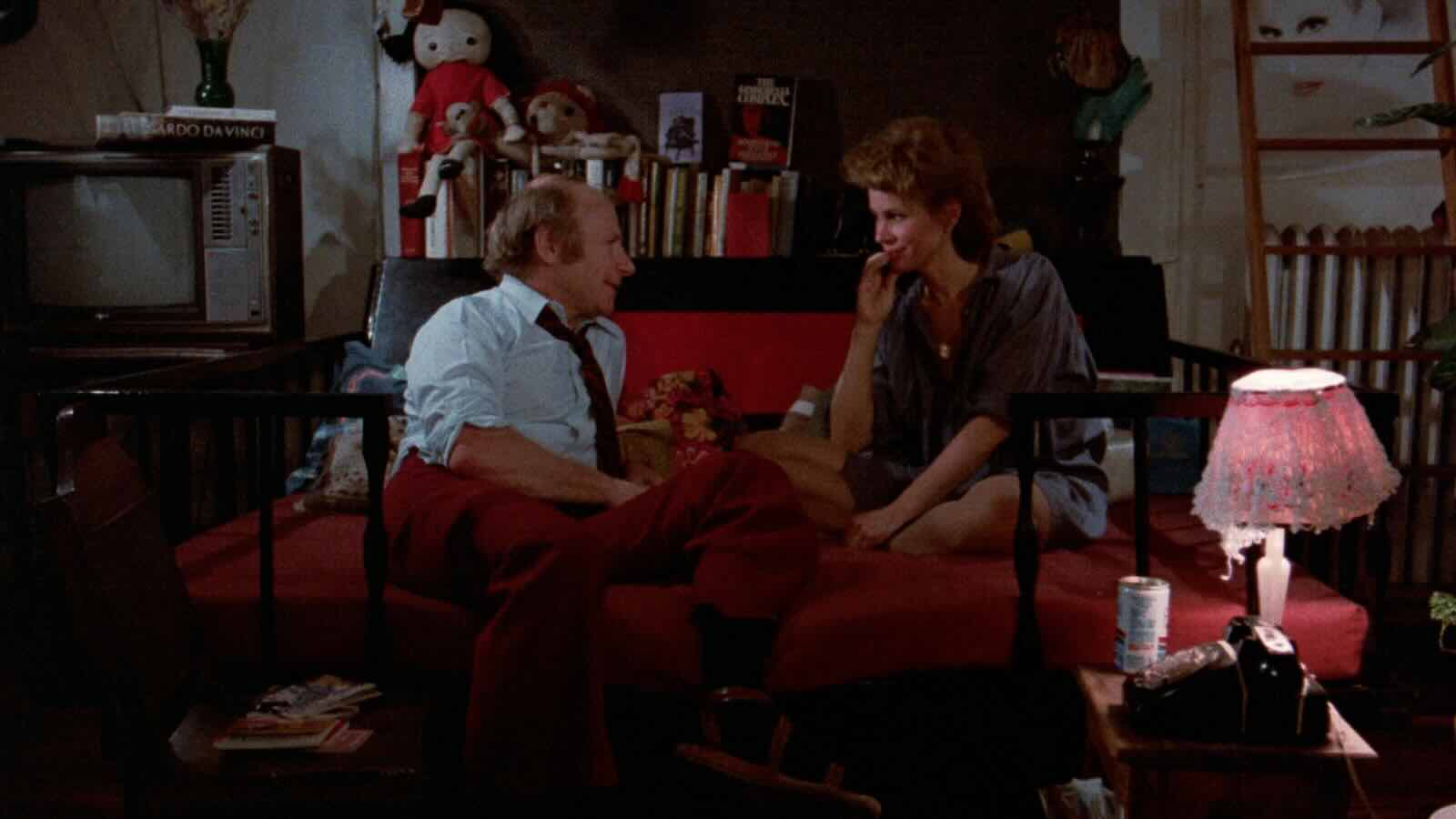
If you've ever thought “Hell is other people,” you're not alone. In Henry Jaglom's Can She Bake a Cherry Pie? (1983), relationship serendipity unfolds as eagerly and clumsily as a Prince Charming who falls off his horse upon arrival to the fated princess-in-waiting: cute, a little embarrassing, and not idealistic. It's closer to the reality of fumbling through unscripted insecurities, rather than delivering polished and clearly memorized dialogue. Cherry Pie is not (and was not) new for portraying two New Yorkers testing if they work as a couple, but its unpredictable quips, interludes, and confident persistence—even when improvising—make it memorable for, not despite, its quirks.
Jaglom’s film was inspired by the end of his marriage to Patrice Townsend, a younger woman he met (and cast) through his films and who announced her decision to leave him after returning from a yoga class one day. In Cherry Pie, Jaglom rewrites his heartbreak with Zee (Karen Black), who is coldly left by her husband. Desperately ambling around the Upper West Side seeking distraction, she grabs the attention of Eli (Michael Emil, Jaglom's brother), who can't resist starting a conversation despite, or because of, her eccentric emotional instability. Recurring through their ensuing situationship, the theme that all individuals remain individual from each other—even when in a relationship—never falters. Two people are just that: one plus one. They don't merge into a single person and their internal lives don't magically blend with the other's quirks, irritations, or needs just because they've met. Everyone is their own main character.
With improvised bit roles and background extras that include a young Larry David, Carol Kane, Frances Fisher, and an appearance from Jaglom’s friend and collaborator Orson Welles, Cherry Pie offers an ode to the privileges of being erratic and unusual. Funny, much in the same way deadpan humor and awkward comedy is, Cherry Pie is full of surprising moments. During sex, a close-up slowly reveals the pulse-measuring device Eli's just attached to his earlobe, which he explains is for a personal “comparative study” he's doing of his heart rate with different sex partners. In another scene, Zee, getting back into her former singing life, belts out “The Food Song,” about eating her feelings, in a daytime basement open mic, liberated and uninhibited. Cycling through a handful of locations as the dialogue twists in and out of ad-libbed moments, Jaglom manages to roll with the punches—no matter how unexpectedly they come—at a pace that hooks rather than wearies. “I just sort of have miscellaneous relationships,” Eli tells Zee after inviting her back to his apartment. “I didn't come here to fuck you, you know,” she replies. “I just came here.”
Jaglom credited Fellini's 8 ½ (1963) with inspiring him to make his own movies after a long career as an actor and editor. It's not surprising, then, that he often experimented with recalling his own life. Cherry Pie's footage of Welles is from Jaglom's directorial debut, A Safe Place (1971), which Zee and Emil watch on TV; in another scene, a character is reading a book by Anaïs Nin, whose praise was on A Safe Place's original poster; and, the end of Cherry Pie features his own family footage. Jaglom passed away in September 2025, but his work memorialized many now-closed New York establishments. One of these, as seen in Cherry Pie, is the marquee of the long-demolished Cinema Studio, which is shown promoting Woody Allen's A Midsummer Night's Sex Comedy (1982). Allen's films clearly influenced Jaglom's blend of autobiographical comedy and improvised philosophizing, but Jaglom deepened his style in the same decade with his meta-divorce tale Always (1985) and the delightful ensemble piece New Year's Day (1989). His approach champions amateur earnestness over established production, a strength that gives his off-center direction a memorable flavor.
Can She Bake a Cherry Pie? screens February 20-24 at Metrograph. This evening’s screening will be followed by a Q&A with Jaglom’s daughter, Sabrina, restoration supervisor Justin LaLiberty, and Hope Runs High curator Taylor Purdee