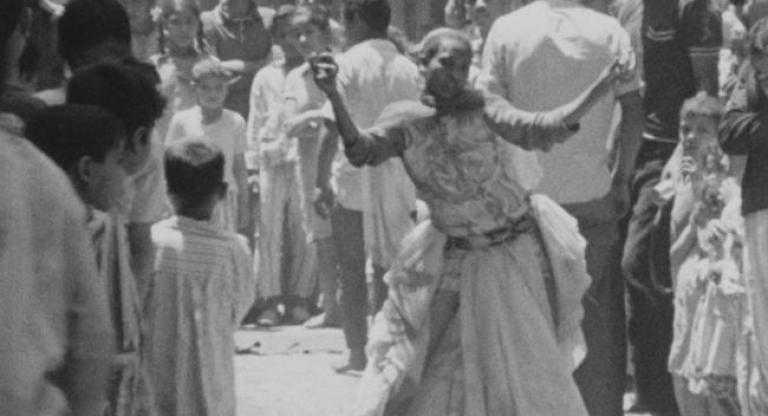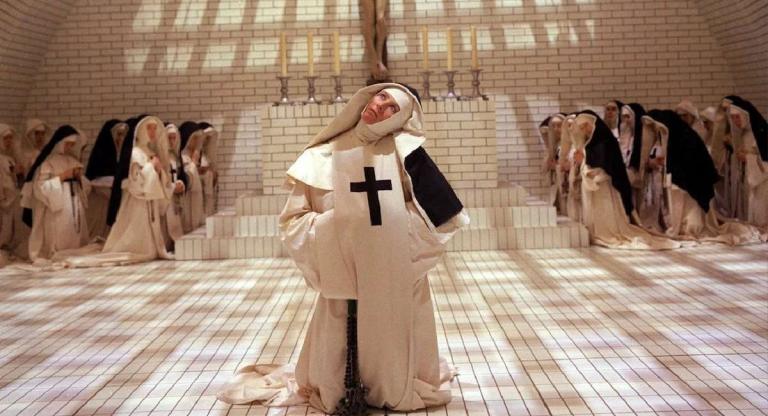
Tucked away in the back of the Marian Goodman Gallery through January 17, two small black box theaters will play a selection of the more than 100 films Ana Mendieta made during her brief yet prolific career. These works will be presented in pairs chronologically throughout the exhibition’s duration, and mainly focus on Mendieta’s celebrated “Silueta Series,” in which she used her body as a tool to investigate the cycle of life & death, rebirth, and our relationship with the Earth.
Like many of her contemporaries, Mendieta was drawn to Super-8 film for its accessible and affordable nature. Mostly shot on a Bolex at 18 frames per second, her films are rarely longer than a single roll (roughly 3 minutes and 20 seconds.) For Mendieta, these technical constraints became a source of power: she used the camera’s limitations to document her ephemeral sculptures in a very deadpan manner, deepening the impact each piece has on its audience. Her ritualistic works express a deep longing to erase the boundaries between human culture and the natural world. Mendieta’s vision was powerfully realized with her “Siluetas,” in which the impression of her body is subsumed by natural materials such as plants, stone, fire, and water found near her performance sites. The simple, straightforward presentation of each “Silueta” creates the sense that you are peering into something private and primal.
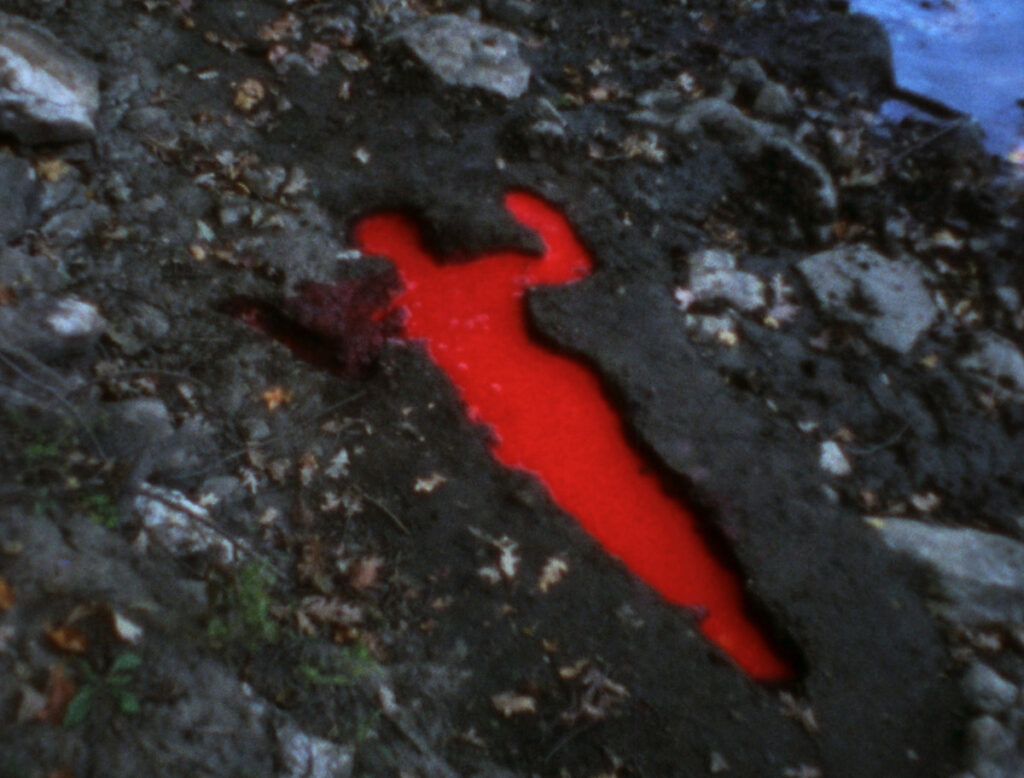
Mendieta’s artistic voice was acutely shaped by her personal history. Displaced from Cuba as a child, her work grapples with belonging and a yearning to merge once more with the land. She felt that by uniting her body with the earth, she could become whole again. Mendieta drew from the commanding imagery of Catholic and Santería traditions, embracing sacrifice and transformation to channel them into a personal and spiritual practice that bordered on animism. This is powerfully echoed in works like Silueta Sangrienta (1975, pictured at top), where an impression of her body in the damp earth is filled with a vibrant red liquid, invoking lava while inviting the viewer to consider themes of femininity, violence, and spirituality. In Grass Breathing (1975), Mendieta lies in the grass, hidden beneath a roll of sod. As her chest rises and falls, her movements turn the land into a breathing being, surrendering her individualism to the earth. While these films document her earth-body performance-sculptures, which were simultaneously photographed with a still camera, they are primary artworks themselves—ephemeral performances otherwise left to erode in their natural settings. Through her innovative use of film, Mendieta’s transient explorations of identity and place were able to achieve a potent, lasting presence.
Ana Mendieta: Back to the Source is on view through January 17 at Marian Goodman Gallery.
Film still: Ana Mendieta, Silueta Sangrienta, 1975, © The Estate of Ana Mendieta Collection, LLC, Licensed by Artists Rights Society (ARS), NY, Courtesy Marian Goodman Gallery