A few days before my interview with Nicolas Winding Refn about his Pusher trilogy (1996 - 2005), I rewatched the first film on Tubi on my phone while parked in the garage of the Burbank Town Center as I waited for my wife, film critic Sarah Fensom, to get out of a press screening of The Devil Wears Prada 2. I mention this only to say I was in the right mindset (and parking space) to experience Refn’s desperate, fugitive debut feature—a scummy, furtive affair.
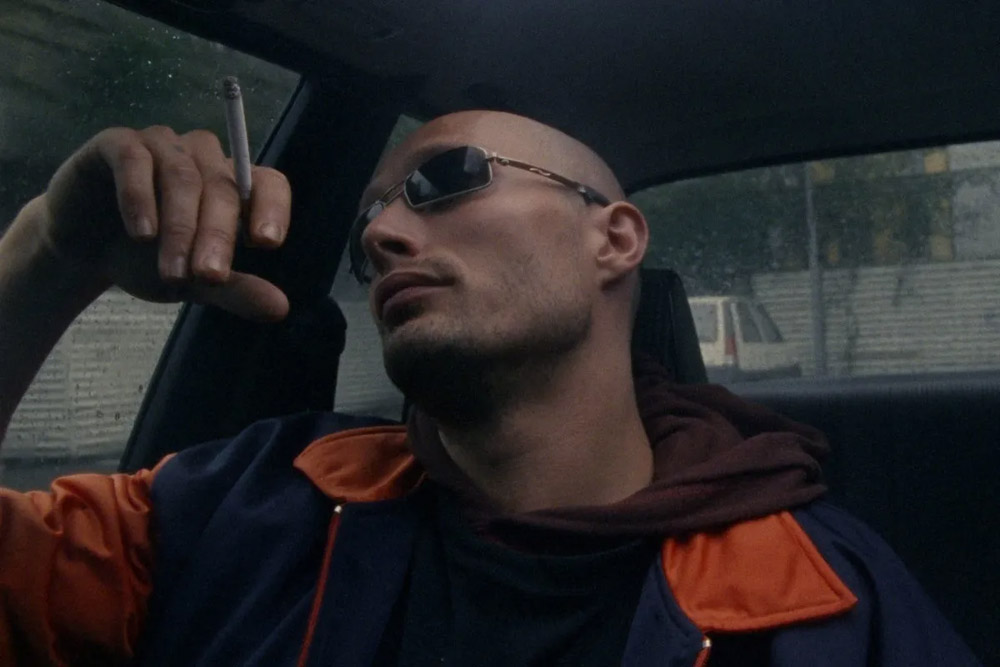
Released in 1996, and heralding not only the arrival of Refn, but of megastar Mads Mikkelsen and screen favorite Zlatko Burić, Pusher offers an unsentimental vision of Copenhagen’s criminal underworld. The photography is stark yet energetic, the performances naturalistic but somehow larger than life, and the violence realistic without losing a stylized cool. As Refn points out, it’s a film born of youthful ambition and intensity. Despite the intervening years and changing cinema fashions, it still throbs with a certain power.
Hailing from the same Danish cinematic period that gave the world Breaking the Waves (also in 1996 and edited by Refn’s father), Refn’s film shares the raw visual grit of the dogma works of Lars Von Trier and Thomas Vinterberg. The Pusher trilogy, however, focuses on its own thematic and artistic concerns, using the vigorous realist aesthetics of its Danish contemporaries to approach the gangster genre. In Refn’s grim trilogy, bad people do bad things, record amounts of coke and heroin are snorted and smoked, big fish eat little fish, and in fleeting moments, all too human characters, show unexpected compassion.
Since Pusher, Refn has become a well known auteur, answering Tarantino’s referential tough guy comic books with minimalist austerity. The director spoke to me about the new 4K restoration of the Pusher trilogy, its stars, and being too young to know you can’t.
Chris Shields: Thank you for restoring Wild Guitar [1962]. I’m a huge Ray Dennis Steckler fan. He’s my guiding light, so I really appreciate that.
Nicolas Winding Refn: Wild Guitar and Incredible Strange Creatures (1964) are great.
CS: I learned so much about what a camera could do from Incredibly Strange Creatures. To move into Pusher, it's been 30 years since the first film. What does it feel like now to have these new 4K restorations coming out and for the world to see it anew?
NWR: It's always daunting when a creator needs an audience to engage with their work, so this was a way to reintroduce the films in the best possible way. I spent an enormous amount of time on the restorations.
CS: Did the original Pusher start as a short and then become a feature?
NWR: Yeah, I was in my twenties and I was applying to film school like everyone else. That’s what I was told, you know, that this is how you go about it. So, I made a short and I applied for the National Film and Television School in the UK. I didn't get in.
Then, I got a job for a commercial producer and I worked for a distribution company that my uncle had. I would go to Cannes every year, to work at the market and to find “product,” as they called films. It was a film market, films were being made, and I came to the conclusion that, you know what… I'm just gonna make a movie. I got into the Danish Film School that same Spring and I had to choose. Everyone obviously said to me, "You gotta go to film school, man. That's how you learn things.” But, having grown up in New York and having the part of me that’s a New Yorker, I said, “No, I think I'm just gonna go do it,” with all the arrogance that you have when you're 24.
CS: You found some incredible collaborators. I’m thinking of Kim Bodnia, who at that time had already had some success in Nightwatch [1994].
NWR: I was living in Copenhagen and all I wanted to do was to get out of Copenhagen and get back to New York where I had grown up. But in Denmark, there was emerging a whole new generation of filmmakers and actors and performers and whatever. It was very much a generational shift. [I got] a government grant to make Pusher, which trust me, they'll never do again because I had no credits to show. It was a bit like sending in an application and it looks like this [holds up a blank sheet of paper]. And it says, "Can I please have $700,000?" It will never happen again. It has never happened again where they're that loose with the dough. When I made the film, I was just incredibly lucky.
Kim Bodnia was obviously the star of Denmark. He was going to go international. Everyone said he was gonna be the next Rutger Hauer. And, I discovered Mads Mikkelsen at an audition. And Zlatko Buric. They became the three males of Pusher and, obviously, all three went on to very successful and unique careers.
CS: Can you talk about Zlatko? Even in the first Pusher, which is more Kim's film, he just jumps out at you immediately. Did you have any sense that you would devote an entire film in the trilogy to him?
NWR: No, no. The first one was made like someone would go in and make an album without knowing how to play the instruments. It was all attitude, you know? Which was great, because that's sometimes the best way to start. Pure attitude. Defiance.
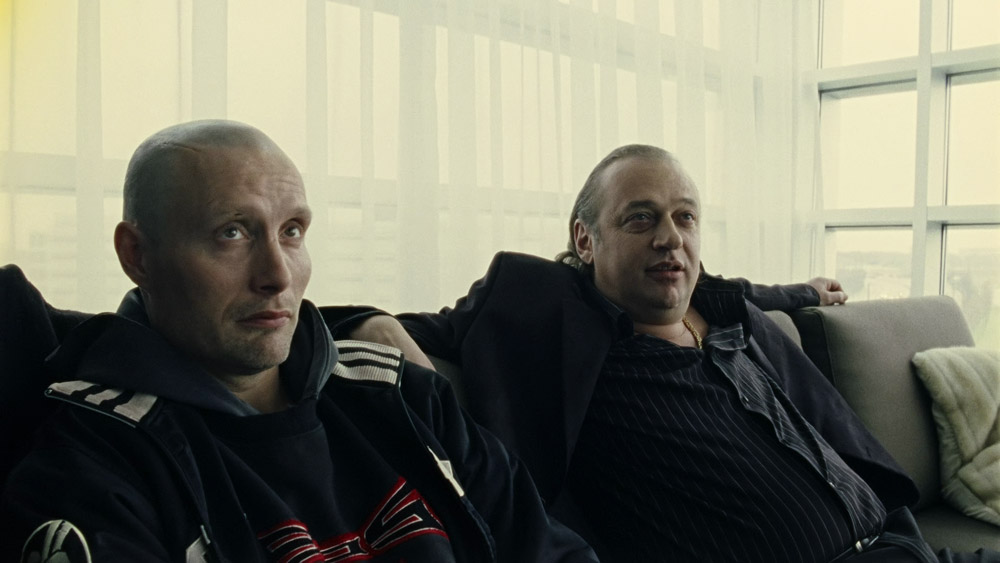
Zlatko came to an audition. He was a dishwasher working at a restaurant and he had done a lot of experimental theater through the late ‘70s into the ‘80s in Croatia. He had an incredible artistic background. It was underground.
Back then, there were no cell phones. And, I didn't have a number for him when he left. I was so nervous that he was going to disappear, so I made an arrangement to meet him that night at this restaurant. When he showed up, it became a beautiful friendship. You’re right, he's not the lead, but he is the one that steals every scene he's in. That is the burden of working with Zlatko: he just might steal the scene because of his ability as a performer, his aura as a movie actor. He will not stop a scene until you say cut. He’ll just keep improvising. He's very, very unique.
CS: I'm curious about working with Mads, because he's gone on to be a superstar. What was it like when you discovered him?
NWR: Mads was a show dancer doing cruise ships and stuff. I mean, not fancy. He was in his last year of acting school, so this was his first film. Obviously, it was a no brainer that this guy was made for something bigger. We've done more movies together now and he's a unique person in my life because, in a way, he very much became my alter ego for many years until I met Ryan [Gosling]. There’s something about Mads. It’s this star you're born under, which makes you a movie star. You can't teach it. You can't learn it. It's just one of those things that’s given to you by God. It sucks sometimes because you're like, "Why are you so goddamn good? You make it look so easy.”
CS: More of a philosophical question, but speaking of the star you're born under, I've always wondered, is Pusher a movie about bad decisions or bad luck?
NWR: I think the movie is the downfall of all the characters based on either bad decisions made because of human scarring or right decisions made out of desperation.
CS: I think that the scarring is what makes the movies feel unique. The protagonists are all given their humanity in the end and I know that you have cited John Cassavetes.
NWR: I think that we're generally drawn to the underdog. It’s certainly very much an iconography of American cinema: the outlaw, the anti-authoritarian. These people are not Robin Hood, but they represent that anti-authoritarianism that I think goes all the way back to kicking out the Brits and the idea of not wanting to be controlled, of not wanting to be governed. There’s a sense of romanticism in that, but behind the romanticism there's just pain in reality. There's no such thing as a happy gangster. That was very important to me. I didn't want to make movies about crime, because I don't really have an interest in that myself. But I'm interested in people living in a criminal environment, in what circumstances you're dealt with and how you use it. It's like heightened reality.
These films [Pusher trilogy] are basically about people that are desperate. It's very important to me that there's nothing romantic about it. Everyone loses at the end. When I was 18, I remember I went to see The Killing of a Chinese Bookie [1976] at The Danish Cinematheque in Copenhagen. I’d never seen it before. I remember when I left the screening, I was like, "If I ever make a movie, that's the kind of acting I want.” I even went to the same acting school as John Cassavetes, the American Academy of Dramatic Arts. I got kicked out after a year, but that’s another story. I think that The Killing of a Chinese Bookie made an enormous impact on me in terms of how to tell these stories about the fall of humanity and the idea of the anti-hero never really being a hero and just surviving.
CS: Zlatko is kind of your Timothy Carey, in a sense… The third film where Zlatko is the main protagonist is very special to me. I feel like you were able to follow the trajectory of French gangster movies, from the early days to a later film era with Jean Gabin and Lino Venture, in the span of 10 years. That's the feeling I get when Zlatko and Slavko Labovic meet again.
NWR: The third film became the one where I felt the entire trilogy fell into its right place. It's the one where I felt that it clicked in a way, at least for me. I obviously have affection for all three children, I don't like them less or more. Two obviously has an enormous emotional impact because Mads is so goddamn good. And one, when I saw it again during the restoration process, I was like, “God, I was arrogant back then.” But that’s the fuel, you have to be, in a way, arrogant, and believe in yourself and that everyone else is wrong. But I think three, story wise, and how it turned out was like, I'm done with these movies. I can now retire from them and leave them to exist in their own sphere.
Pusher runs May 8-14 at IFC Center.