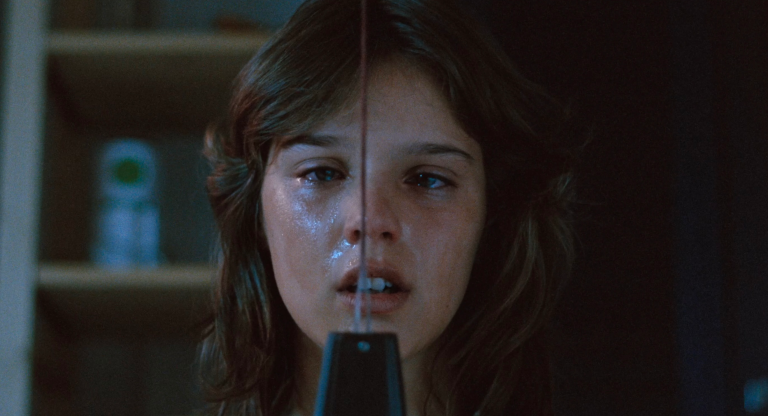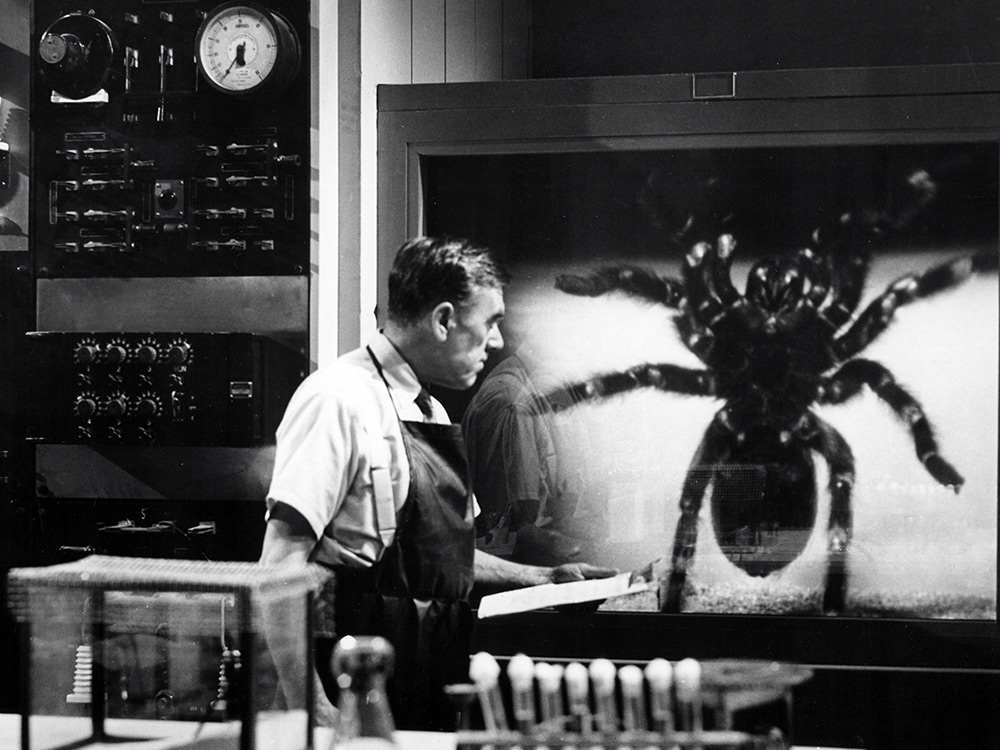
Jack Arnold’s Tarantula (1955) is a quintessential 1950s B-movie and, like many of the horror and science fiction films of its day, it features a familiar animal magnified to monstrous proportions. Arnold, the director behind genre classics such as It Came From Outer Space (1953) and Creature From the Black Lagoon (1954), brings a clarity and seriousness to this tale about a giant arachnid terrorizing a desert community. Although the film only runs a brisk 80 minutes, Tarantula has more to offer than just one huge creature. In this surprising slow-burn monster movie, the audience is also treated to mystery, human mutations, romance, and a few other enlarged animals.
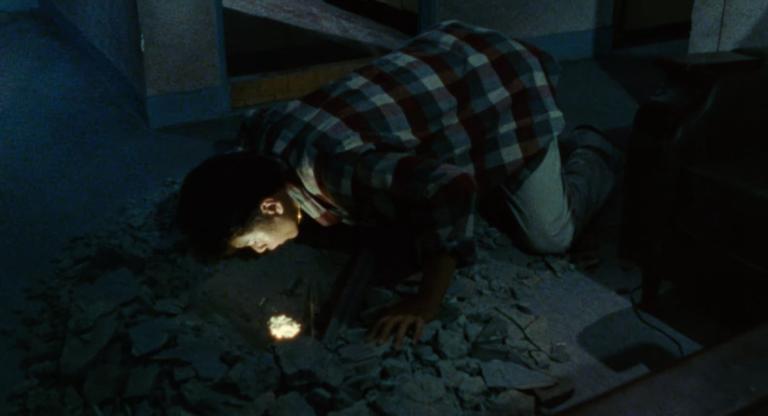
Tarantula opens with a bleak set piece in which a deformed man (Eddie Parker) stumbles through the desert, falls, and dies grasping a fistful of dirt in his hand. The man is identified as the scientist Eric Jacobs by his collaborator, Professor Gerald Deemer (Leo G. Carroll), who claims Jacobs died of acromegaly. But local doctor Matt Hastings (John Agar) isn’t convinced. Eventually we’ll learn that Deemer is working on a synthetic nutrient that makes animals grow to enormous sizes very quickly, and when there is a fire at his desert lab, one of the test animals, a tarantula, escapes. The rapidly growing tarantula moves through the countryside mostly unseen, feeding on livestock and leaving huge puddles of insect venom in its wake. Hastings is on the arachnid’s trail, which leads to a fiery showdown when the creature turns its 8-eyed sites toward the small town of Desert Rock.
After Tarantula, Arnold directed what many consider his masterpiece:The Incredible Shrinking Man (1957), a film exploring horror on the opposite end of the scale. The latter is lauded for the simplicity of its scenario and the horror it generates from it—one of the highlights being when Robert Scott Carey (Grant Williams) must fight a spider that, at the man’s current size, has become a giant predator. Like The Incredible Shrinking Man, Tarantula is not a tongue-and-cheek affair, but one that plays with the possibilities of disproportionality in a relatively—and I stress, relatively—realistic way. The script isn’t overly talky and there are moments of believable shock and horror at the unnatural things science has wrought. Arnold’s film, and his work in general, elegantly employs movie effects magic to strike primal nerves about our place in the food chain and how small we are in the grand scheme of things.
Tarantula screens this evening, December 5, at the Museum of Moving Image as part of the series “Disreputable Cinema.”