Already, in the translated titles of both Euzhan Palcy’s 1983 debut and its 1950 source novel, two interdependent systems that sustain European colonialism are evident: extractive economies and racial hierarchies. The English, Sugar Cane Alley, which conjures a paradisal vision of island living, aptly refers to Martinique’s formerly agrarian economy during its colonial period. (Though the French overseas department is now better known as a West Indian holiday destination, it still sports nearly 20,000 hectares of fertile farmland according to the statistical office of the European Union, with sugar cane still being one of the key crops.) The French title, La Rue Cases-Nègres, which is often translated as “Black Shack Alley,” paints a vivid picture of the workers who tend the fields. Not only does it identify the laborers that uphold this system of procurement, but also describes the confined squalor that these workers were relegated to.
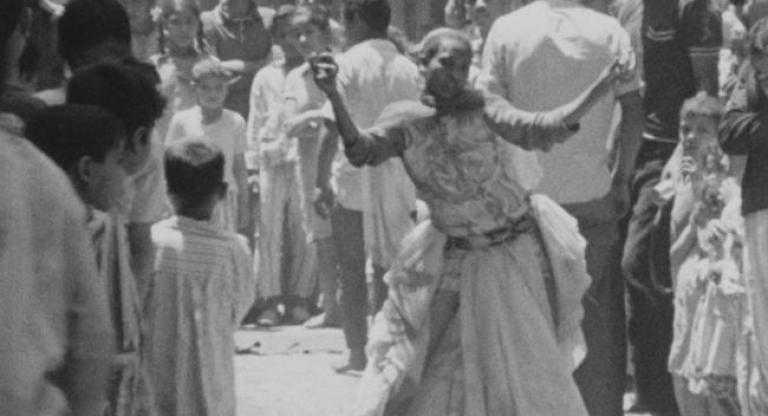
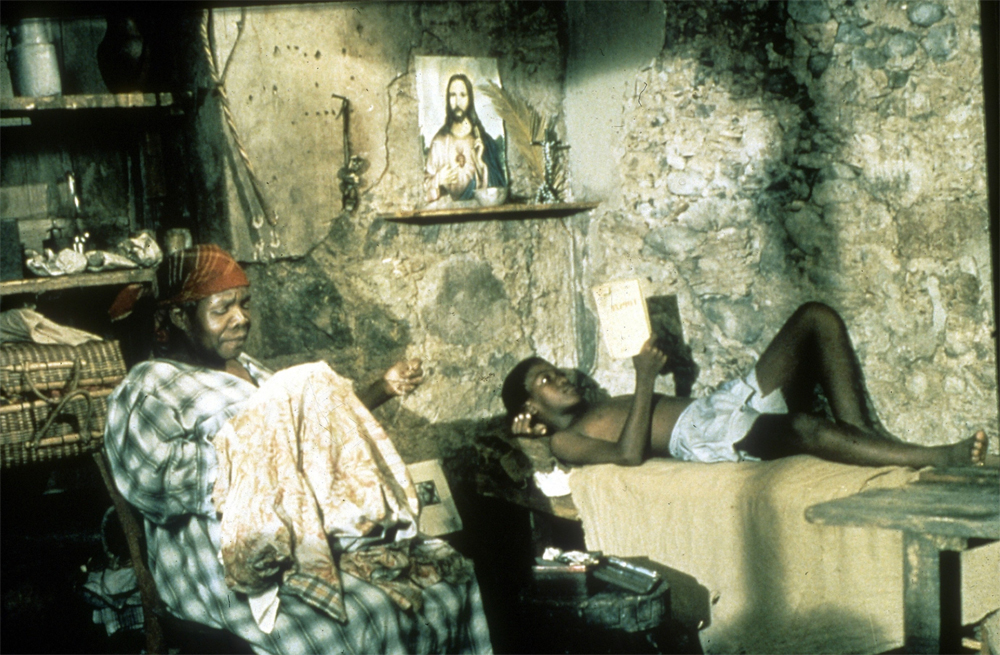
Based on the semi-autobiographical coming-of-age novel by Joseph Zobel, Palcy’s film is set in a 1930s plantation town in Martinique. The young José Hassam (Gary Cadenat) serves as the audience’s guide through this landscape of extraction. With the help of Parisian DP Dominique Chapuis, who was introduced to Palcy by one of her early supporters, François Truffaut, and would soon after work on Claude Lanzmann’s Shoah (1985), the pair patiently navigate the seemingly banal, nature-filled scenes of José’s childhood. He works the fields with his grandmother Ma’ Tine (Darling Légitimus), commits small acts of mischief in between classes, and ends the day by the campfire with spiritual mentor Médouze (Douta Seck), who shares passed-down creole tales of slavery and rebellion. Though these intimate moments seem uniquely local, their familiar story beats transcend cinematic borders, sharing similarities with scenes from films like Pather Panchali (1955), The 400 Blows (1959), Kes (1969), and beyond.
Like most portraits of childhood, Sugar Cane Alley captures a child gradually socialized into the norms of adulthood. Summer days wrecking havoc around the neighborhood are inevitably replaced by the strict regiment of schooling in Fort-de-France. Cadenat’s face, with his penetratingly wistful stares, conveys a universal reckoning with the immoral realities all children have to eventually confront. However, where Palcy’s film differs from its western counterparts is in her searing critique of imperialism, which is shown to compound the struggles of growing up. For José, to succeed is to have an eloquent command of the French language and to be well versed in the bureaucratic intricacies of the colonial metropole’s organization. To assimilate with the Empire is to leave behind the woman who worked to death in order to get him an education and never again live in the cluster of shacks he called home.
Palcy isn’t interested in simply critiquing the inhumane machinery that grinds the Martiniquais into the margins. When Medouze recounts oral histories that have traversed the Atlantic, interspersed by the crackling of woodfire and the abrupt exchange of creole phrases forged by generations of slaves, the film’s intellectual position on imperial plunder takes full form. Building off the legacy of her mentor Aimé Césaire, who Palcy also made a three-part TV documentary series about, her decolonial analysis is also grounded in emphasizing the survival of African modes of storytelling. In his book Discourse on Colonialism, Césaire asserts that every bloody transgression by the European ruling class “brings home to us the value of our old societies.” Both the on-screen relationship between Médouze and José, as well as Palcy’s own unwavering determination to make this film are a response to this lesson. As the first Black female director to be awarded a César Award and a Silver Lion at Venice, Palcy’s accolades mark an exceptional infiltration of Martiniquais history into the Western cultural mainstream. Her unfiltered frames of Black Caribbean life stand in defiance of a continued, centuries-long campaign to degrade and erase the global majority.
Sugar Cane Alley screens this evening, March 17, and on April 4, at the Museum of Modern Art on 35mm as part of the series “A View from the Vaults: The 1980s.”