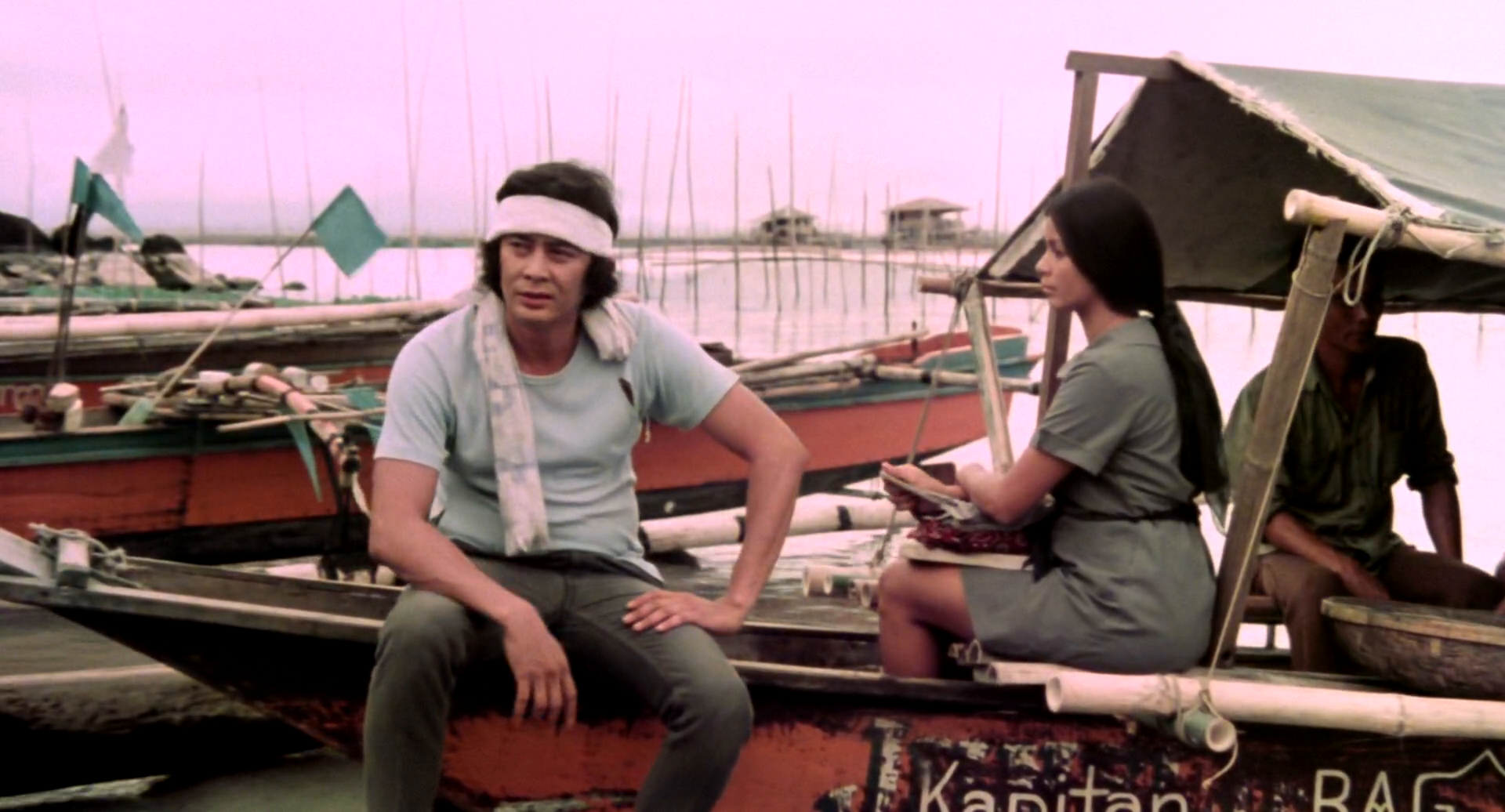
In 1991 and 1996, Filipino cinema suffered the premature loss of two generational talents. Lino Brocka was the first to pass in a tragic car accident, then Ishmael Bernal after suffering from a heart attack. The former's legacy only continues to grow with each successive restoration and retrospective. But, while recognized as Brocka's equal by many and even though his 1982 film Himala is widely considered a foundational contribution to the national cinema, Bernal’s works still receive little airtime relative to many of his Second Golden Age peers. Even with the revitalized international interest in Filipino filmmakers like Brocka and Mike De Leon, prints of Bernal’s films remain in short supply and most of his titles remain overlooked. If not for the discovery of a 35mm print in the Fukuoka City Public Library's Film Archive and an exhaustive restoration process, gems like A Speck in the Water (1976) would have remained in footnote purgatory along with troves of other national gems still yet to be unearthed.
Among its 1976 peers, a landmark year for Filipino cinema which saw several era-defining works hit the big screen, A Speck in the Water stands out as a film largely stripped of crowd-pleasing genre forms. In the barrio of Santa Fe, on the coast of a secluded inland island, Bernal assembles an intergenerational cast of village dwellers. The web of relationships on this island are anchored by a love triangle between a ferryman (George Estregan), a midwife-in-training (Daria Ramirez), and her neighbor (Elizabeth Oropesa). An unabashed humanist who was unjudgmental when observing his countryman's flaws, the director's most potent instrument was not in his characterization of people but of the spaces they occupied.
The isolated Santa Fe, the derelict nightlife haunts of Manila by Night (1980), the arid desert in Himala. In each case, the environment, infused with rich layers of semiotic meaning, dwarfs its occupants. Settings assert their own natural laws and fated judgements upon their respective ensembles. More than any other work in his oeuvre, Bernal's A Speck in the Water is the one most keenly attuned to man's intimate yet fraught relationship with nature. The film meticulously realizes the regime of contradictions that govern Filipino life. Throughout the first century of the Filipino nation, an unprecedented flow of capital streamed into the country as metric tons of natural resources and labor were shipped abroad. In the ‘70s, during the height of the Marcos dictatorship, concrete edifices shot up across the capital while countless communities were systemically pushed out of sight and into the underdeveloped margins.
Like many settlements throughout the archipelago, the island community of Santa Fe is embedded in idyllic tropical splendor. Of course, this idle atmosphere is anything but soothing. Early on in the film, a mysterious epidemic kills off the fish in the bay, cutting the community off from their main source of income. Disaster, tragedy and thwarted expectations arrive in waves, receding only momentarily to allow for brief moments of connection. As moonlight bounces over the black ripples beyond the coast, babies are delivered, secret midnight rendezvous commence, and the village elder tells stories by the fire. As day breaks, with nothing left to do but wait for boat-loads of dead milkfish to dry under the sun, with little prospect of any of it being sold, the yearning gazes of the islanders dart across the glistening water. Under the shade of coastline flora, the camera captures a fleeting beauty in decay.
A Speck in the Water screens this evening, September 25, at Spectacle as part of the series “Gripped by Hysteria: Ishmael Bernal x3.”