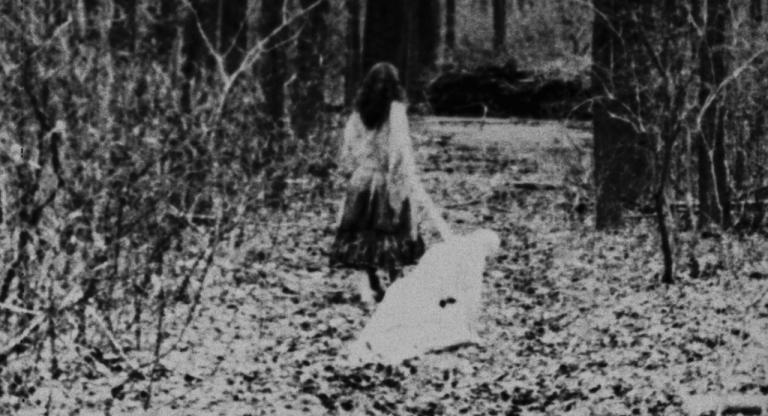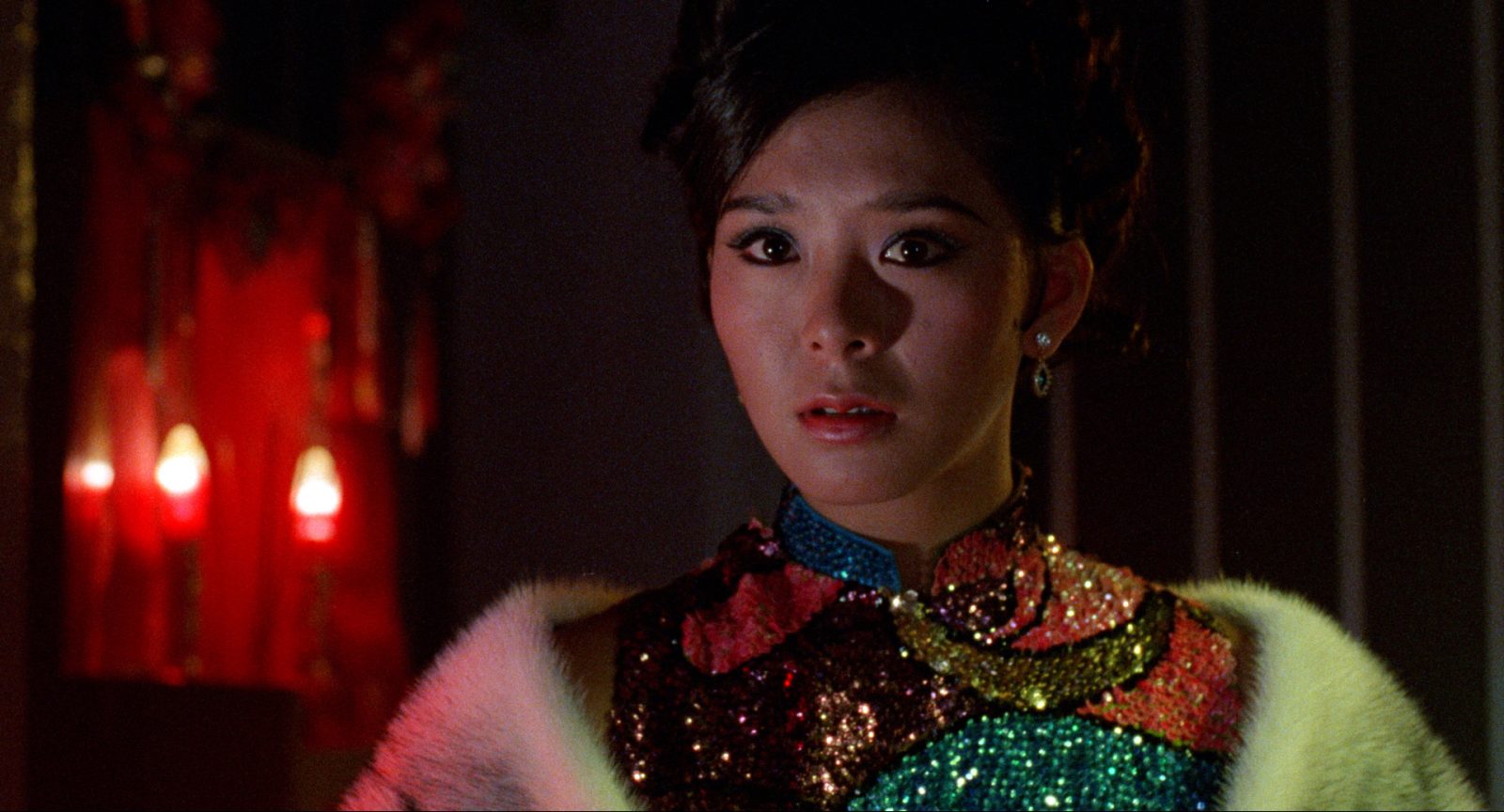
If Richard Quine’s The World of Suzie Wong (1960) is a pin-up fantasy of Hong Kong and the Asian sex worker, Angie Chen’s My Name Ain’t Suzie (1985) counters with a rhapsodic rags-to-riches epic of working sex that foregrounds the inner world of women in the trade. The film opens at the height of the Cold War, when American GIs on R&R from deployments in Korea and Vietnam flooded Wan Chai’s neon-lit bars. Chen recreates this world in sensuous detail. The façade of Lucky Bar was built on location at an abandoned Wan Chai building, while costume designer Colette Koo sourced the film’s dazzling mid-century dresses from secondhand shops in London. Working with screenwriter Chan Koon-chung, Chen spent time with Wan Chai bar girls and American men staying in hostels in Chungking Mansions and cast several of them in the film, a nod to the lingering afterlives of the era depicted on screen.
The film follows an enterprising “salt water girl,” Shui-Mei (Pat Ha), whose name is Cantonese slang for “leftovers.” Shui-mei is brutally pragmatic about the economics of sex from the start, declaring in her first scene that a girl's virginity is worth at least $100. She is recruited by a bar madam from her village, Auntie Monroe, to work in the city at Lucky Bar, where she trains her feminine wiles under the wing of Miss Xiao, a reverie of old Shanghai glamor. The foil between Auntie Monroe and Miss Xiao as well as the jeers and jokes on dialect and regional background exchanged between bar girls subtly reflect the ways local identity and class politics were renegotiated as Shanghainese émigrés flooded into Hong Kong during the postwar period. These details build out the world of Suzie’s bar girls distinct from their identification with erotic labor or the clientele they serve. Even when American sailors visually fill the frame, it is the women’s conversations in Chinese about themselves and one another that take center stage.
From Lucky Bar, Suzie follows Shui-mei over three decades, as she tries her hand at street-based work after being banished by Miss Xiao over a shared love interest (played by Anthony Wong), then opens her own parlor and, eventually, a nightclub. Shui-mei’s move to Kowloon echoes the shifting geography of sex work and nightlife in Hong Kong in the late 20th century, which was driven by urban redevelopment and American military withdrawal from the port city. Throughout the film, rather than dramatize transactional sex, Chen focuses on the day-to-day travails of managing the business. We find Shui-mei and her masc lesbian-coded hired brawn, Wong Ying—a role that won Deanie Ip Best Supporting Actress at the 1986 Hong Kong Film Awards—constantly brokering backdoor deals and fending off local gangs to stay afloat.
The social worlds and cultures formed through and around sex work generate their own queer sociality beyond the confines of normative family structure. Shui-mei cares for Miss Xiao when the elder falls into poverty and addiction. She finds deep companionship in other women, extends financial support to others in the community, and mentors younger girls entering the trade. Yet, for the power she embodies as such a matriarchal figure, Shui-mei eventually pays for her glamorous nonconformity in loneliness, a devastating admission of heteropatriarchy’s pervasive coercion.
Suzie was made during a brief window of creative latitude for women directors at Shaw Brothers, but quickly shelved after its release due to disputes over the final cut. As a result, Chen retreated from feature filmmaking for decades. Now, as sex worker media draws renewed critical attention, Kani Releasing’s new restoration with L’Immagine Ritrovata Asia gives this overlooked jewel of Hong Kong cinema’s golden years the attention it has long deserved.
My Name Ain’t Suzie screens this evening, October 4, at Anthology Film Archives as part of the series “Avatars of the Whore.”