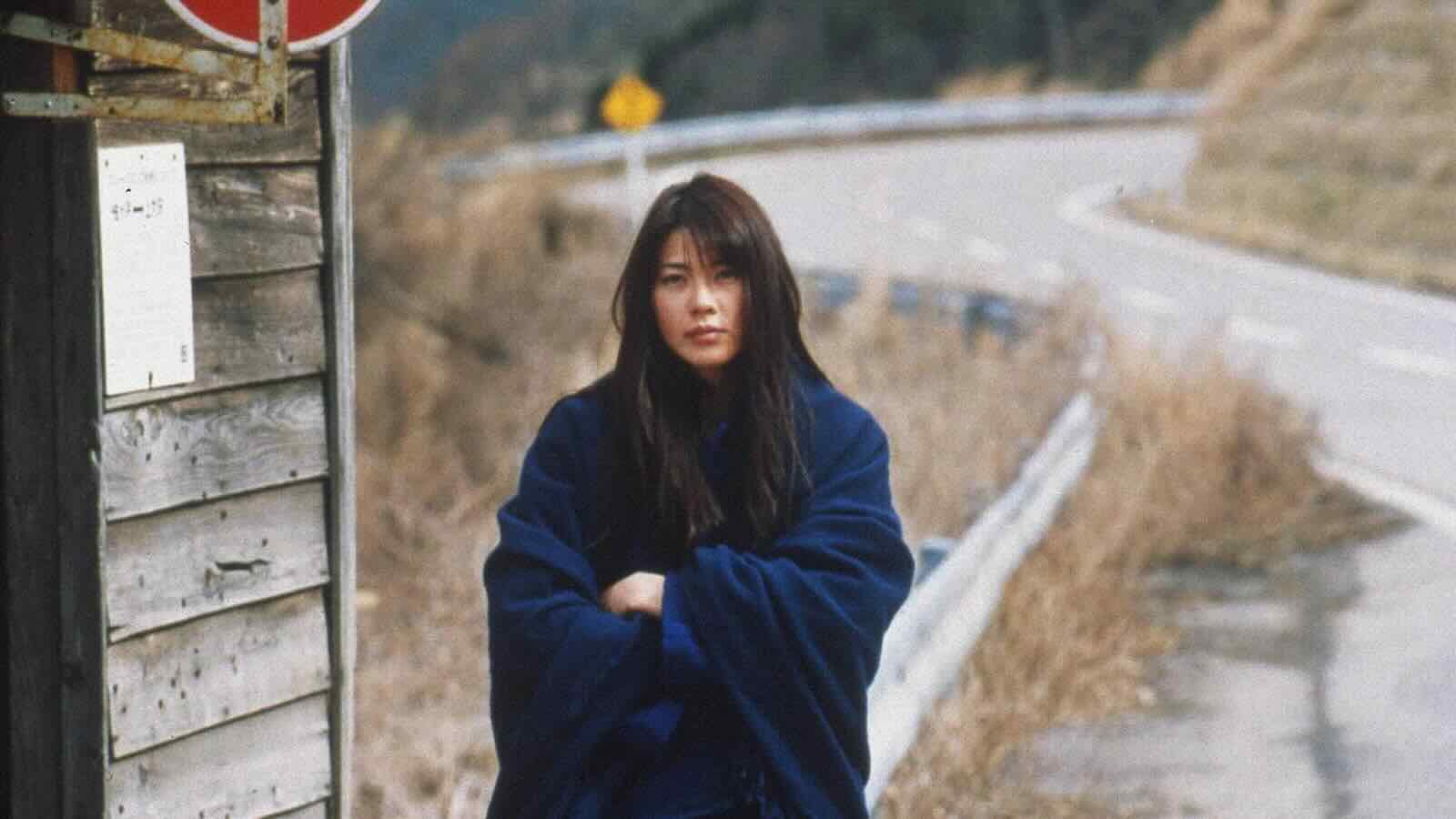
A young Japanese woman named Yumiko (Makiko Esumi) waves eagerly as she sends her beloved husband off to work in their small town outside Osaka. She faithfully watches his slender figure recede in the distance before returning to her daily chores. As the day passes and night falls, she keeps waiting for his return. The return never comes, as her husband inexplicably decides to walk on train tracks on his way home. Her life suddenly changes, with an infant son to care for.
Yumiko has experienced this form of leave once before, as a 12 year-old, when she discovers her grandmother escaping to her hometown of Shikoku to spend her final days there. Yumiko catches her hobbling away on a bridge and begs her to come back, imploring that her father would be upset. Her grandmother insists, and with a faint wave of hand, leaves Yumiko behind.
These two hauntingly stunning moments in Hirokazu Kore-eda’s debut feature, Maborosi (1995), resurface for Yumiko as she has no choice but to carry on. Helped by a close neighbor, she is arranged to remarry a widower in a small fishing village, who also has a young daughter. She gradually settles into her new home and role as a mother to two, finding reassuring moments of happiness there. However, despite her determination, her face retains the look of someone forever wondering.
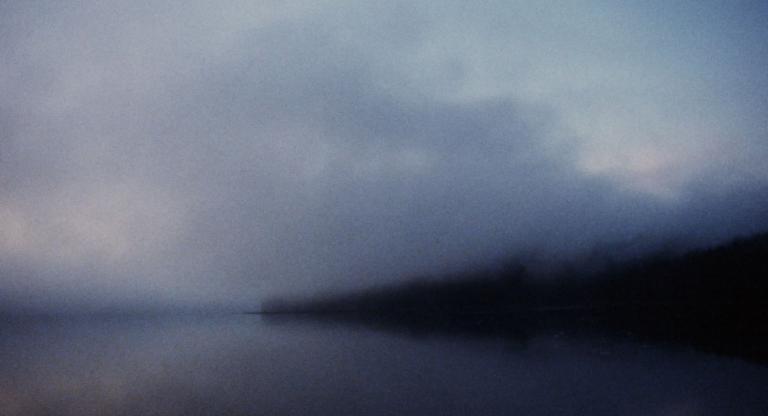
Maborosi, which was adapted from Teru Miyamoto’s short story Maborosi no Hikari, translates as “phantom”, or “apparition.” Memorably shot in long takes using only natural light by cinematographer Masao Nakabori, the film carefully depicts the lighting changes surrounding Yumiko’s daily life. Kore-eda, who storyboarded every image, has described how these compositions were intended to “portray the changes within Yumiko’s interior landscape.” The film marked the debut role for Makiko Esumi, then a fashion model. In a way that echoes Robert Bresson’s use of “models” as actors, Esumi’s performance is defined by her physicality — how she occupies space and moves with a model’s deliberate grace.
Maborosi takes place predominantly in two locations, Amagasaki and the Noto Peninsula. The latter experienced a devastating earthquake on New Years Day in 2024, where recovery efforts continue to this day. In preserving a landscape that may now be lost, the film gives early voice to the profound themes of loss, memory, and continuity, which mark Kore-eda’s earliest works, with incredible sensitivity.
Maborosi screens this evening, January 16, at Metrograph as part of the series “The Year Begins in Silence.”