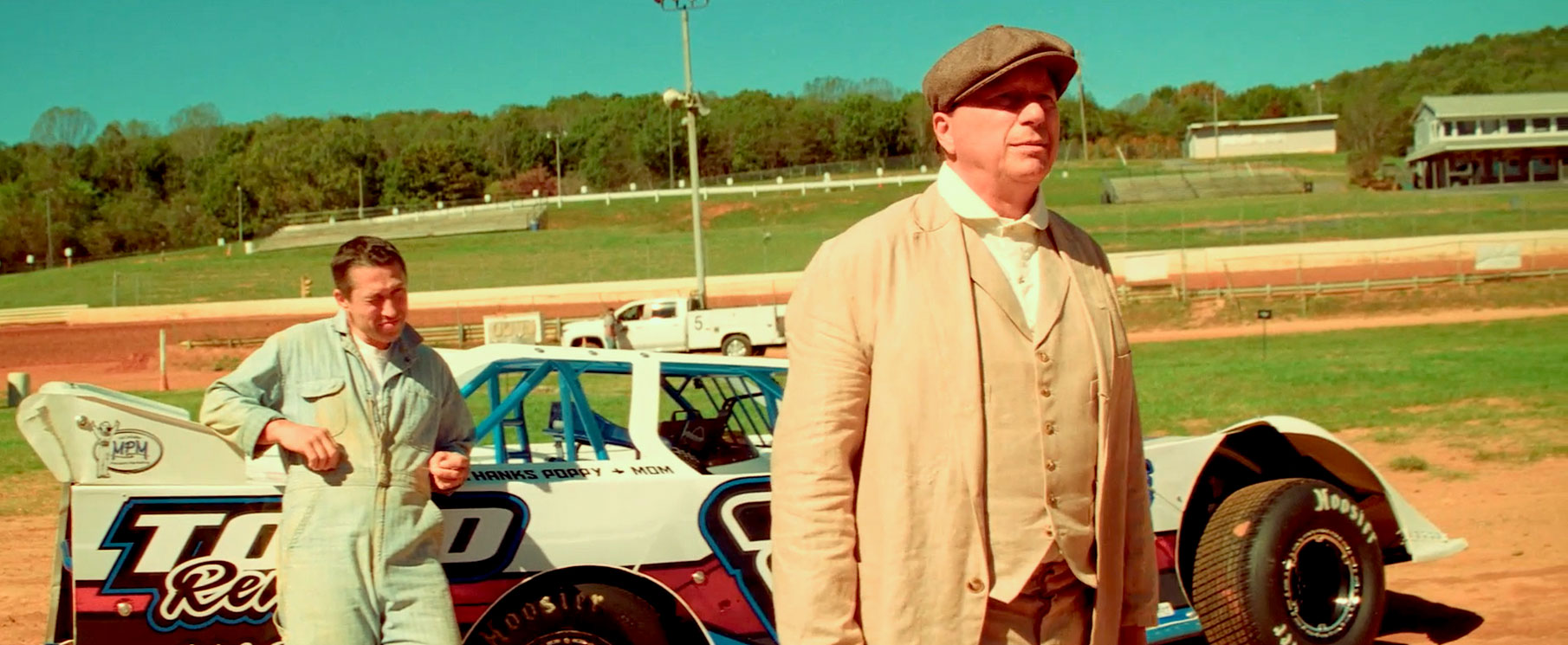
Potential energy is the prevailing force in Rob Tregenza’s sixth feature, FAST (2026), an entrancingly slow film about an aspiring racecar driver. It’s perversely thrilling to watch a torpedo-shaped, open-wheel performance machine obey the speed limit along narrow smalltown roads. The engine blasts a sense of danger at odds with the sleek body’s serene tour past old brick churches and historical landmarks. When the car does finally hit the track, its menace is swallowed when Tregenza cuts to an empty control room in which a hysterical assembly of seemingly autonomous panels and monitors atomize the vehicle’s progress into units of information, i.e. various angles suitable for reconstruction. In the control room, FAST confronts its antithesis, an industry-standard suite of gizmos bent on reorganizing continuous live events into palatable entertainment through constant cutting. Tregenza bottles the frenzy we expect from his subject matter and in so doing concocts tension without availing himself of cinema’s orthodox tools (layered sound design, vertiginous cuts) for ginning up excitement.
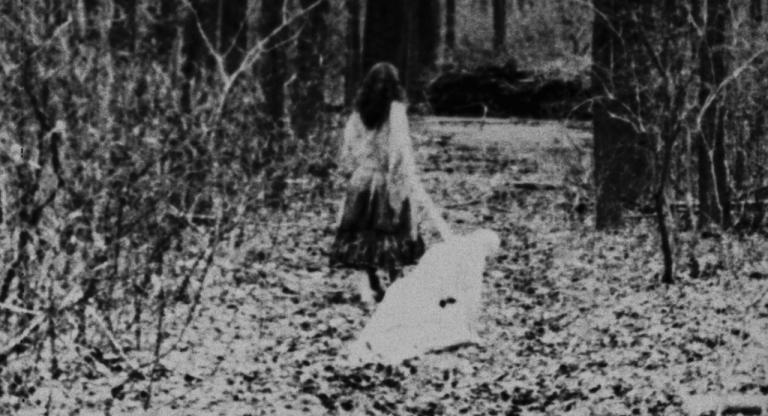
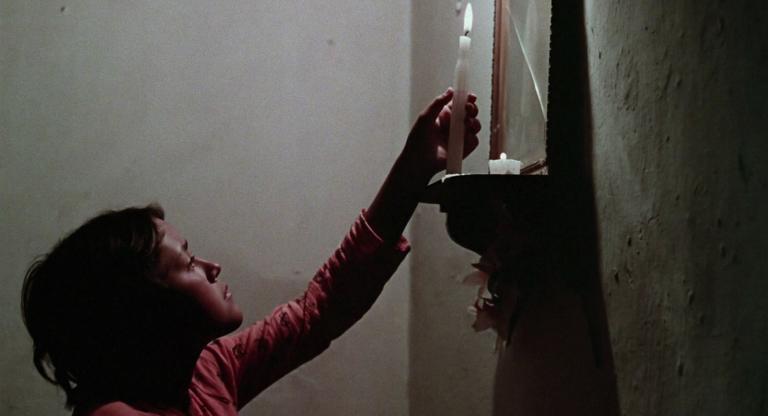
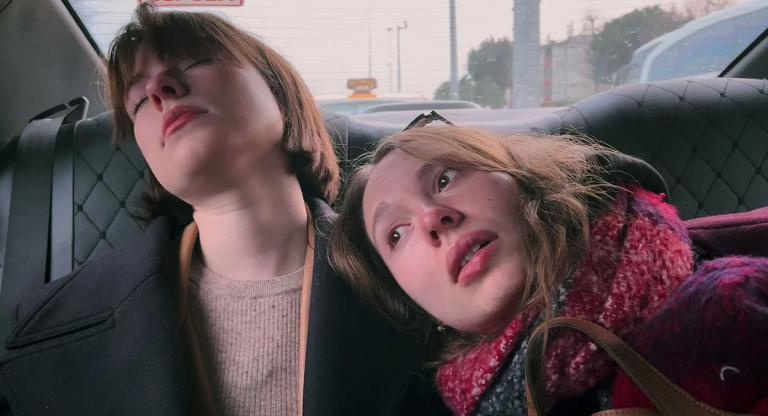
The film’s narrative unfurls elliptically, with exposition arriving in shards through brief dialogue exchanges and wordless sequences that dissolve the boundaries between dream, memory, and fantasy. One possible reading of the film’s plot: having fled her small Virginia town after the mysterious death of her mother, Sterling (Madison Pankey) returns years later after her aspirations to become a lawyer stall out; with the assistance of a soft-bellied gangster and two lascivious mechanics, she gradually constructs a single-seat racecar and reinvents herself. Your sense of what’s actually happening or has already happened will likely differ because Tregenza is far more interested in constructing a metaphysical palimpsest of events and eras that provokes reverie than he is in supplying setups and payoffs.
The integrity of movement has been central to Tregenza’s method throughout his largely unheralded 40-year career. During unbroken stretches of real time, his camera glides among characters and landscapes as though they are familiar partners in an ancient dance ensemble. In the possessory scramble that is film production and marketing, it’s worth noting that Tregenza’s camera truly is his: he has always acted as his own director of photography and camera operator. During FAST’s long takes, the philosopher William James’s notion of “specious present,” our phenomenological experience of “now,” is stretched and conjoined with Tregenza’s widescreen frame to form a contemplative perceptual window. Through this aperture waltz plot elements that correspond to Sterling’s present and past, as well as emblems of the deeper social history of the postdiluvian South. In one shot, Sterling and her father share a tender moment in period dress before exiting the frame to reveal the chassis of her car haphazardly covered by tarps and surrounded by junked SUVs. And, in the film’s mesmerizing final sequence, Sterling enters the town hall, where a 19th century family portrait session is taking place. Tregenza tours the unfurnished landmark as his tophatted and corseted figures dance, play, and wander themselves under the high ceilings. For better or worse, American history lives most vividly in the South and irresistibly intrudes on individual identity. Braiding nonchronological events from Sterling’s life with snapshots of the 19th century, Tregenza makes the specious present feel infinite.
FAST screens this evening, August 17, and tomorrow, August 18, at the Museum of Modern Art.