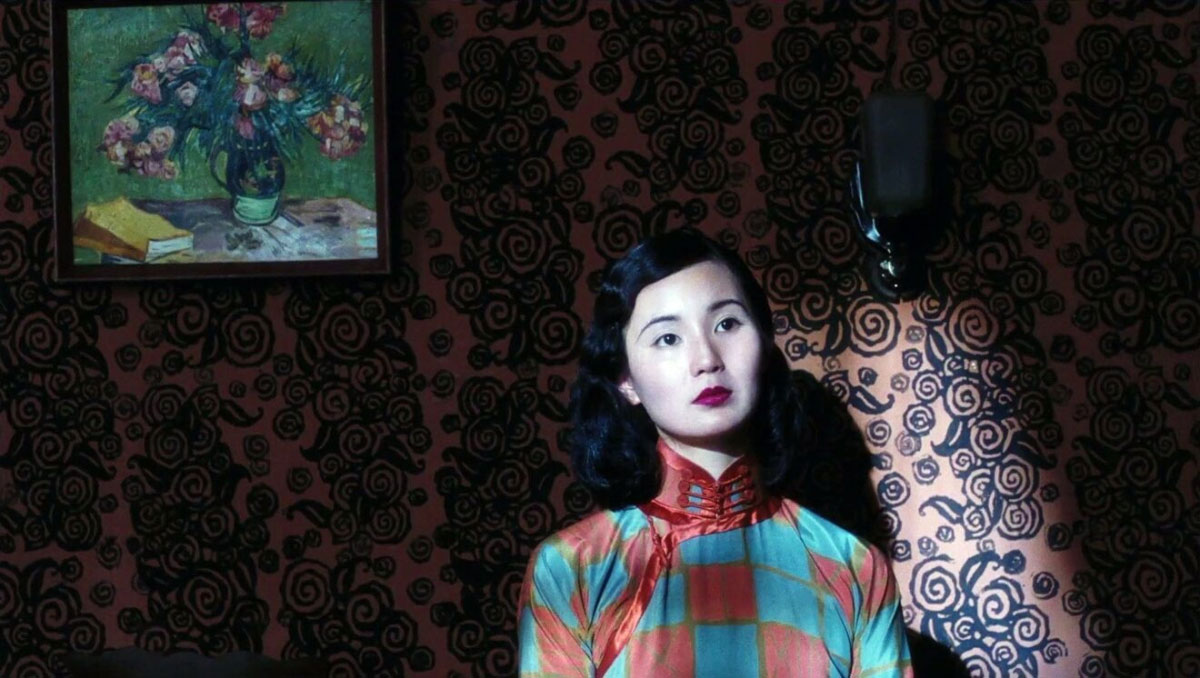
Few films blur the lines between biography and self-portrait as daringly as Stanley Kwan's Center Stage (1991). It is a film about the silent era Shanghai star Ruan Lingyu, who took her own life at the age of 24 in 1935 after being hounded by the tabloid press. With films like The Goddess (1934) and New Women (1935), Ruan had become the most iconic face of Chinese silent cinema and her funeral procession reportedly stretched for miles through Shanghai.
Casting Maggie Cheung as Ruan and interweaving the drama with documentary-style interviews, on-set rehearsals, and Ruan’s surviving silent footage, Kwan set two generational actresses in dialogue with each other, while stepping before the camera himself to interrogate his own act of reconstruction. The multi-layered performance won Cheung the Silver Bear for Best Actress in Berlin, a first for a Chinese-language performer.
As the film's 35th-anniversary restoration comes to New York on the heels of Asia Society's retrospective of Kwan’s work last month—this version of the film has been approved by Kwan and includes restored footage Hong Kong audiences never saw upon release—I spoke with him about when he first encountered Ruan’s films as a teenager, casting Maggie Cheung, his decision to shoot in Shanghai, and collaborating with both Hong Kong and Mainland crews.
Our conversation has been edited for length and clarity.
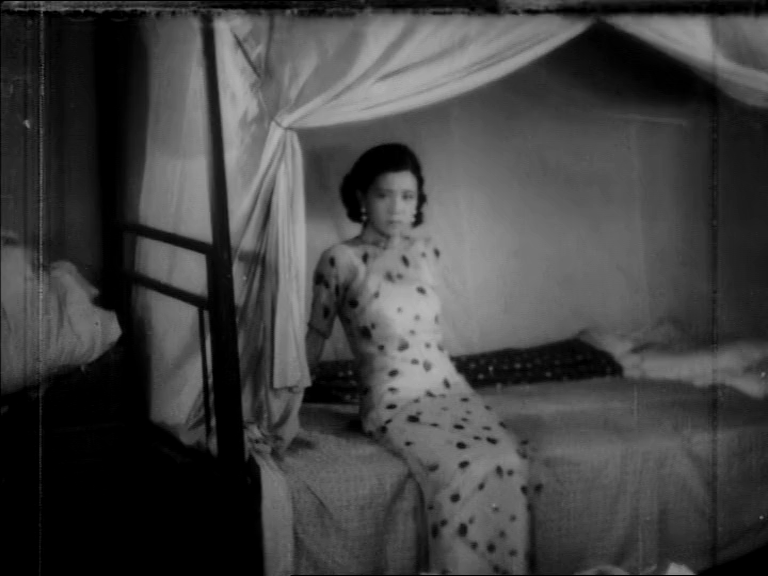
Frank Yan: When and under what circumstances did you first encounter Ruan Lingyu’s films?
Stanley Kwan: I was in secondary school, probably in my early teens. At the time, there was a Hong Kong Film Culture Centre housed in a very modest apartment. I watched old films from the 1930s and ‘40s there on video-tapes. Even though they were silent films, I was deeply captivated just observing Ruan Lingyu’s makeup, her acting, her expressions, and her gaze. That impression stayed with me. Whenever the Film Culture Centre had retrospective screenings, I would enthusiastically recommend films by 1930s directors like Fei Mu, Sun Yu, and Wu Yonggang to my friends.
After I finished Rouge [1987], Golden Harvest [the legendary Hong Kong production company founded by Raymond Chow] wanted Anita Mui and I to work together again. Naturally, I thought, “Why not have Anita play Ruan Lingyu?” Her looks even resemble Ruan's a little.
FY: Center Stage interweaves archival footage, dramatic reenactment, and documentary-style interviews—a rather formally audacious choice within Hong Kong’s highly commercial film industry at the time. What led you to adopt this hybrid structure and what did it enable you to express about Ruan Lingyu that a conventional biopic could not?
SK: The company agreed to my proposal of a Ruan Lingyu biopic starring Anita Mui. But because the entire story was set in Shanghai, I insisted on shooting there. Anita withdrew for personal reasons. She wanted me to build Shanghai on sets in Hong Kong; I felt that no matter how we built it, it would not become Shanghai. We parted amicably and I later approached Maggie Cheung.
By the time we approached Maggie, I had already spent over a year researching Ruan. I was very grateful to the China Film Archive in Beijing, which let us use all their 1930s silent film footage however we wanted free of charge. During that year, I also interviewed surviving figures from that era, including director Sun Yu and actresses Li Lili and Chen Yanyan, alongside reviewing extensive written and photographic archival materials. Essentially, whatever I saw, Maggie saw as well.
During the research and script discussions, Maggie happened to go through an intense media scandal: letters she had written to a foreign boyfriend were published by the tabloids. It struck me that the way the press had treated Ruan Lingyu was being repeated, in 1991, with Maggie Cheung. But Maggie, though born in Hong Kong, was raised and educated in London, and had a more open outlook. It made her all the more sympathetic toward Ruan. In our conversations, I realized—why not a form that pieces together dialogue between two women, two actresses.
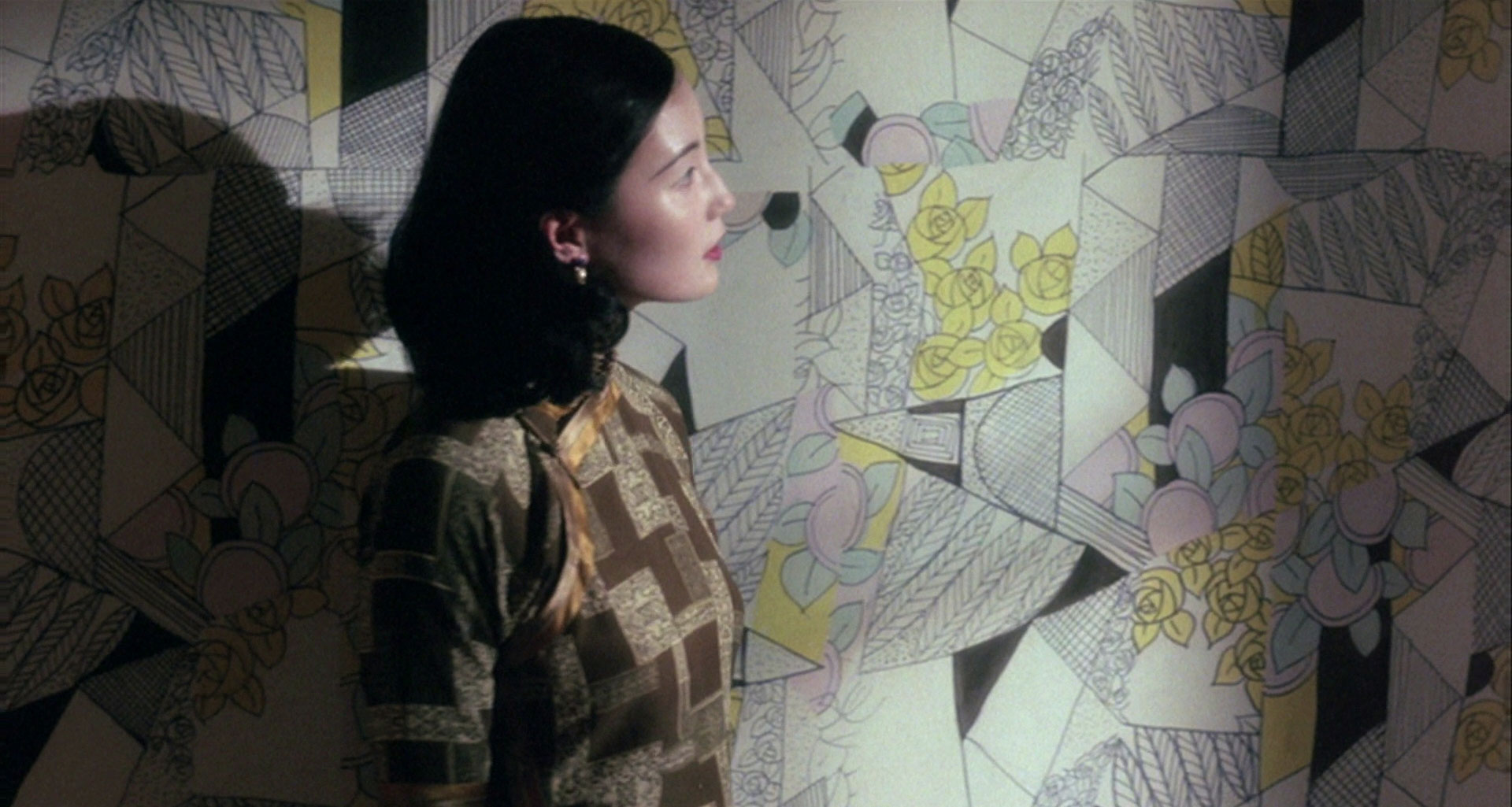
FY: Besides that incident, what qualities in Cheung’s acting or personality convinced you that she was the right fit to play Ruan?
SK: After Maggie returned to Hong Kong and entered the Miss Hong Kong pageant, she made many commercial films and people called her a “vase”—a pretty face with no acting skills. When I saw Wong Kar-Wai’s feature debut As Tears Go By [1988], I realized she truly could act. There is a scene in which she simply watches Andy Lau board a bus, and her performance in that moment was sheer perfection. That is why I invited her to make Full Moon in New York [1989] with Sylvia Chang and Siqin Gaowa, which earned her a Golden Horse Award for Best Actress.
When Anita Mui left Center Stage, I naturally thought of Maggie among the actors I had worked with. I felt she might be an exceptionally suitable choice and I wanted to explore another collaboration with her.
FY: The film posed an enormous challenge for Maggie Cheung because she needed to operate on three distinct levels: as a version of herself, the actress Maggie Cheung, in the present day; as a dramatized Ruan Lingyu in the 1930s; and, in reenacting scenes from Ruan's silent films, which required her to adopt the performance style of the silent era. How did you work with Cheung to distinguish these layers while sustaining a coherent emotional and dramatic through-line?
SK: It was through conversation with Maggie—asking her about her own impressions of the media, or letting her draw comparisons with her own experience. To some degree, this was a multi-layered way for Maggie to understand herself and to understand the figure of Ruan Lingyu. I think her own melancholy and sympathy is in her performance, but also a resolve of her own—like how she faces the characters of Zhang Damin [Lawrence Ng] and the character of Tang Jishan [Chin Han] in the film. For the Lianhua Studio part, we designed a scene where she stops midway on a staircase, not knowing whether to go down or up—Cai Chusheng [Tony Leung Ka-fai] above, Tang Jishan below. The screenwriter and I tried to hand Maggie as many different angles on the character as we could.
FY: To what extent were those documentary-style interview segments scripted or improvised on the spot?
SK: When the screenwriter Chiu Kang-Chien and I decided on this form, the interview sections were already built into the structure of the script. Every question we asked Maggie was written, but we left the process open, allowing Maggie to give the most personal answer she was willing to offer. It was the same with Tony Leung Ka-fai, Carina Lau, Chin Han, and the other actors: the questions were scripted, but their answers were their own. Some critics, at the time, called these scenes “pseudo-documentary.”
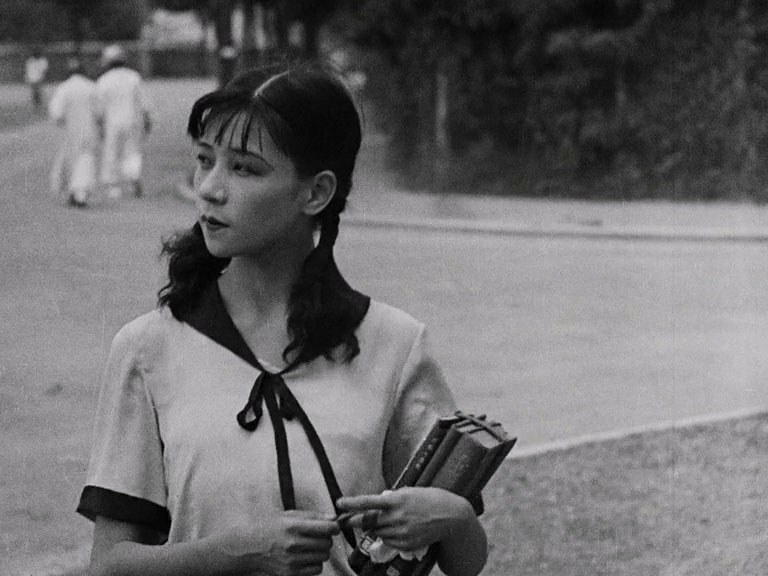
FY: The film already incorporates surviving footage from Ruan Lingyu’s original films. Why did you also ask Maggie Cheung to reenact scenes from those films? What relationship did you hope to establish between the original and recreated performances, and were you concerned that viewers might compare them?
SK: Beyond showing Ruan Lingyu’s surviving footage, Maggie’s portrayal of Ruan had to move through different periods and states. When she interpreted The Peach Girl [1931], New Women, The Goddess [1934], and Playthings [1933], she inevitably brought her own understanding of Ruan, her sympathy for her, and her own sense of why Ruan had performed that way at that moment.
For instance, after we finished the final scene from New Women and the director had called cut, Maggie continued to cry. That moment carried her understanding of Ruan as a person and of the emotional relationship between Ruan and Cai Chusheng. This is why, in addition to portraying Ruan’s life, Maggie also needed to interpret scenes from Ruan’s films.
FY: Much of Center Stage was filmed in Shanghai, making it an early example of a Hong Kong-Mainland co-production. Was this your first time shooting in Mainland China? What was the co-production dynamic like and were there any challenges to it?
SK: Center Stage was my first time shooting in Mainland and my first collaboration with the Shanghai Film Studio. I insisted on bringing cinematographer Poon Hang-Sang and the principal camera crew from Hong Kong, along with the art department, the key gaffer, and assistant directors. Shanghai Film Studio provided secondary support crew, such as stagehands and lighting assistants. Thus, the daily workflow on set and the basic communication remained very much a Hong Kong-style operation.
On the executive level, Golden Harvest remained the principal investor for Center Stage. The Shanghai Film Studio participated only as a facilitating partner and provided practical resources. It had no say in decisions involving the budget and creative control.
FY: This restoration is also labeled as the director’s cut. How does it differ from the original Hong Kong theatrical release?
SK: Golden Harvest only insisted on revising the final funeral sequence: all the behind-the-scenes materials within it had to be removed, and the very long funeral was shortened and became a purely dramatic, tear-jerker scene. Apart from that, the company did not insist that I change anything else. That’s the main difference between this director’s cut and the version Golden Harvest required for the Hong Kong release.
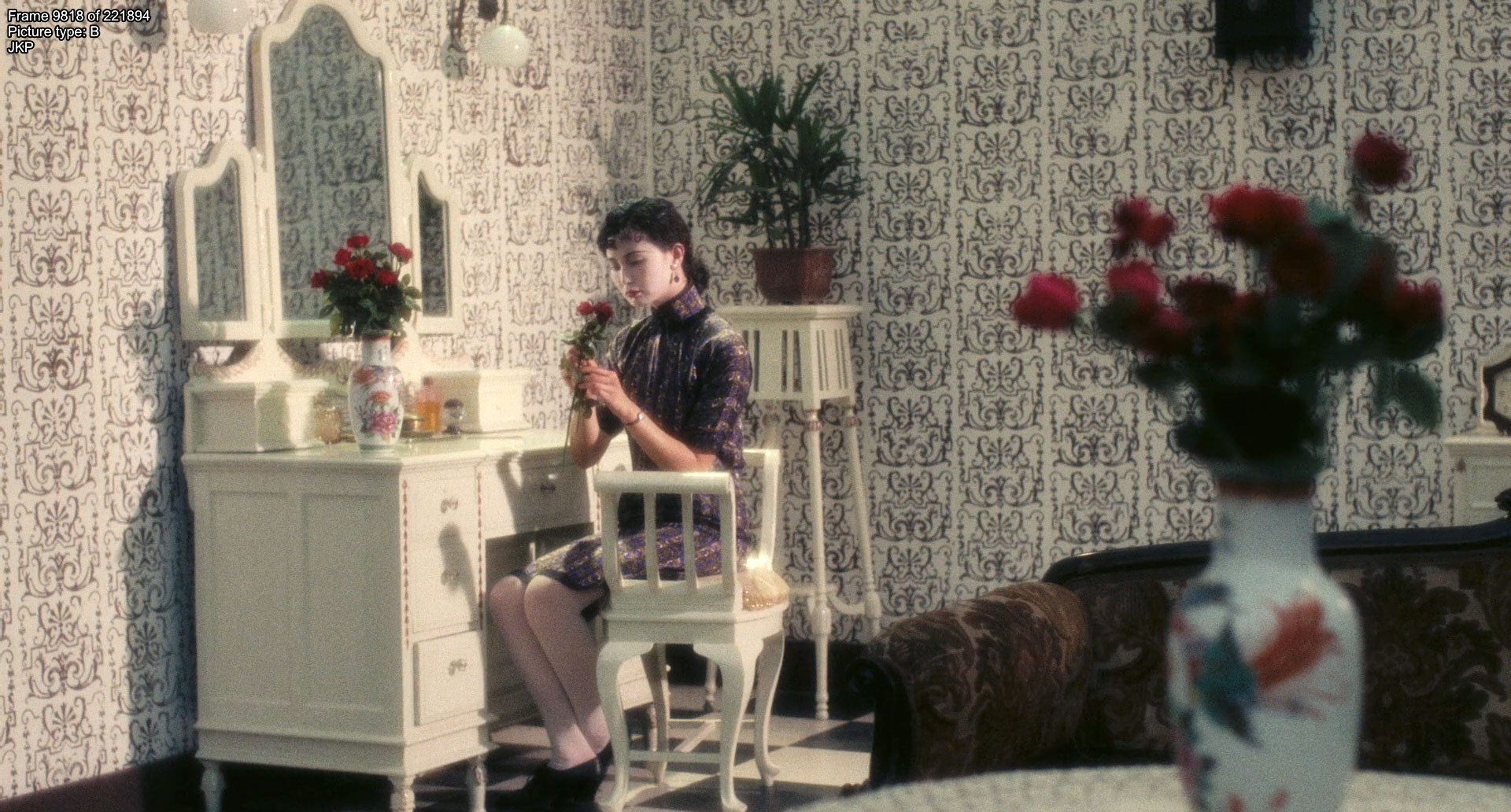
FY: As Center Stage returns in a 35th-anniversary release, previously lost films of Ruan Lingyu such as Bu Wancang’s Love and Duty have been rediscovered, while scholarship on her life has continued to develop. Have all these new materials altered your understanding of Ruan’s films or biography, or the way you regard Center Stage today?
SK: I would not remake Center Stage. At that particular moment, Golden Harvest happened to want another collaboration between Anita and I, and I had my childhood experience of seeing Ruan Lingyu’s films. Those circumstances brought this film into being.
Over the years, I have heard many rumors. There were reports, for example, that after Ruan took sleeping pills, Tang Jishan did not take her straight to a nearby hospital but instead sent her to one farther away to avoid any gossip, which delayed her treatment—the overdose might not have killed her immediately. But I am not very interested in continuing to investigate such rumors.
The film was conceived around 1991 and released in 1992. For me, that completed it. In a creative life, a particular moment arrives when you have the passion to tell a story like this well. Films have lives of their own. Once that moment has passed, perhaps the same film should not exist again in the same way at all.
Center Stage runs August 7-13 at Film Forum.